 English
 Español
 عربى
عربى Türk
TürkA portable air compressor for car tires is the tool you reach for on a cold morning when all four tires read 24 PSI instead of 32. It is a compact electric pump that plugs into the 12V socket, clamps to the battery, or runs from a built-in lithium cell, restoring pressure in minutes without a gas station stop. For most passenger-car owners, the sweet spot is a 12V model rated at 150 PSI with a digital gauge and automatic shutoff. Want faster fills for a larger vehicle? Step up to dual-cylinder. Prefer zero cables? Choose a cordless lithium unit.
Content
What Counts as a Portable Air Compressor for Car Use?
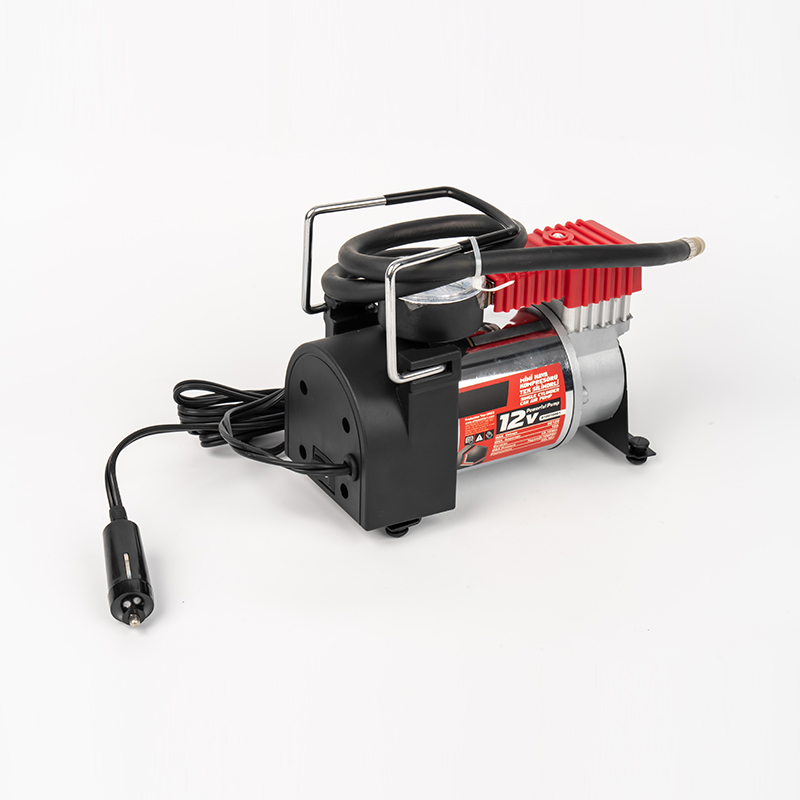
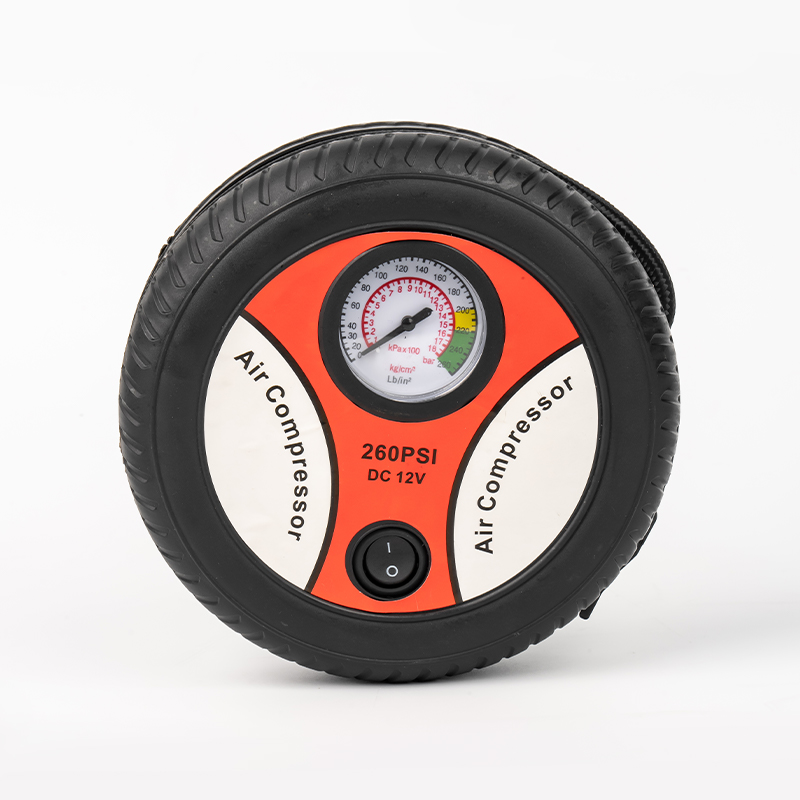
A portable car air compressor is a self-contained inflation device built around one or two DC-powered cylinders. It pushes compressed air through a hose into the tire valve, uses a gauge to control the target pressure, and shuts off automatically when the job is done.
Passenger-car tires typically run at 30–35 PSI. A practical portable unit takes a tire from 20 PSI back to 32 PSI in two to five minutes, depending on cylinder count and motor output. That covers the most common scenarios: seasonal temperature swings, slow leaks, and cold mornings when all four tires drop several PSI overnight.
Portability is what separates these devices from workshop compressors. Gas station air hoses are often broken, coin-operated, or a long walk from where you parked. With a compressor in the trunk, you handle pressure correction on your own schedule and with a gauge you can trust.
Which Type Should You Choose?
Each power format has real trade-offs in speed, runtime, and vehicle compatibility. The right answer follows the car you drive and how often you inflate.
12V Single-Cylinder Units — The Daily-Driver Standard
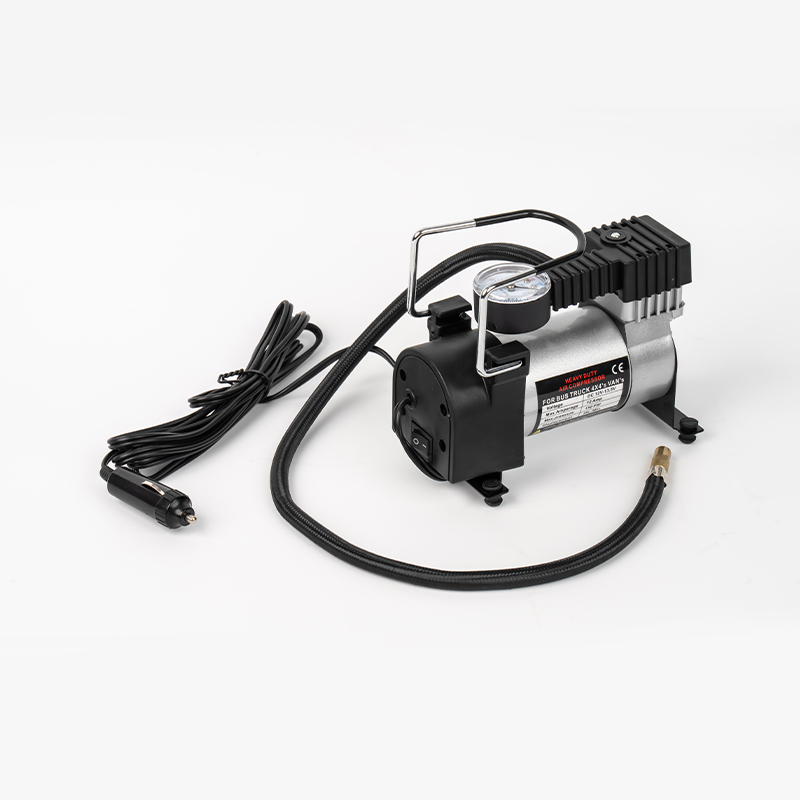
For most sedans and commuters, a 12V single-cylinder compressor is the best balance of cost, size, and reliability. It draws around 8–10A from the cigar-lighter socket, which virtually every car has, and it costs less than cordless or dual-cylinder alternatives. A compact toolbox-style unit like the SX202 keeps the pump, hose, and adapters together so nothing gets lost. Before comparing models, it helps to know what the key features in an automotive tire inflator actually do rather than chasing marketing numbers.
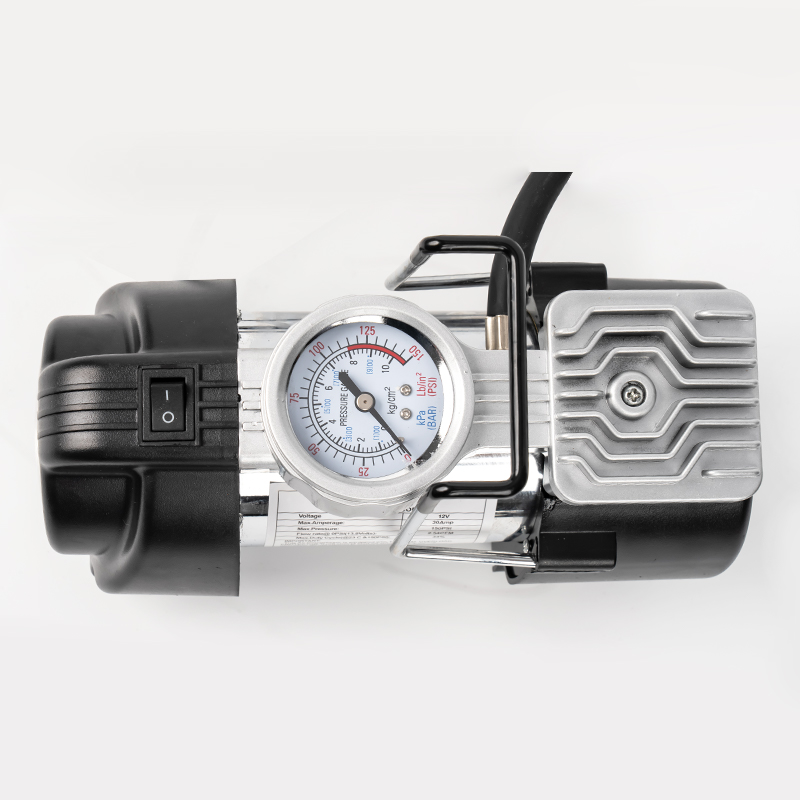 SX-202 Compact Single-Cylinder Air Compressor with ToolboxThis compact single-cylinder inflator pairs with an organized toolbox, keeping the pump, hose, and accessories together. It suits daily sedan and commuter needs while offering a tidy storage solution.View Product →
Dual-Cylinder and Battery Clip Units — Speed for Larger Vehicles
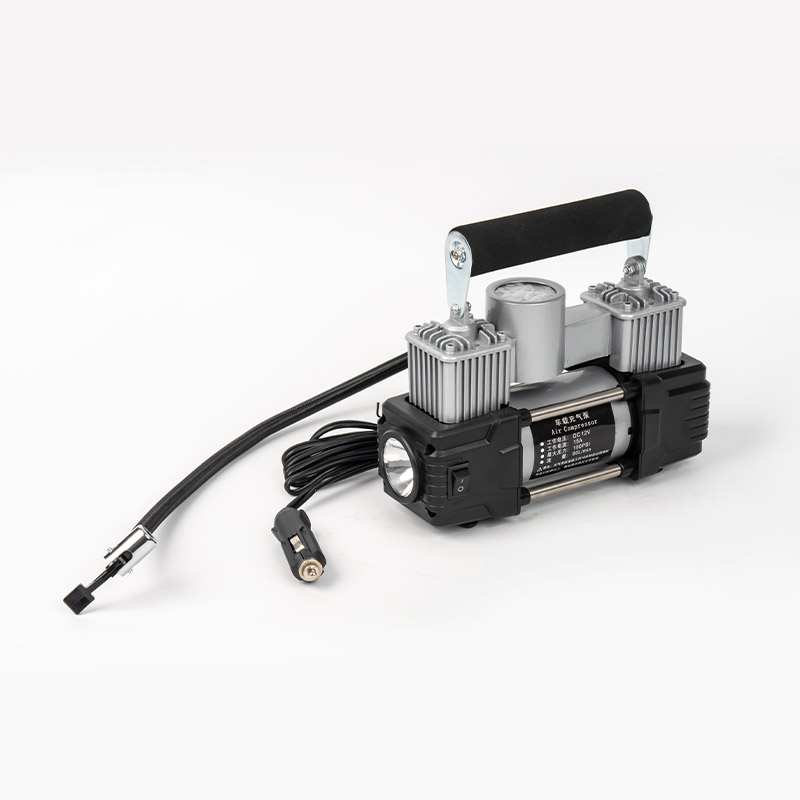
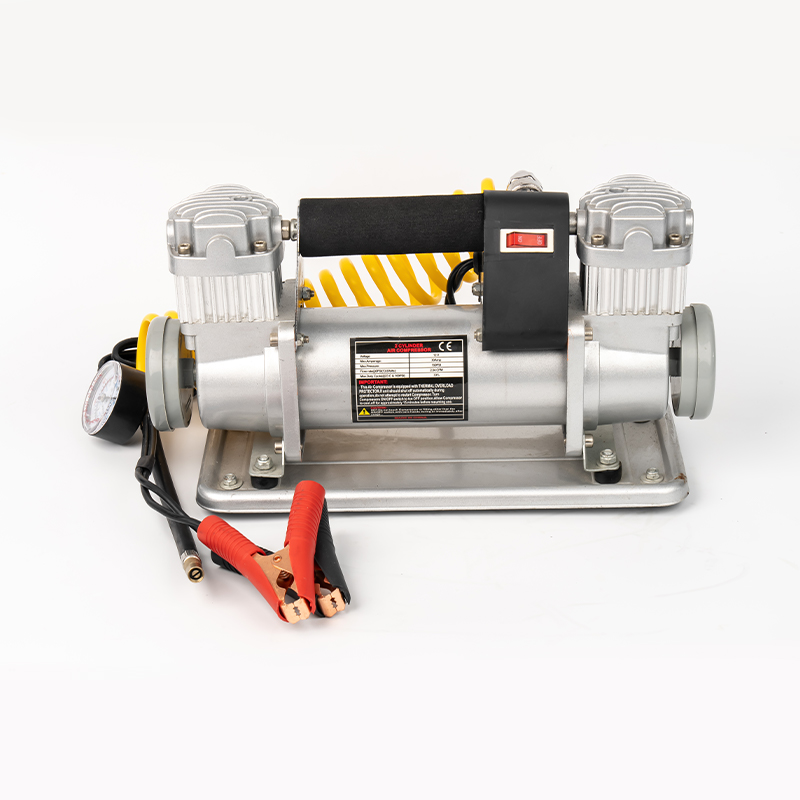
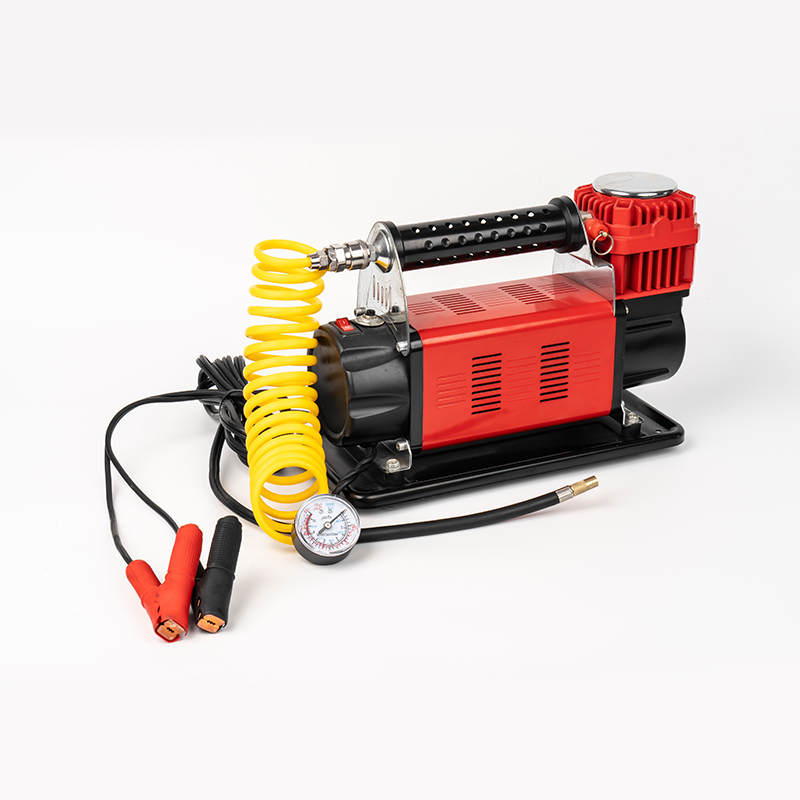
Dual-cylinder compressors roughly double airflow, cutting inflation time significantly. Battery-clip units draw power directly from the battery terminals, bypassing the lighter socket's current limit, so they suit SUVs, pickup trucks, vans, and anyone who inflates often. Look for ventilated housings on twin-cylinder pumps, because heat builds up fast during sustained runs.
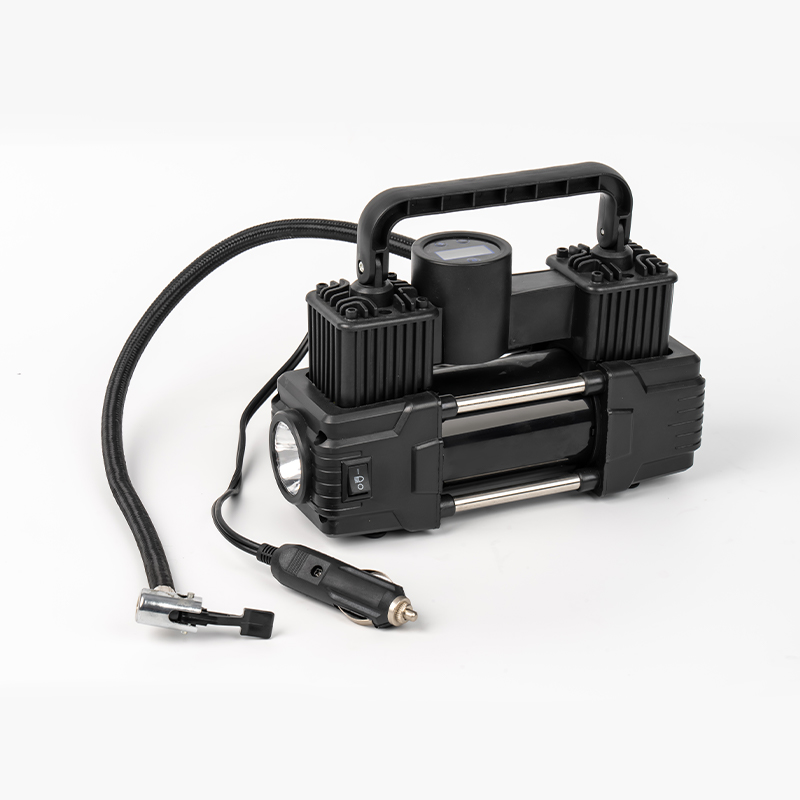
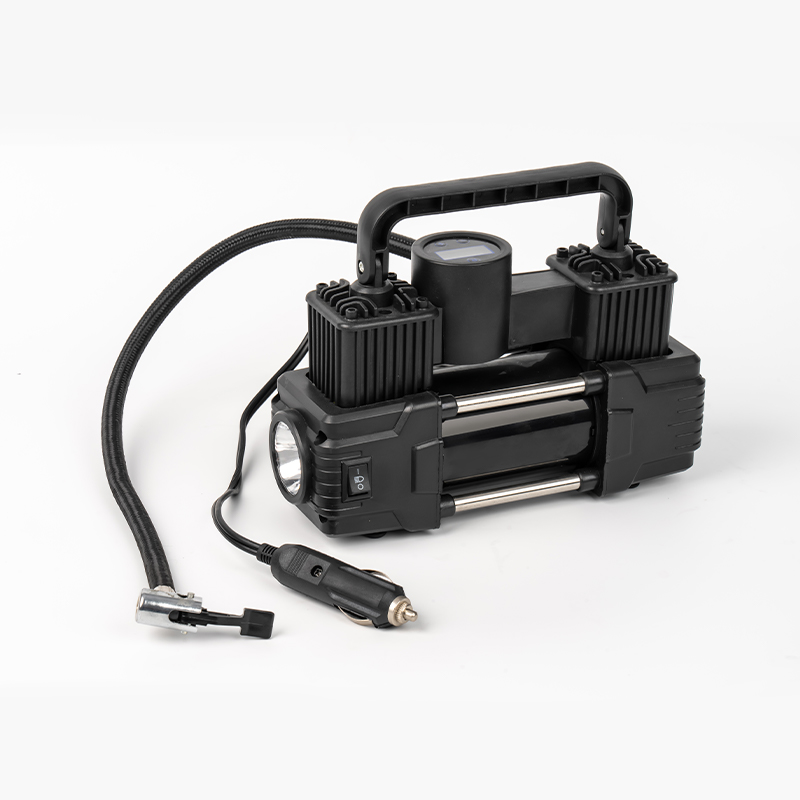 SX-211 Dual-Cylinder Air Compressor with LED LightThis twin-cylinder compressor delivers high airflow for faster inflation, and its bright LED lamps make it practical for dark garages or nighttime roadside use. Ventilated housing helps manage heat.View Product →
Cordless Lithium Units — No Cables, No Limits
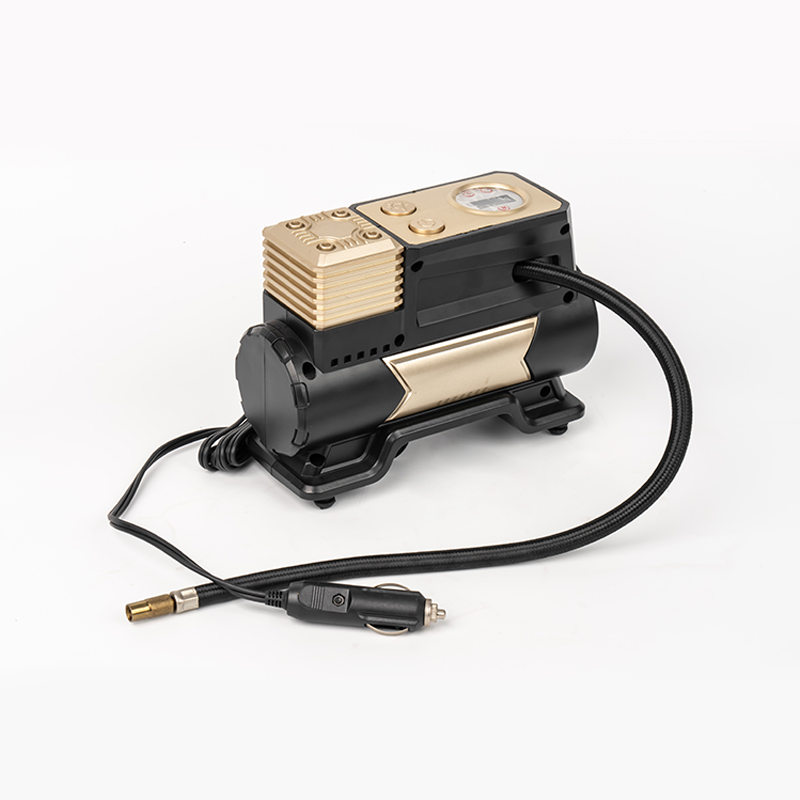
Cordless models run on an internal lithium battery, so they work for motorcycles, bicycles, trailers, and cars parked where a 12V socket is not within reach. They are quieter and simpler to store. The trade-off is runtime: most cordless inflators manage three to five tire fills per charge, which is plenty for topping up but not for heavy repeated work.
 SX-301 Cordless Digital Mini Air CompressorThis battery-powered mini compressor offers digital tire-pressure readings for accurate inflation. Its large battery capacity and portable design make it convenient for topping up tires anywhere, including vehicles parked away from a 12V socket.View Product →
Manufacturers who build the whole category make it easier to compare these formats side by side; SHUANGXIN's complete vehicle-mounted air compressor range covers all three power sources.
Key Specifications at a Glance
The specification that most often separates a pleasant pump from a frustrating one is airflow, not maximum pressure. A 150 PSI rating tells you the ceiling; airflow in liters per minute tells you how fast a tire actually fills.
| Specification | What It Affects | Typical Range | Recommended for Cars |
|---|---|---|---|
| Max pressure | Whether the pump can handle your tires | 100–160 PSI | 150 PSI |
| Airflow | Inflation speed | 15–40 L/min | 25–30 L/min |
| Power source | Runtime and compatibility | 12V / battery clip / lithium | 12V or battery clip |
| Duty cycle | Continuous run time before cooling | 10–30 min | 20 min or more |
| Gauge | Accuracy of the pressure reading | Analog +/-3 PSI; digital +/-1 PSI | Digital |
Use the table as a guide, not a guarantee. Real performance also depends on motor quality, cylinder design, and the vehicle's electrical system. A well-built unit with modest numbers often outperforms a flashy spec sheet on a weak motor.
Features That Matter Most for Daily Use
Beyond the headline numbers, six features define how convenient a portable car air compressor really is.
- Automatic shutoff — stops the pump at the preset PSI. Non-negotiable for daily convenience.
- Digital gauge — shows pressure in 0.5 PSI increments to match the vehicle door sticker.
- Built-in LED — illuminates the valve area at night and doubles as a roadside warning light.
- Long reinforced hose — reaches rear tires on wide vehicles without awkward angles.
- Storage case or toolbox — keeps the pump, nozzle adapters, and power cord organized.
- Cooling design — dual ventilation outlets or a metal cylinder head extends continuous duty time.
Common Mistakes to Avoid
Even a good compressor can frustrate when used the wrong way. These five mistakes show up most often.
- Relying on the lighter socket for high-draw pumps. Check the socket fuse rating first. If it trips, switch to a battery-clip unit instead.
- Trusting a cheap analog gauge. Cross-check it against a known-good gauge. A digital readout with +/-1 PSI accuracy is much easier to set precisely.
- Ignoring the duty cycle. If the pump stops, it is protecting itself from overheating. Wait 10–15 minutes before resuming.
- Expecting a portable compressor to fix a fully flat tire. It handles low pressure well, but a damaged tire still needs a spare or professional repair.
- Inflating to the sidewall maximum. The sidewall number is the limit, not the target. Always follow the door sticker value.
Frequently Asked Questions
Can I use a portable car air compressor on a completely flat tire?
It depends. If the tire still holds some air, you can bring it back to a drivable pressure and head to the nearest shop. If the sidewall is folded or the bead has come off the rim, no portable pump will help. Inspect for visible damage before inflating.
Is 150 PSI enough for a car tire?
Yes. Passenger-car tires rarely need more than 40 PSI. A 150 PSI compressor has enough headroom to work in the 30–35 PSI range without straining, which means faster and more consistent fills.
Are cordless inflators as reliable as 12V models?
For topping up tires, yes. The main difference is runtime. Cordless units are limited by battery capacity, so repeated heavy use drains them quickly. If you only top up a few tires a month, a cordless model is perfectly reliable.
How often should I check tire pressure with a portable compressor?
At least once a month and before any long trip. Tires naturally lose 1–2 PSI per month, and temperature changes add roughly 1 PSI for every 10°F shift. A quick check takes under two minutes and extends tire life.