 English
 Español
 عربى
عربى Türk
TürkA heavy duty portable air compressor is a high-output, vehicle-powered or battery-powered unit designed to inflate large tires quickly and reliably. The most important thing to understand is that PSI alone does not make a compressor heavy duty—you also need steady airflow, a practical duty cycle, and a pump that can handle repeated use. Whether you drive a truck, tow a trailer, or take a 4x4 off-road, the right portable compressor turns a slow, unsafe situation into a five-minute fix.
If you have ever been stranded with a low tire and a weak inflator, you already know the difference between a toy and a tool. Heavy-duty models are not just bigger versions of the same design; they use larger cylinders, stronger motors, and better cooling. This guide explains the specifications that matter, the trade-offs between single- and dual-cylinder pumps, and how to choose a portable unit that will actually perform when you need it.
Content
- What Makes a Portable Compressor "Heavy Duty"?
- PSI, Airflow, and Duty Cycle: What the Numbers Actually Mean
- Single-Cylinder vs. Dual-Cylinder: Which Is Right for You?
- Power Options: 12V Sockets, Battery Clips, and Cordless Compressors
- Portability, Storage, and Visibility
- How to Choose the Right Heavy-Duty Portable Compressor
- Safety and Maintenance Tips
- Frequently Asked Questions
What Makes a Portable Compressor "Heavy Duty"?
A heavy-duty portable air compressor is defined by four things: high pressure, strong airflow, a long duty cycle, and a durable pump design. A high PSI number matters, but it needs to be paired with enough airflow to fill a large tire in a reasonable time. Duty cycle prevents the motor from overheating, and durable materials—metal cylinders, reinforced housings, and anti-vibration feet—keep the unit alive on rough roads.
- Pressure rating: Look for at least 150 psi to cover most truck, SUV, and RV tires.
- Airflow: Higher airflow (measured in CFM or L/min) means faster fills, especially for big tires.
- Duty cycle: A 50% duty cycle or higher is desirable for repeated use.
- Pump design: Dual-cylinder pumps provide more airflow and better balance than single-cylinder units.
- Mounting and feet: Anti-vibration feet reduce noise and prevent internal parts from loosening.
Anti-vibration feet are a small but telling feature. They isolate the pump from the housing and the ground, which lowers sound and protects the internals during a long inflation cycle. One example of this approach is a single-cylinder 150 psi compressor with vibration-proof feet, the SX205, which is compact enough for everyday carrying but still built for serious work.
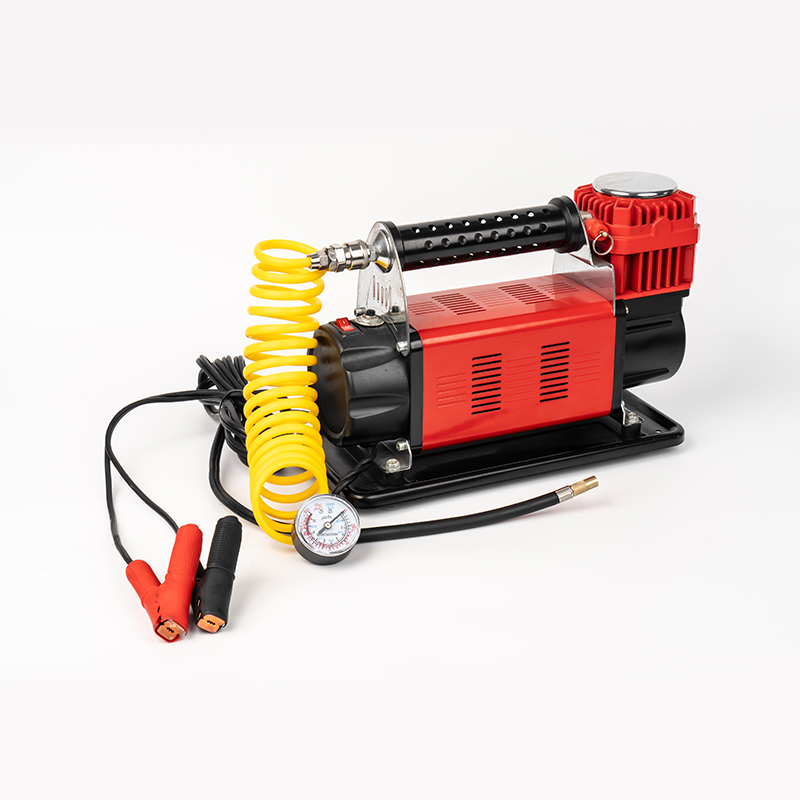 SX-205 Single-Cylinder 150 PSI Air Compressor with Anti-Vibration FeetThis compact single-cylinder compressor delivers 150 psi and vibration-proof feet for stable operation. Its lightweight design suits everyday carrying while still handling heavy-duty 4x4 tire inflation.View Product →
PSI, Airflow, and Duty Cycle: What the Numbers Actually Mean
PSI tells you the maximum pressure, airflow tells you how fast the tire is filled, and duty cycle tells you how long the unit can run without overheating. For large tires, you need all three to be adequate.
For reference, here are typical pressures for common vehicle types and the compressor spec you should aim for:
| Vehicle type | Typical tire pressure (psi) | Compressor recommendation |
|---|---|---|
| Passenger car | 30-35 | 100 psi max, single cylinder is fine |
| Light truck / SUV | 35-45 | 120-150 psi, dual cylinder preferred |
| Heavy truck / RV | 60-90 | 150 psi, dual cylinder with high airflow required |
| Off-road / aired-down tires | 15-25 (trail use) | 150 psi to re-inflate quickly after airing down |
When comparing models, check the airflow at a realistic pressure, not just the free-flow number. A dual-cylinder portable unit will typically push 35-60 L/min at 90 psi, which is often enough to bring a 265/70R17 tire from 20 to 40 psi in under two minutes. Lower airflow means longer waits and more strain on the pump.
Duty cycle is expressed as a percentage. A 50% cycle, for example, allows 5 minutes of continuous operation followed by 5 minutes of cooling. Heavy-duty use means you will sometimes exceed that, so choose a model with thermal protection or a good cooling fan.
Single-Cylinder vs. Dual-Cylinder: Which Is Right for You?
Dual-cylinder compressors are the default choice for heavy-duty use because they produce roughly twice the airflow while sharing the load between two pistons. That means faster inflation, lower motor temperature, and longer overall life. Single-cylinder units are lighter and cheaper, but they struggle with larger tires and run hotter.
Consider a dual-cylinder model with battery clips if you regularly inflate truck-size tires or assist other drivers on the trail. A well-balanced package includes a battery clip for high current, a vibration-proof mount, and a digital gauge for accurate stopping. The SX204 double-cylinder compressor fits that description, offering 150 psi with the stability you need for repeated jobs.
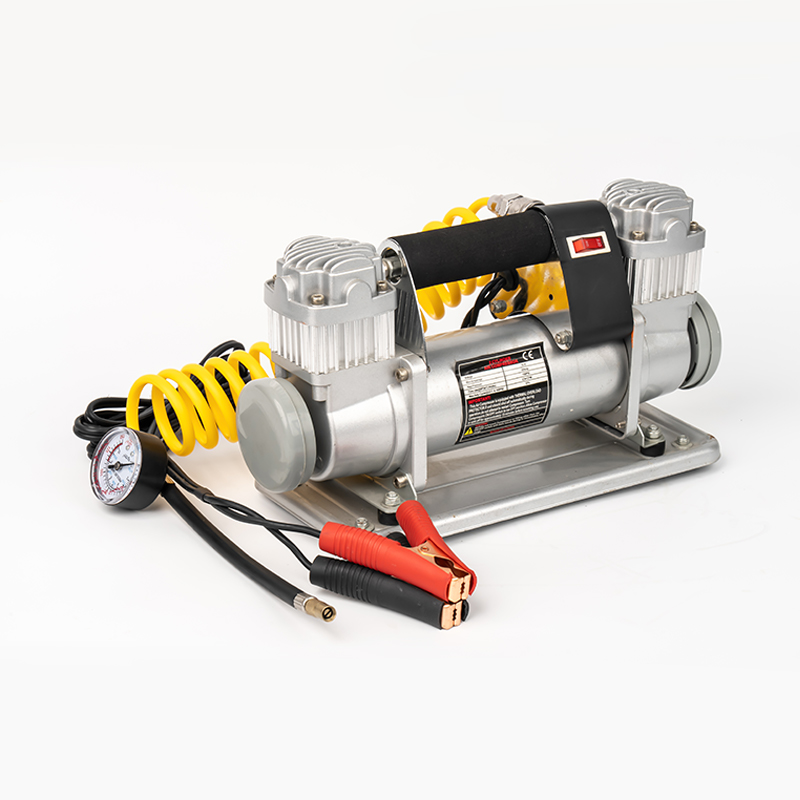 SX-204 Twin-Cylinder Air Compressor with Anti-Vibration MountsFeaturing a dual-cylinder motor and 150 psi output, this model provides high airflow for large tires. The anti-vibration pads reduce noise and protect equipment, making it reliable for repeated heavy use.View Product →
Power Options: 12V Sockets, Battery Clips, and Cordless Compressors
The power source determines whether your compressor will actually perform in an emergency, and for heavy loads direct battery clips are far more reliable than a 12V socket. A 12V accessory socket is limited to around 10-15 amps; a dual-cylinder motor can easily exceed that under load, which means you will either blow a fuse or get underwhelming performance. Battery clips connect straight to the vehicle battery and let the compressor draw what it needs.
Cordless lithium-ion compressors are convenient for quick top-ups and for vehicles that are hard to reach, but they have a finite runtime and slower airflow. If you only need to add a few psi to a car tire before work, a cordless model is fine. If you are reseating a bead or airing a truck back up after off-roading, stick with a battery-clip model that gives you sustained power.
Portability, Storage, and Visibility
A true portable compressor should weigh less than about 10 kg, have a comfortable handle, and fit into a toolbox or under a seat. Heavy-duty units tend to be bulkier than basic inflators, so consider where you will store them. Toolbox-style designs protect the unit and keep hoses and accessories organized.
If you often handle tire changes in low light, a compressor with a built-in LED is a practical upgrade. The SX211 double-cylinder compressor includes a high-visibility LED that lights the work area, which is especially helpful on the roadside or in a dark trail. This feature also helps you keep an eye on the pressure gauge while the pump is running.
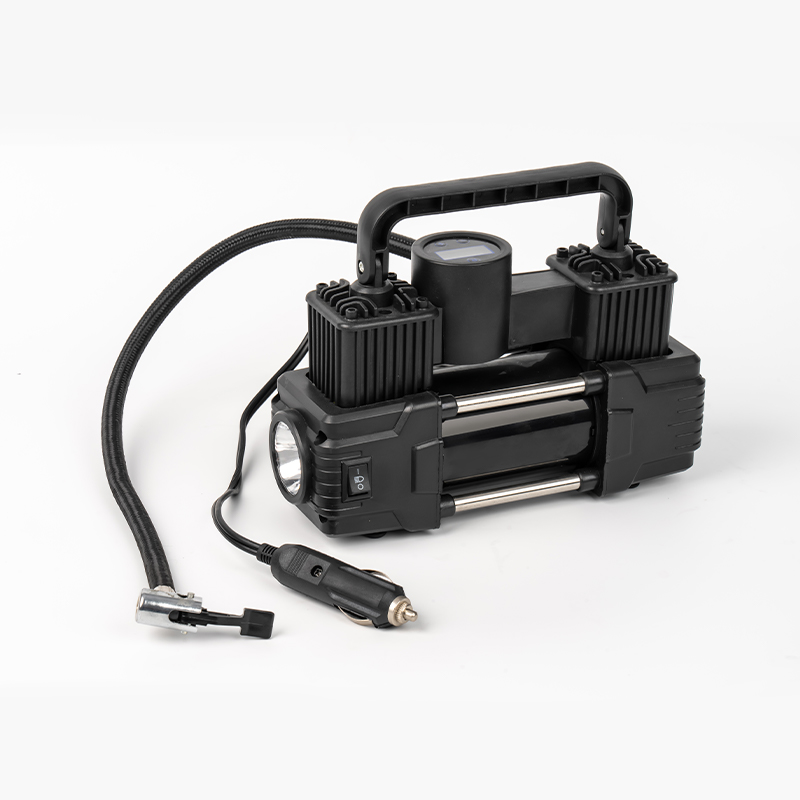 SX-211 Twin-Cylinder Air Compressor with Built-in LED LightThis double-cylinder compressor includes a bright LED for nighttime or roadside repairs, improving visibility around the pressure gauge. Its metal cylinder and copper motor support efficient, accurate inflation.View Product →
How to Choose the Right Heavy-Duty Portable Compressor
Choose a compressor based on the largest tire you need to inflate, not the one you use most often. That single decision prevents you from buying a unit that works fine on your car but fails on your truck or trailer.
- List your vehicle types and tire pressures.
- Check the compressor's max pressure and airflow at that pressure.
- Consider the duty cycle and whether you will be doing multiple tires in one session.
- Decide between battery clips and 12V socket based on the size of your tires.
- Pick a storage format that fits your vehicle and keeps the unit protected.
If you are juggling multiple vehicle types, the right choice will usually be a 150 psi dual-cylinder model with battery clips. For a more detailed breakdown of matching compressors to tire categories, see our guide on choosing the right automotive tire inflator for different types of tires.
Safety and Maintenance Tips
Most compressor failures happen because of overheating, loose connections, or contaminants, not because of the pump itself. Follow the duty cycle and keep the unit clean to avoid the most common causes of premature failure.
- Never exceed the rated duty cycle; allow the compressor to cool between tires.
- Check battery clip connections before each use; a loose connection causes voltage drop and heat.
- Keep the air intake and filter clear of dust, especially when working on unpaved roads.
- Store the compressor in a dry location to prevent corrosion.
- Use the correct hose and chuck for your valve stems; a poor seal wastes time and creates false pressure readings.
For more detail on avoiding common mistakes, refer to our safety tips for using an automotive tire inflator.
Frequently Asked Questions
Can a heavy-duty portable air compressor inflate truck tires?
Yes, as long as the compressor is rated for at least 150 psi and has enough airflow for your tire size. Check the airflow at 90 psi, because that is closer to the real working pressure for large tires.
What is a good duty cycle for heavy-duty use?
A duty cycle of at least 50% is a practical minimum for continuous use. That means you can run the pump for 5 minutes and should let it rest for 5 minutes before the next run.
Are cordless compressors suitable for heavy tires?
Cordless models are fine for topping off car tires, but they usually lack the sustained airflow to refill a large truck tire from near-empty quickly. If you need a heavy-duty portable compressor as a primary tool, choose a battery-clip model.