 English
 Español
 عربى
عربى Türk
TürkStop guessing. For a truck tire, the best portable air compressor is one that moves enough air to refill a large tire in under five minutes, draws power from the vehicle's battery rather than a cigarette-lighter socket, and sustains output without overheating. That means a dual-cylinder unit rated around 150 PSI with a duty cycle of at least 10 minutes. Here's what actually matters when you buy one.
Content
What Size Air Compressor Does a Truck Need?
The size of your truck's tires determines the minimum air flow you need, not the pump's physical dimensions. A larger tire has more air volume, so it needs more CFM (cubic feet per minute) to fill quickly. A single-cylinder unit may work for a light-duty pickup, but a heavy-duty truck with 35-inch or larger tires will benefit from a dual-cylinder design.
| Tire Size | Air Volume Needed | Approx. Fill Time |
|---|---|---|
| LT245/70R17 | 1.2 cfm | 3 min |
| LT265/70R18 | 1.5 cfm | 4 min |
| 35x12.50R15 | 2.0 cfm | 5 min |
| 37x12.50R17 | 2.5 cfm | 6 min |
The takeaway: if you run oversized tires, do not settle for a single-cylinder model with a low CFM rating.
12V vs. Battery-Powered Units for Truck Use
For trucks, direct battery-clip power is more reliable than a cigarette-lighter plug or an internal battery.
- 12V wire with battery clips: Consistently delivers full amperage from the truck battery, allows long runtimes, and works in cold weather when internal battery packs often lag.
- Cordless battery units: Offer cord-free convenience but their runtime is limited, and cold temperatures reduce performance. You also have to remember to charge them.
- Cigarette-lighter plug: The simplest option but usually limited to 10-15 amps, which means slower fill times and a higher risk of blowing the fuse.
For a truck, the best practical choice is a 12V compressor with battery clips and a long power cord.
Key Specifications to Check Before Buying
Focus on four numbers: PSI rating, real CFM output, duty cycle, and hose length.
- PSI rating: Most truck tires require 40-80 PSI, but a compressor with a 150 PSI rating gives headroom for high-pressure tires and ensures it can reach the target without working at its absolute limit.
- CFM output: Look for 1.5 CFM or more. Avoid inflated "peak" CFM numbers; the real airflow at the nozzle matters.
- Duty cycle: This is the runtime in minutes before the pump needs to cool down. A 10-minute or higher duty cycle is essential for truck tires.
- Hose length: A 6-foot hose is a minimum. For a truck with large wheels, a 10-foot hose lets you set the compressor on the ground instead of holding it in the air.
Real-World Buying Mistakes and How to Avoid Them
Most buyers regret choosing a small single-cylinder unit that overheats, or a model with a short hose that pins you awkwardly near the wheel.
- Mistake: Ignoring duty cycle. Solution: Check the manual and choose a unit with a 10-minute cycle or a thermal protection switch.
- Mistake: Buying on PSI alone. Solution: CFM gets your tire filled; PSI just tells you the ceiling.
- Mistake: Using a cigarette-lighter plug on a heavy truck. Solution: Use battery clips and route the cable through a door or window if needed.
- Mistake: Not checking the hose connection. Solution: Look for a 1/4-inch quick coupler with a brass fitting, which seals well under high pressure.
If you want to steer clear of common errors, review this guide on common mistakes with automotive tire inflators.
How to Use a Portable Truck Air Compressor Safely
Always connect battery clips before the pump is switched on, and use the included extension hose to keep the compressor on the ground.
- Park the truck on a level surface, engage the parking brake, and turn off the ignition.
- Connect the battery clips to the positive and negative terminals, making sure the clamp is secure.
- Attach the air hose to the tire valve and check that the pressure gauge is reading correctly.
- Switch on the compressor and monitor the gauge. Stop at the recommended pressure.
- Let the unit cool down after use, and disconnect the clips only after the compressor has stopped running.
Our Recommended Portable Air Compressors for Trucks
We selected three proven units that cover different truck applications: heavy-duty single-cylinder, dual-cylinder with battery clips, and dual-cylinder with LED lighting for nighttime roadside work.
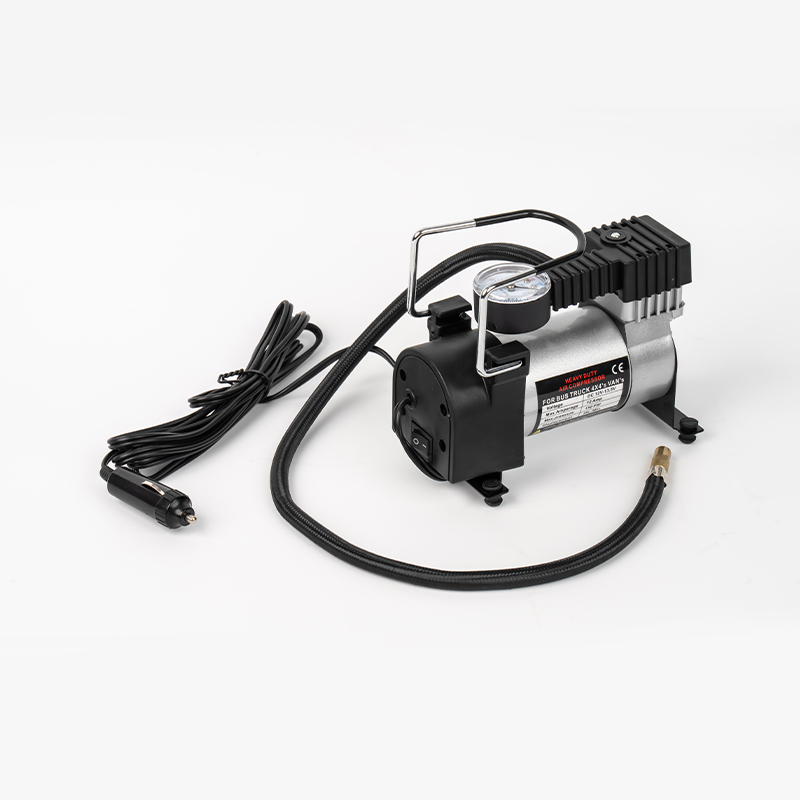
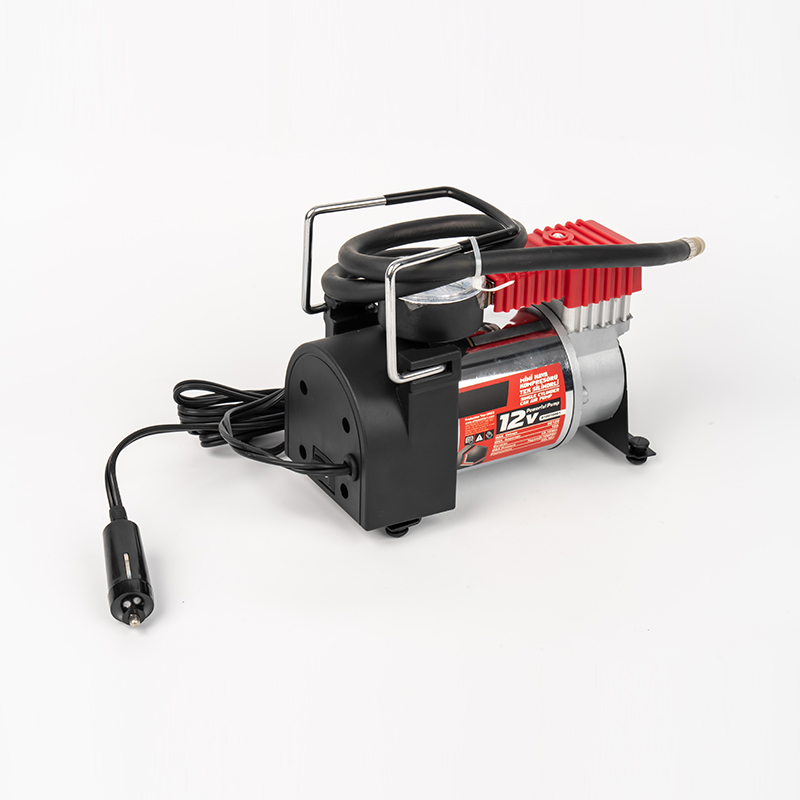
SX205 Heavy-Duty Single-Cylinder
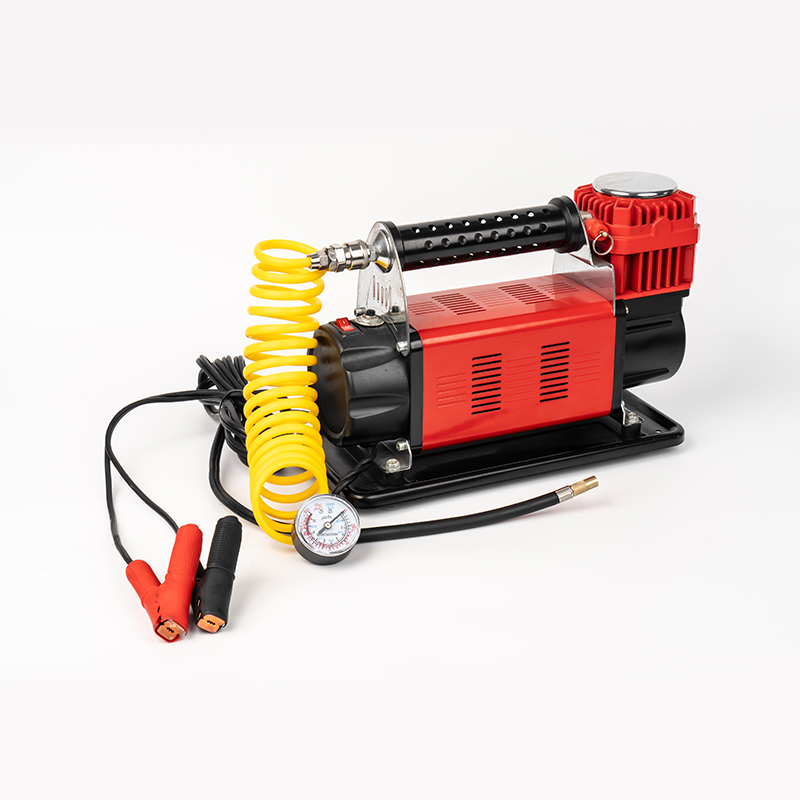 Heavy-Duty Single-Cylinder Air Compressor with Anti-Vibration FeetThis single-cylinder compressor delivers steady 150 PSI output and features vibration-absorbing feet for stability on rough ground. It suits trucks needing a simple, reliable plug-in solution for spare tires.View Product →
For trucks that simply need a reliable, no-frills unit, the SX205 delivers steady 150 PSI output with vibration-absorbing feet that keep it stable on rough pavement. It is a good fit for a work truck that carries a spare tire and wants a simple, plug-in solution.
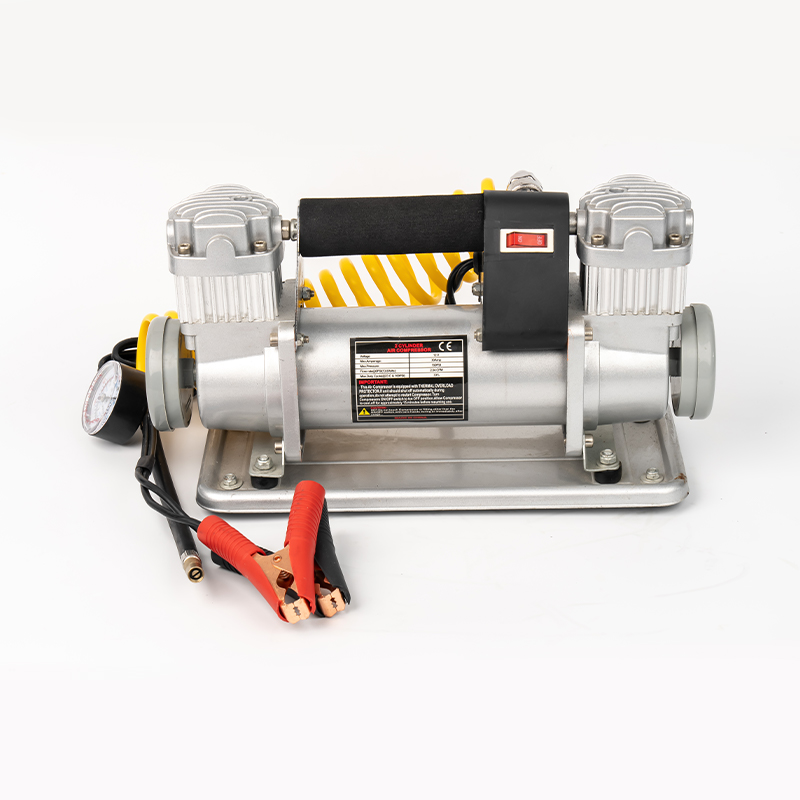
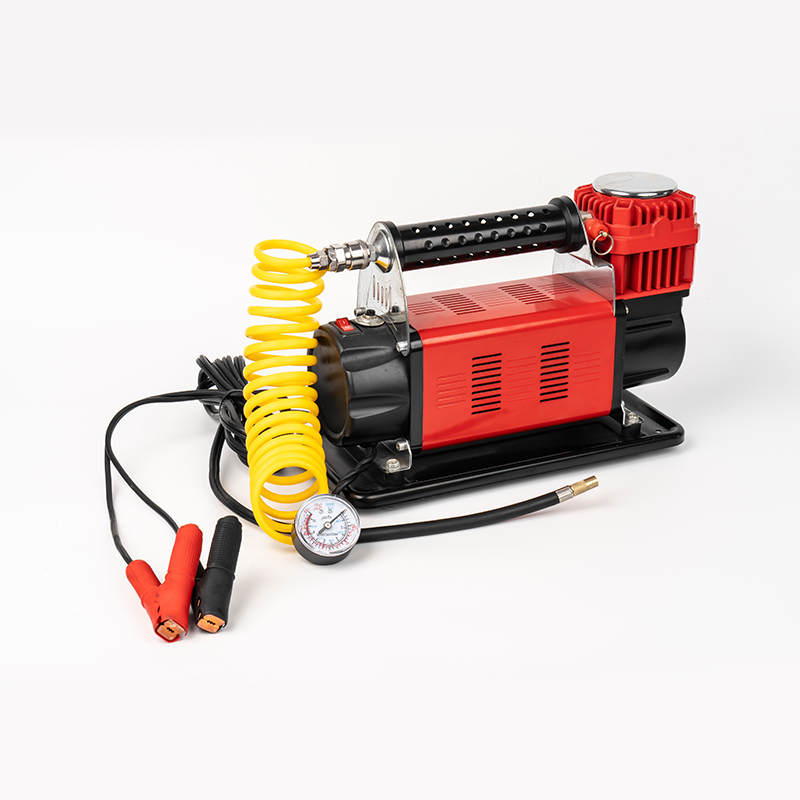
SX204 Dual-Cylinder with Battery Clips
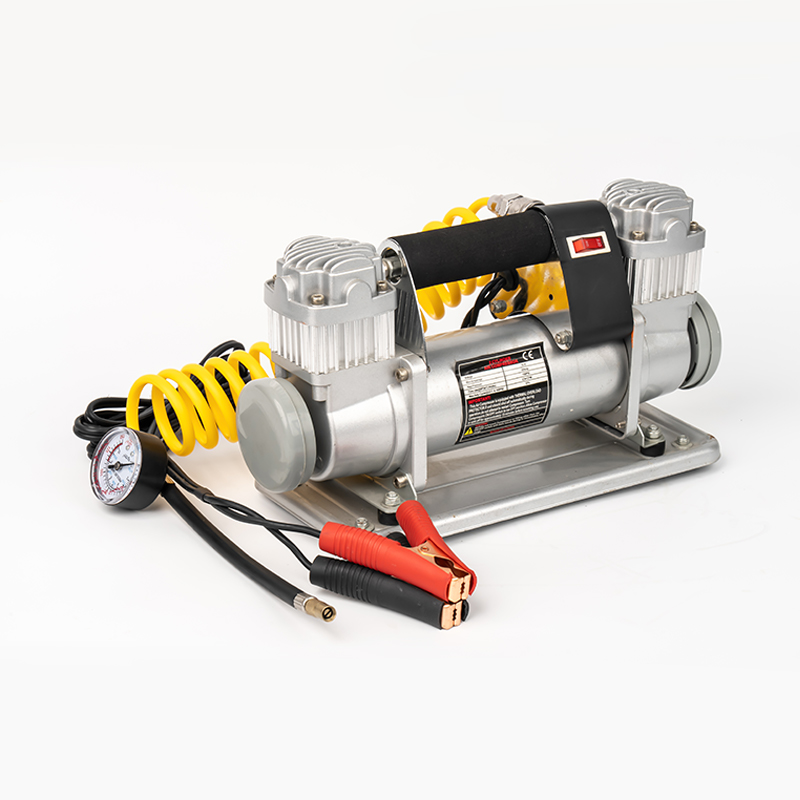 Dual-Cylinder Air Compressor with Anti-Vibration Pads and Battery ClipsThe dual-cylinder design moves more air per minute for faster inflation of large truck tires. With battery-clip power and anti-vibration pads, it ensures consistent operation and stable performance even when tires are fully flat.View Product →
The SX204 is the faster choice for larger truck tires. Its dual-cylinder design moves more air per minute, and the battery-clip power source ensures consistent voltage even when the tire is completely flat. This is the unit to keep in a truck bed.
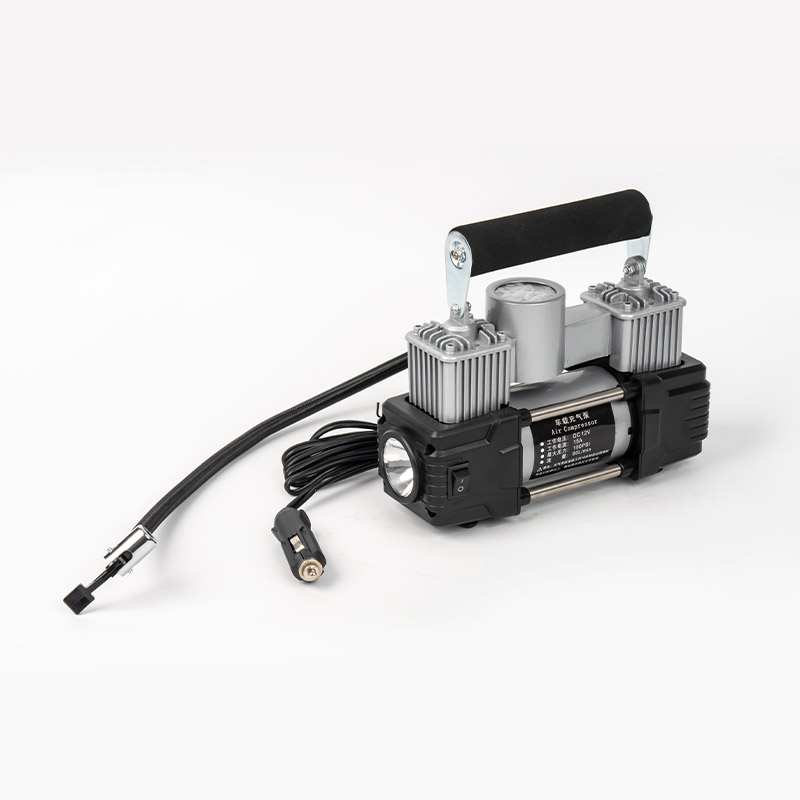
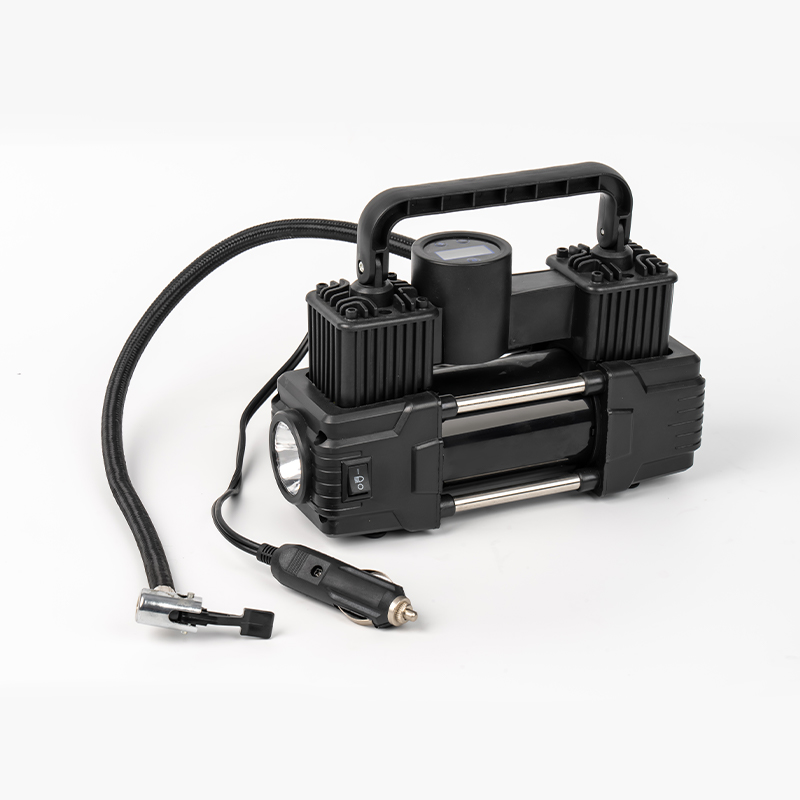
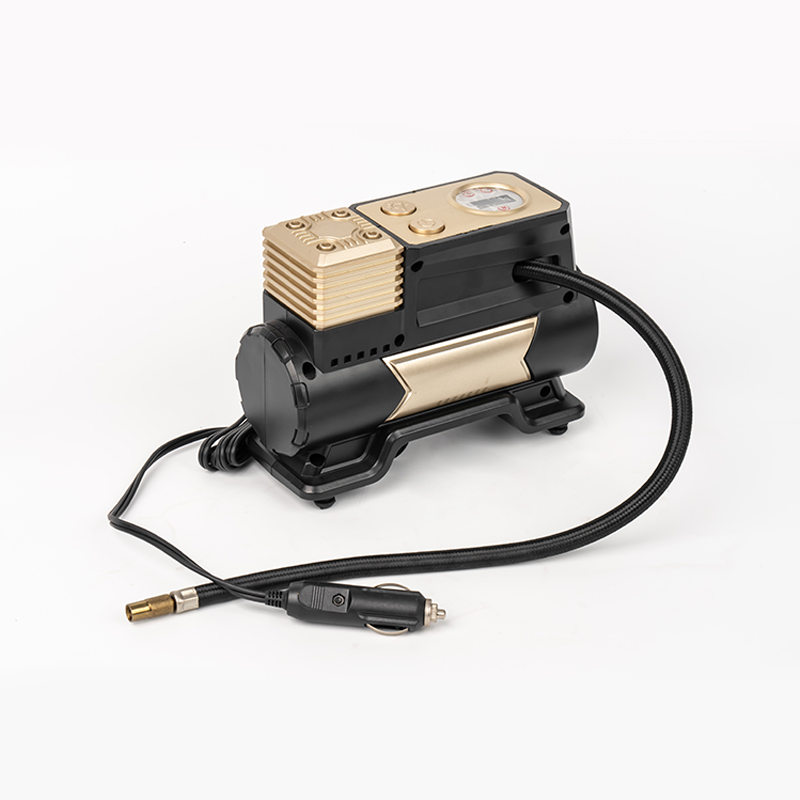
SX211 Dual-Cylinder with High-Intensity LED
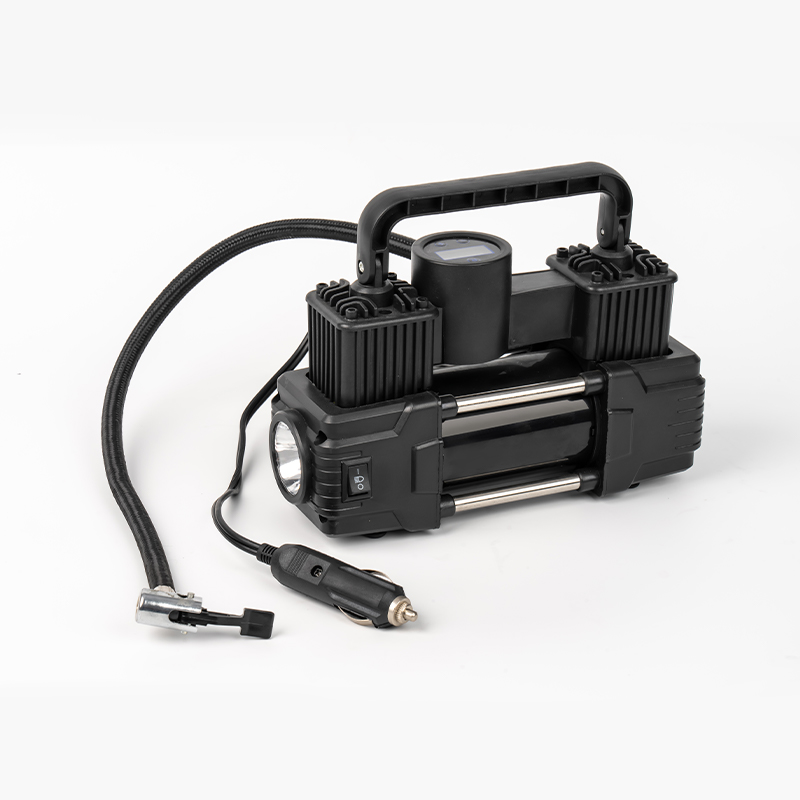 Dual-Cylinder Air Compressor with High-Intensity LED for Night WorkThis unit pairs dual-cylinder performance with a high-intensity LED that illuminates the valve stem and work area at night. It is a practical safety feature for roadside emergencies in dark or rural conditions.View Product →
The SX211 pairs dual-cylinder performance with a high-intensity LED that illuminates the valve stem and work area at night. If you drive at odd hours or in rural conditions, this extra visibility is a practical safety feature.
FAQ
Can a portable air compressor inflate a truck tire to 80 PSI?
Yes, most 12V units can reach 80 PSI, but the limiting factor is airflow. A dual-cylinder model will do it faster without overheating.
How long does a portable truck air compressor last?
With proper duty-cycle management and occasional maintenance, a quality 12V compressor can last 3 to 5 years in normal truck use.
Can I use a portable air compressor to inflate a fully flat truck tire?
Yes, for smaller flat tires, but a large 35-inch tire that is completely flat requires a unit with at least 2.0 CFM and a 10-minute duty cycle.
Should I keep a portable air compressor in my truck at all times?
Yes, it is the best insurance against low-pressure issues, especially if you tow or haul heavy loads.
Final Verdict
Choose a portable air compressor for your truck based on the tire size you run, not on the most impressive number on the box. A dual-cylinder 12V model with battery clips, a real CFM rating above 1.5, and a duty cycle of at least 10 minutes will handle most scenarios. Keep it in your truck, learn how to use it correctly, and you will never be stranded by a low tire again.