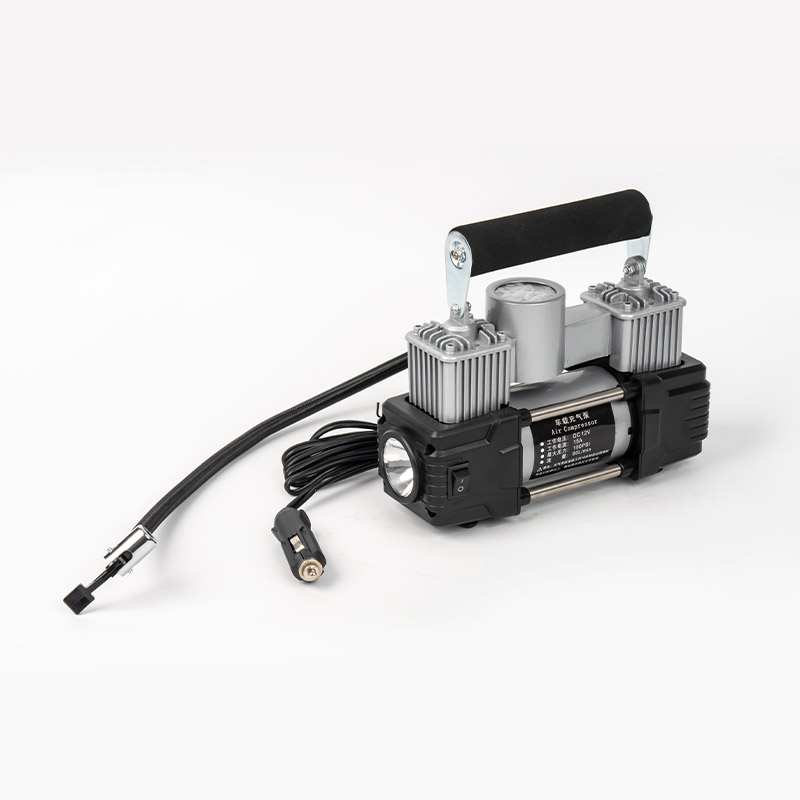
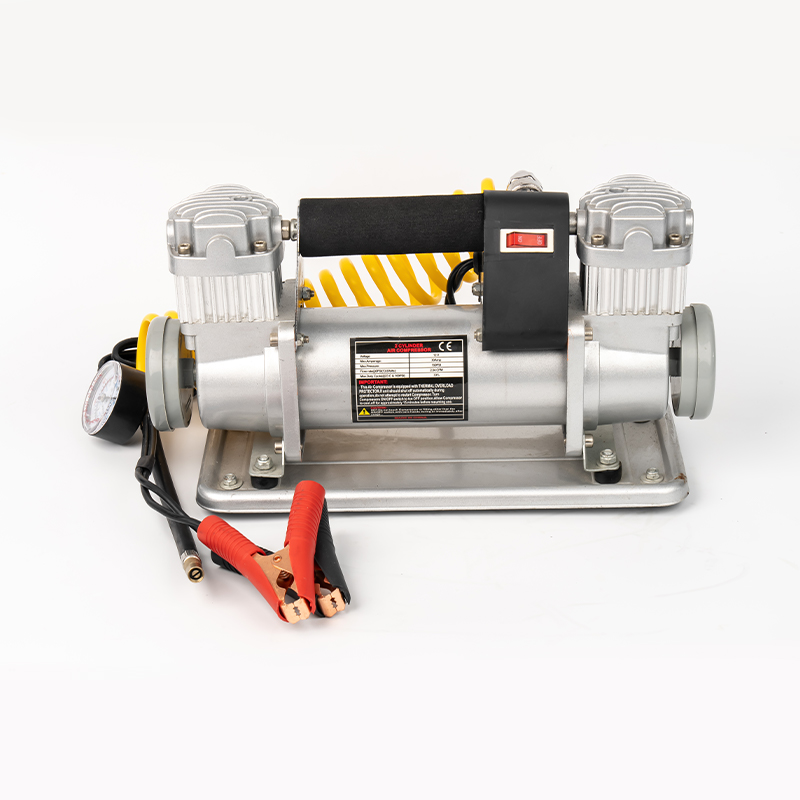
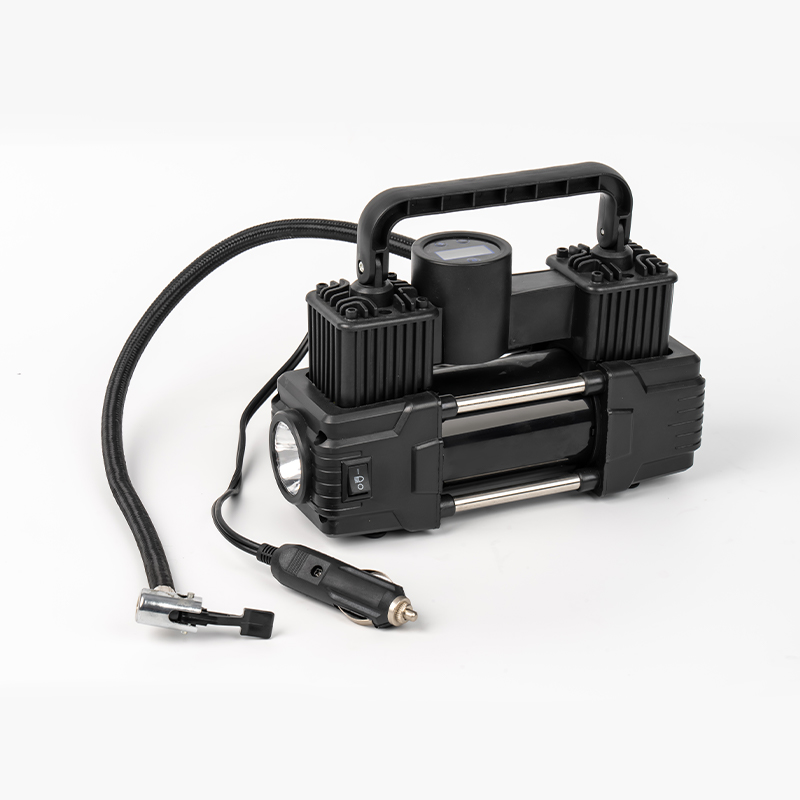
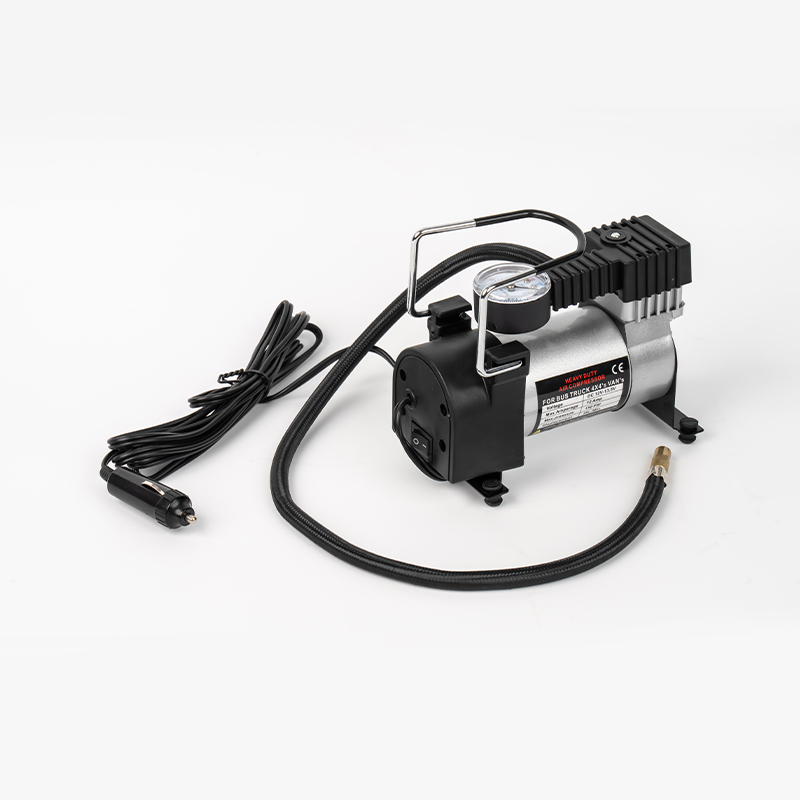
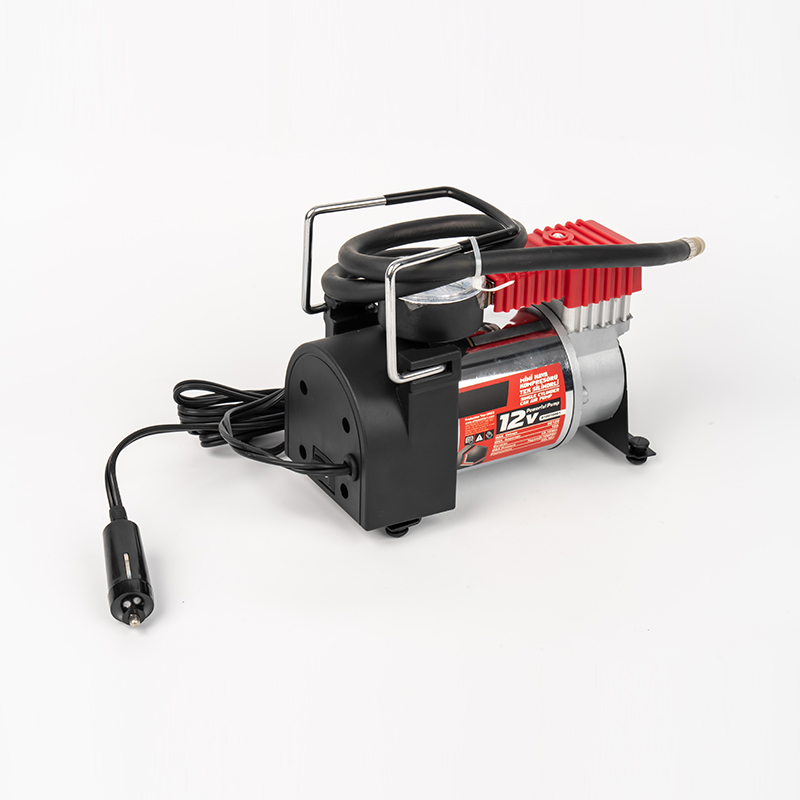
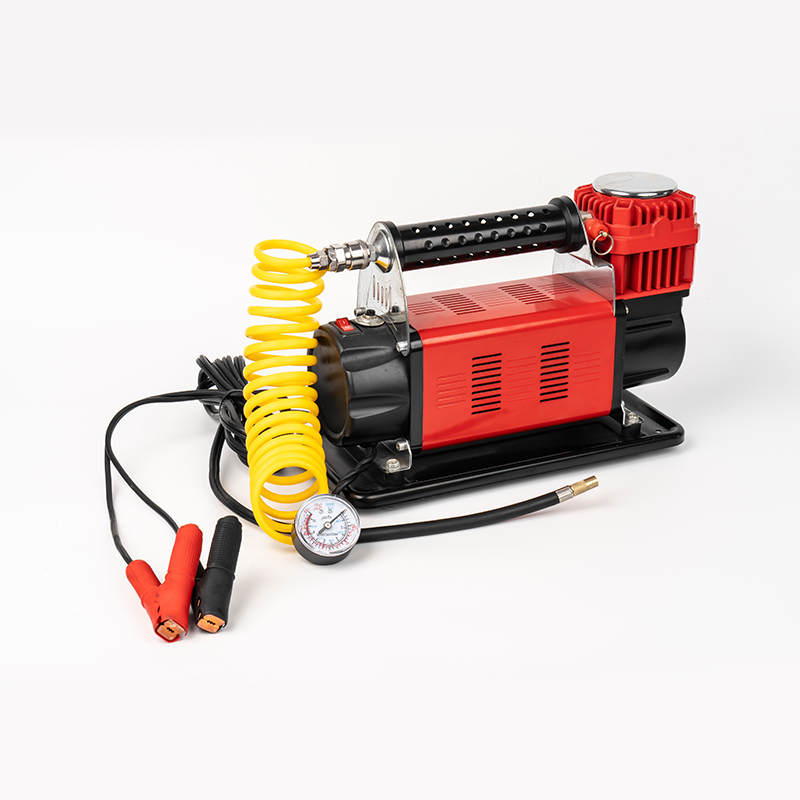
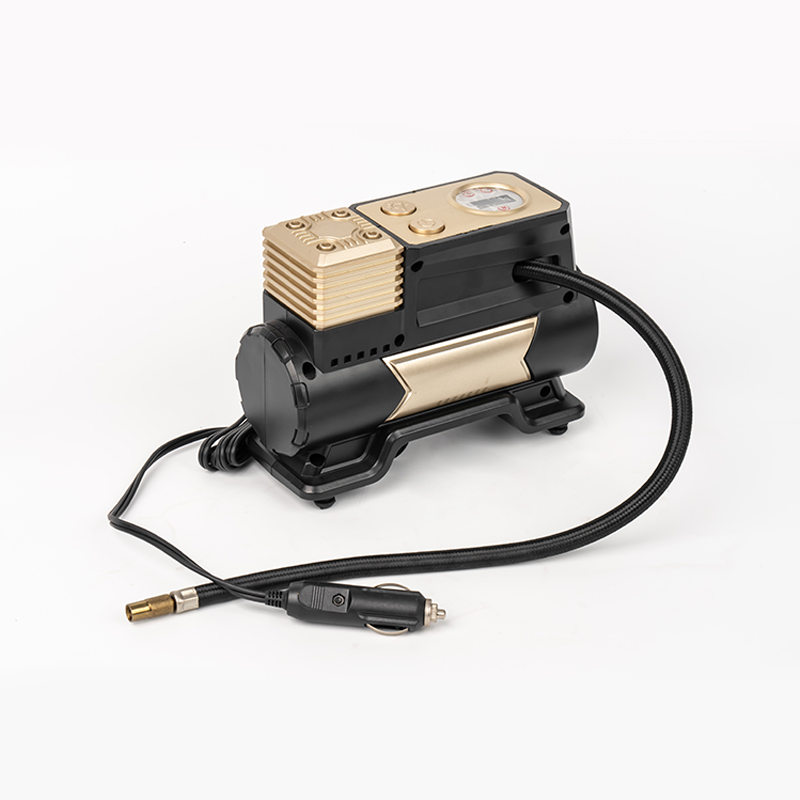
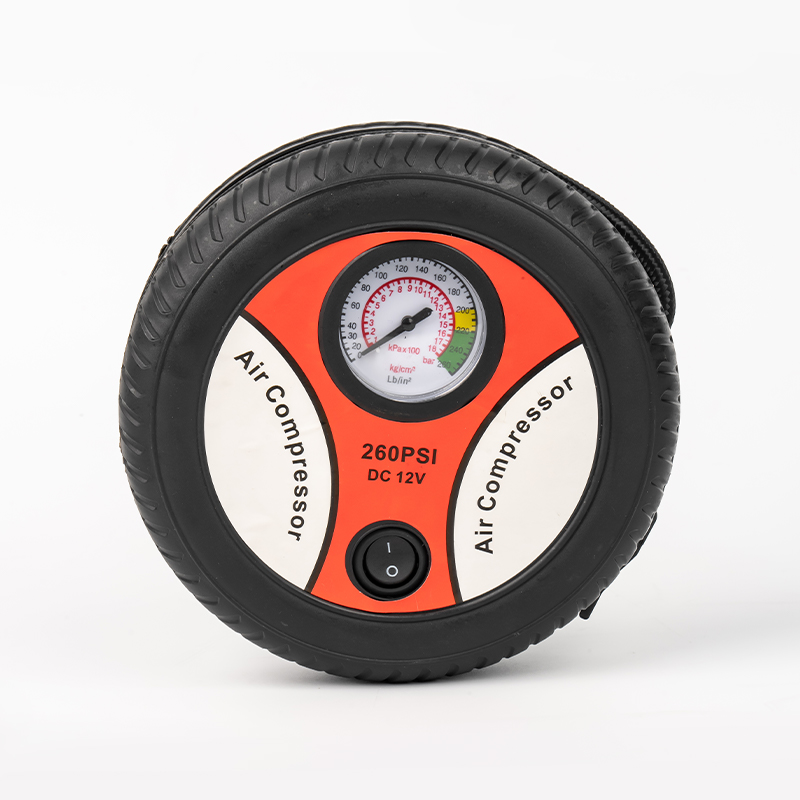
A 12V on board air compressor is a permanently mounted, vehicle-powered inflation system that draws power directly from a 12-volt DC electrical system to deliver compressed air on demand — without needing an external power source or portable unit. Unlike portable compressors stored in a cargo area, an on board air compressor is wired directly to the vehicle's battery, mounted to the chassis or engine bay, and ready to inflate tyres, lockers, air bags, or tools at the press of a switch. For serious off-road drivers, overlanders, and 4WD enthusiasts, it is one of the most practical and time-saving permanent upgrades available.
How Does a 12V On Board Air Compressor Work?
A 12V on board air compressor works by using an electric motor powered by the vehicle's 12V DC supply to drive a piston or twin-piston pump that compresses ambient air and delivers it through a regulated output port. The core operating cycle is straightforward: the motor spins a crankshaft, which drives one or two pistons inside cylinders; the pistons compress air on the downstroke and push it through a one-way valve into the output line or an onboard air tank.
Most quality 12V on board compressors draw between 20 and 50 amperes at peak load, which is why direct battery wiring with an appropriately rated fuse — typically 40A to 60A — is essential. Running through a cigarette lighter socket (maximum 15–20A) is not suitable for permanent-mount compressors. A dedicated relay circuit ensures the compressor only activates when the engine is running, protecting the battery from discharge.
Single Piston vs Twin Piston: Which Pump Design Performs Better?
Twin-piston compressors outperform single-piston units in every measurable way — delivering higher airflow, faster tyre inflation times, and better sustained duty cycles — making them the preferred choice for serious 4WD and overland use.
| Feature |
Single Piston |
Twin Piston |
| Airflow (CFM / L/min) |
1.06–1.59 CFM (30–45 L/min) |
1.76–4.24 CFM (50–120 L/min) |
| Max Pressure |
100–120 PSI (6.9–8.3 bar) |
120–150 PSI (8.3–10.3 bar) |
| Duty Cycle |
25–50% |
50–100% |
| Current Draw (typical) |
15–25A |
30–50A |
| Heat Generation |
Moderate |
Higher (better cooling fins needed) |
| Time to Inflate 35" Tyre (from 20 to 35 PSI) |
~4–6 minutes per tyre |
~2–3 minutes per tyre |
| Best Use Case |
Light 4WD, daily driving, occasional use |
Heavy 4WD, trucks, frequent off-road use |
| Relative Cost |
Lower |
Higher |
Table 1: Performance comparison between single-piston and twin-piston 12V on board air compressor designs.
Why Install a 12V On Board Air Compressor Instead of Carrying a Portable One?
A permanently mounted 12V on board air compressor is faster to deploy, more powerful, and more reliable than a portable compressor stored in the boot — and it frees up valuable cargo space in the process.
- Always ready: No locating, unpacking, or cable management. A dashboard-mounted switch activates the system in seconds.
- Higher duty cycle: On board units designed for permanent mounting are built for extended run times. Portable units rated at 25–33% duty cycle overheat when inflating four large tyres in sequence.
- Permanent wiring = full power: Direct battery connection delivers consistent voltage and current. Portable units relying on accessory sockets receive throttled power that reduces performance.
- Integration with air lockers and air suspension: On board systems can be plumbed to air lockers (e.g., for diff locks), air bag suspension, or air horns — functions a portable unit cannot serve.
- Cargo space recovery: A permanently mounted compressor removes a bulky item from the load area, which matters significantly in expedition-style vehicles with full gear loads.
- Weather protection: Quality on board compressors are rated for underbonnet or underbody mounting with IP dust and water resistance, handling conditions that would damage a portable unit left in the open.
What Specifications Matter Most When Choosing a 12V On Board Air Compressor?
The three specifications that most directly determine real-world performance are airflow rate (CFM or L/min), maximum pressure (PSI or bar), and duty cycle (%) — and understanding all three together is essential to avoid buying an undersized or overworked unit.
Airflow Rate (CFM / L/min)
Airflow is the most important performance metric for tyre inflation. A higher CFM/L/min rating means faster inflation times. As a practical guide: inflating a standard 265/75R16 tyre from 15 PSI (aired down for tracks) to 35 PSI requires moving approximately 45–50 litres of free air. A compressor rated at 72 L/min will accomplish this in roughly 60–70 seconds; a 30 L/min unit will take over 2.5 minutes per tyre — nearly 10 minutes for all four wheels.
Maximum Pressure (PSI / bar)
Most passenger 4WD tyres require 30–40 PSI for road use, so a compressor rated at 100 PSI covers standard inflation comfortably. However, if you intend to run air lockers, pneumatic tools, or air bag suspension, you need a unit capable of reaching and sustaining 120–150 PSI. Check the tool's minimum operating pressure — many air-powered impact wrenches require 90 PSI minimum, with a recommended supply of 120 PSI.
Duty Cycle
Duty cycle describes the percentage of time a compressor can run continuously before requiring a cool-down period. A 100% duty cycle unit can run indefinitely (with adequate cooling). A 50% duty cycle unit must rest for as long as it ran — so 5 minutes on, 5 minutes off. For inflating four large off-road tyres in a single session, a minimum of 50% duty cycle is recommended. Anything lower risks thermal cutout mid-inflation, particularly in hot ambient conditions.
Which 12V On Board Air Compressor Spec Level Suits Your Vehicle and Use Case?
Matching compressor specification to actual use case prevents both under-investment (buying a unit too small for the job) and over-investment (paying for capacity you will never use).
| Use Case |
Min. Airflow |
Min. Pressure |
Min. Duty Cycle |
Recommended Type |
| SUV / light 4WD, occasional tracks |
35 L/min |
100 PSI |
33% |
Single piston, compact mount |
| Regular off-road, 30–35" tyres |
72 L/min |
120 PSI |
50% |
Twin piston, underbonnet or chassis |
| Expedition / overland, 35–40" tyres |
100+ L/min |
150 PSI |
100% |
Heavy-duty twin piston with tank |
| Air locker operation only |
30 L/min |
120 PSI |
25% (brief cycles) |
Compact single piston + small tank |
| Pneumatic tools + tyre inflation |
120+ L/min |
150 PSI |
100% |
High-output twin piston + large tank |
Table 2: Recommended 12V on board air compressor specifications matched to common vehicle types and use cases.
Should Your 12V On Board Air Compressor Include an Air Tank?
Adding an air tank to a 12V on board air compressor system provides a reserve of pressurised air that is essential for air lockers, traction control air systems, and pneumatic tools — but is optional for pure tyre inflation use.
| Feature |
Compressor Only (No Tank) |
Compressor + Air Tank |
| Instant air availability |
Only while running |
Pre-charged reserve ready instantly |
| Air locker compatibility |
Marginal (pressure fluctuates) |
Excellent (stable regulated supply) |
| Pneumatic tool use |
Limited (flow drops under demand) |
Practical for short bursts |
| Tyre inflation performance |
Good (continuous flow) |
Good (tank tops up during use) |
| Compressor run time per session |
Continuous during inflation |
Shorter (tank stores energy) |
| Installation complexity |
Simple |
Moderate (tank, pressure switch, safety valve) |
| Weight / space penalty |
Minimal |
2–4 kg extra; 1–4 litre tank volume |
Table 3: Comparison of 12V on board air compressor setups with and without an auxiliary air tank.
For a vehicle equipped with pneumatic differential lockers, a small tank of 1–2 litres at 150 PSI provides the instant, high-pressure air burst the locking mechanism needs without waiting for the compressor to build pressure from zero. Without a tank, the compressor must reach operating pressure before the locker can engage — which can take 30–60 seconds and places repeated start-stop stress on the motor.
How to Install a 12V On Board Air Compressor: Step-by-Step Overview
A correctly installed 12V on board air compressor requires direct battery wiring, a relay, a correctly rated fuse, vibration-isolated mounting, and an appropriately sized air line — skipping any of these steps risks poor performance or component damage.
- Step 1 — Select a mounting location: The compressor should be mounted in a position with good airflow for cooling. Common locations include the engine bay (on a bracket away from exhaust heat), under the chassis on a skid plate, or inside the vehicle on an insulated tray. Avoid mounting directly above exhaust components.
- Step 2 — Use vibration isolation: Mount the compressor on rubber anti-vibration mounts. Piston compressors generate significant vibration; rigid mounting transmits this to the chassis and fatigues both the compressor and the air lines.
- Step 3 — Wire directly to the battery: Use a minimum 6 AWG (13.5 mm²) cable for runs up to 3 metres. Longer runs require heavier gauge to avoid voltage drop that reduces compressor performance. Install an inline fuse as close to the battery positive terminal as possible — typically 40A to 60A depending on the compressor's rated draw.
- Step 4 — Install a relay: Wire the compressor motor circuit through a 40A relay triggered by an ignition-switched supply. This prevents the compressor from running with the engine off and draining the battery.
- Step 5 — Route the air line: Use a minimum 6 mm inner diameter (ID) nylon or reinforced rubber air hose. Avoid sharp bends and keep the air line away from exhaust heat. Secure with P-clips every 300 mm to prevent vibration chafing.
- Step 6 — Install an output fitting and pressure gauge: Fit a quick-connect coupling at the working end of the air line and mount a 0–160 PSI pressure gauge in an accessible location to monitor output during inflation.
- Step 7 — Test before first use: With engine running, activate the compressor and check for air line leaks at all fittings. Verify the fuse rating is correct and that the relay activates cleanly.
How to Maintain a 12V On Board Air Compressor for Maximum Service Life
Regular maintenance is simple but essential — a well-maintained 12V on board air compressor can deliver a service life of 10 years or more, while a neglected unit may fail within 2–3 years.
- Clean the air filter every 3–6 months: Most on board compressors have a small foam or paper air intake filter. A blocked filter reduces airflow and forces the motor to work harder, generating excess heat.
- Check and tighten air line fittings annually: Vibration loosens compression fittings over time. A slow leak reduces outlet pressure and increases compressor run time unnecessarily.
- Inspect mounting hardware: Check anti-vibration mounts for deterioration and tighten all mounting bolts, as vibration can progressively loosen fasteners.
- Drain the air tank (if fitted) every 3 months: Condensed moisture accumulates in tanks and causes internal corrosion. Open the drain valve at the tank base to release accumulated water.
- Check electrical connections for corrosion: Underbonnet and underbody environments are harsh. Apply dielectric grease to connectors annually and inspect the positive battery terminal connection for oxidation.
- Allow adequate cool-down after heavy use: After inflating multiple large tyres, allow the compressor to rest for its specified duty cycle period before running it again. Chronic thermal overload is the most common cause of premature motor failure.
What Accessories Enhance a 12V On Board Air Compressor System?
A well-equipped 12V on board air compressor system goes beyond just the compressor itself — the right accessories transform a basic inflation unit into a comprehensive on-vehicle air management system.
| Accessory |
Function |
Benefit |
| Tyre Inflation Hose (5–10 m) |
Extends reach to all four tyres |
Inflate without repositioning vehicle |
| Digital Tyre Inflator with Auto-Shutoff |
Cuts power at target PSI |
Prevents over-inflation; hands-free operation |
| Pressure Regulator |
Sets adjustable output pressure |
Safe supply for air tools and lockers |
| Moisture Separator / Air Dryer |
Removes water from compressed air |
Protects air lockers and pneumatic tools |
| Dual-Zone Distribution Block |
Splits supply to front/rear axle lockers |
Independent control of multiple air circuits |
| Inline Check Valve |
Prevents backflow into compressor head |
Protects compressor when tank is fitted |
Table 4: Common accessories that enhance the functionality and protection of a 12V on board air compressor installation.
FAQ: 12V On Board Air Compressor
Q: Will a 12V on board air compressor drain my battery?
With correct installation through an ignition-switched relay, the compressor will only operate while the engine is running. At engine idle, a typical vehicle alternator produces 60–120A — more than enough to power a 40–50A compressor while maintaining battery charge. Running a compressor with the engine off will drain the battery rapidly and is not recommended.
Q: What size air tank do I need for air lockers?
Most pneumatic differential lockers require a supply pressure of 100–120 PSI and consume a relatively small volume of air per engagement cycle. A 1–2 litre tank pre-charged to 150 PSI is sufficient for typical air locker use on a single-axle installation. For front and rear locker systems operated frequently, a 2–4 litre tank provides a more comfortable reserve.
Q: Can I use a 12V on board air compressor for pneumatic impact tools?
A standard tyre-inflation compressor (72–100 L/min) cannot sustain continuous pneumatic tool use — most air impact wrenches require 150–250 L/min at 90 PSI for sustained operation. However, for brief bursts (loosening wheel nuts) with a 4-litre tank at 150 PSI, a high-output twin-piston on board compressor can supply enough stored air for short tool tasks. Continuous pneumatic tool use demands a dedicated high-flow system.
Q: How long does it take a 12V on board air compressor to inflate a tyre from flat?
Inflating a completely flat tyre is not the typical use case — and could indicate a tyre with structural damage that should be repaired, not simply re-inflated. However, for re-inflation after controlled air-down (e.g., from 15 PSI back to 35 PSI on a 265/75R16), a 72 L/min twin-piston unit takes approximately 90 seconds per tyre — or around 6 minutes for all four wheels. A 35 L/min single-piston unit would take approximately 3 minutes per tyre, totalling around 12 minutes for a full set.
Q: Is it safe to mount a 12V on board air compressor in the engine bay?
Yes, provided the compressor is mounted away from direct exhaust heat, moving belts, and coolant lines. Most quality on board compressors are rated for underbonnet temperatures up to 80°C ambient. Use a dedicated bracket that positions the compressor in an area with airflow, and avoid locations where it will be directly hit by water from the wheel arch during river crossings.
Q: What is the difference between a 12V on board air compressor and a portable 12V compressor?
An on board air compressor is permanently mounted and hard-wired to the vehicle, with a fixed air line routed to a working outlet. A portable 12V compressor is a self-contained unit stored loose and connected via the cigarette lighter socket or battery clamps when needed. On board units are heavier, more powerful, have higher duty cycles, and can be integrated with air locker systems. Portable units are lighter, require no installation, and can be used across multiple vehicles — but are significantly less capable for high-demand applications.
Conclusion: Why a 12V On Board Air Compressor Is a Smart Permanent Investment
A properly specified and installed 12V on board air compressor is one of the most practical upgrades for any vehicle used in off-road, overland, or demanding work environments. By eliminating the limitations of portable compressors — limited power, low duty cycles, cluttered storage, and slow deployment — an on board system delivers fast, reliable compressed air exactly when and where it is needed.
The key to getting the most value is matching specifications to actual requirements: choose a twin-piston unit with at least 72 L/min airflow and 50% duty cycle for regular 4WD use, add an air tank if air lockers are part of the system, and invest in correct wiring and installation from the outset. A quality on board compressor, properly maintained, will deliver reliable service for a decade or more — making the initial investment extremely cost-effective over its operational life.

 English
 Español
 عربى
عربى Türk
Türk