 English
 Español
 عربى
 Türk
A 12V jump starter should be bought on real cranking current, not on the largest number printed on the box. A pack that honestly delivers 400–600 A through thick leads and well-machined clamps will restart a four-cylinder engine at -5 °C repeatedly; a 3,000 A sticker on a unit with thin cable and a year-old cell may not turn the same engine once. That single gap explains most of the returns, warranty claims and one-star reviews in this product category.
A 12V jump starter is a portable battery pack that feeds a short burst of high current into a vehicle's 12 V system so the starter motor can crank when the on-board battery is flat. It is not a charger, it does not repair a sulphated battery, and it will not rescue a vehicle whose starter or wiring has failed. What it does is buy you one clean start and a safe trip home or to a workshop — and that job is decided by four things: cranking output, cable and clamp quality, protection electronics, and how the pack behaves after six months in a cold boot.
Content
- Lithium or Lead-Acid: The Pack Inside Sets the Weight and the Shelf Life
- How Many Amps You Actually Need
- Cables, Clamps and Protection Electronics: Where Cheap Units Fail
- Cold Weather, Heat and Long-Term Storage
- Multi-Function 12V Jump Starters: Inflator, Power Bank and Work Light
- Buying in Volume: What Importers Should Verify
- How to Use a 12V Jump Starter Correctly
- Frequently Asked Questions
Lithium or Lead-Acid: The Pack Inside Sets the Weight and the Shelf Life
For a product that sits unused for months, lithium chemistry is usually the better choice; lead-acid still makes sense in very hot climates and on tight budgets.
Lithium packs (Li-ion or LiFePO4) hold roughly 1–3% self-discharge per month, weigh a few hundred grams to about 1.5 kg, and tolerate being carried in a glovebox. Lead-acid jump packs are heavier, lose charge faster, and are more forgiving of a baking-hot cab. Both fail in the same place when they fail cheaply: the cable-to-clamp joint and the protection board.
| Option | Needs a second vehicle | Typical weight | Best use |
|---|---|---|---|
| Lithium 12V jump starter | No | 0.4–1.5 kg | Daily carry, roadside emergencies, cold-weather backup |
| Lead-acid jump pack | No | 3–8 kg | Workshop, fleet yard, hot climate |
| Jumper cables | Yes | 1–2 kg | Planned use where a donor car is certain |
How Many Amps You Actually Need
Size the peak rating at roughly twice your engine's cranking draw, then add margin again if you live somewhere the temperature drops below freezing.
Three numbers get mixed together in listings. Peak amps is a short, marketing-friendly burst. Cranking amps is what the pack sustains for a few seconds while the starter turns. Cold cranking amps is the same test at -18 °C, where battery chemistry gives up a large share of its output. Ask for the cranking figure, not the peak figure, and treat any listing that quotes only one number with suspicion.
| Vehicle type | Typical cranking draw | Suggested peak rating |
|---|---|---|
| Small petrol, 1.0–1.6 L | 150–250 A | 400–600 A |
| Mid-size petrol, 1.8–2.5 L | 200–300 A | 600–800 A |
| V6 or large petrol, 3.0 L and up | 250–400 A | 800–1,000 A |
| Diesel up to 3.0 L | 400–700 A | 1,000–1,500 A |
| Large diesel or light commercial | 700–1,000 A | 1,500 A and above |
A 1.6 L hatchback and a 3.0 L diesel are not the same product problem, and a single SKU rarely serves both well. That is why sensible ranges split by engine class rather than by price point.
Cables, Clamps and Protection Electronics: Where Cheap Units Fail
The burst is only as good as the path it travels, so cable gauge, clamp contact area and protection circuitry decide whether the pack delivers what the label promises.
- Cable gauge: thin leads drop voltage and heat up; short, thick cable keeps more of the burst at the clamp.
- Clamp jaws: cast, copper-plated jaws with a wide bite grip a corroded terminal far better than stamped steel.
- Reverse-polarity protection: the pack should refuse to output when clamps are swapped, with an audible alarm rather than a silent failure.
- Over-current and over-temperature cut-off: protects the cells during repeated attempts on a stubborn engine.
- Charge level display: a four-bar indicator is enough; a hidden LED that only lights when charging is not.
In practice, the failure pattern is consistent: units returned as "dead" are usually units whose protection board tripped and never reset, or whose cable lug worked loose after a few dozen connects. Both are manufacturing details, not user error.
Cold Weather, Heat and Long-Term Storage
Store the pack in the cabin, not the trunk, and top it up every three to six months — capacity in watt-hours and self-discharge decide whether it works when you finally need it.
Lithium cells lose a substantial part of their available current below -10 °C, and a pack left in a freezing boot overnight may refuse to crank a diesel that it would start easily in summer. Carrying it inside the cabin keeps it closer to room temperature and within reach. Heat is the opposite problem: a pack stored on a dashboard in direct sun ages quickly, so a shaded compartment or under-seat bag is the better home.
Watt-hours, not milliamp-hours, tell you how many starts to expect. A pack rated 10,000 mAh at 3.7 V carries about 37 Wh; a single 3-second crank on a mid-size petrol engine draws only a small fraction of that, but the internal resistance rises with age and the practical count falls over the years.
Multi-Function 12V Jump Starters: Inflator, Power Bank and Work Light
For most drivers, a combined jump starter and inflator removes two separate tools from the boot and one charging routine from the calendar.
The logic is practical rather than decorative. A flat battery and a soft tyre tend to appear on the same bad morning, both are roadside jobs, and both need a stored energy source that is charged and reachable. Combining them means one device to check, one device to carry and one charging cable in the glovebox. The trade-off is that a combined unit must still be judged as a jump starter first: if the cranking output is weak, the inflator does not compensate.
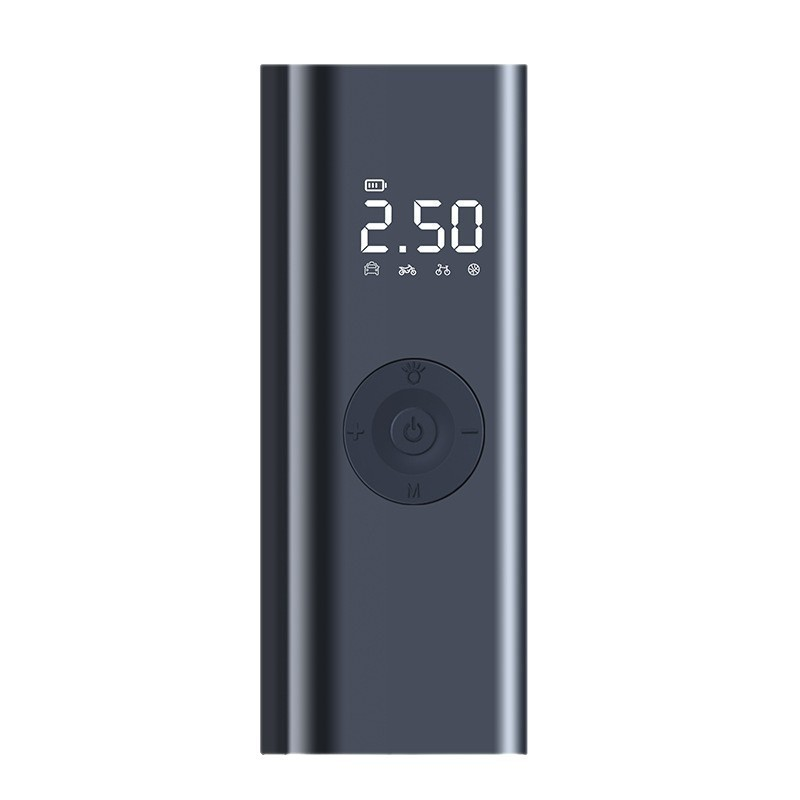
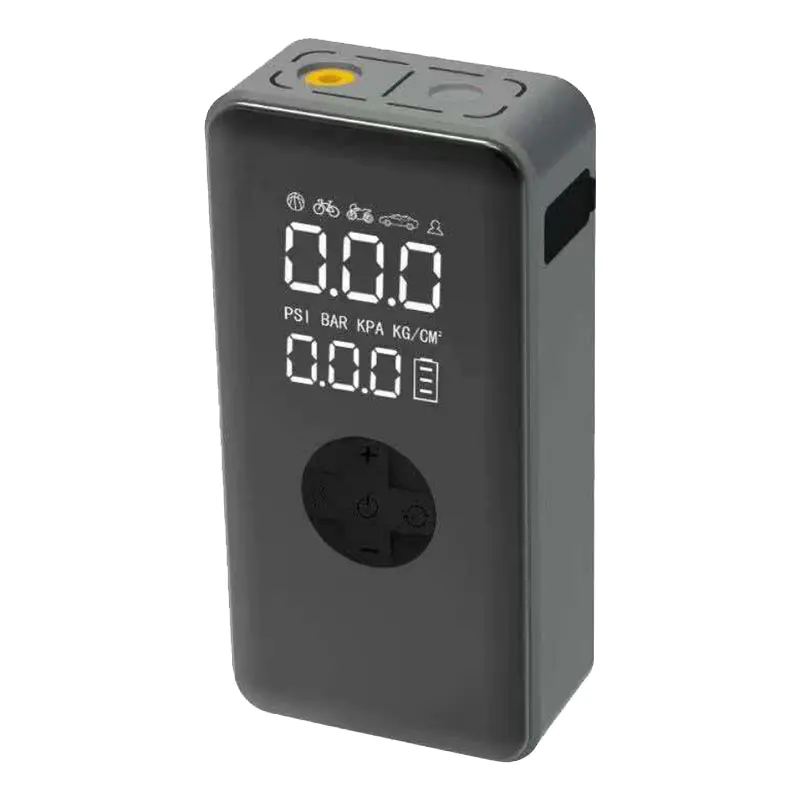
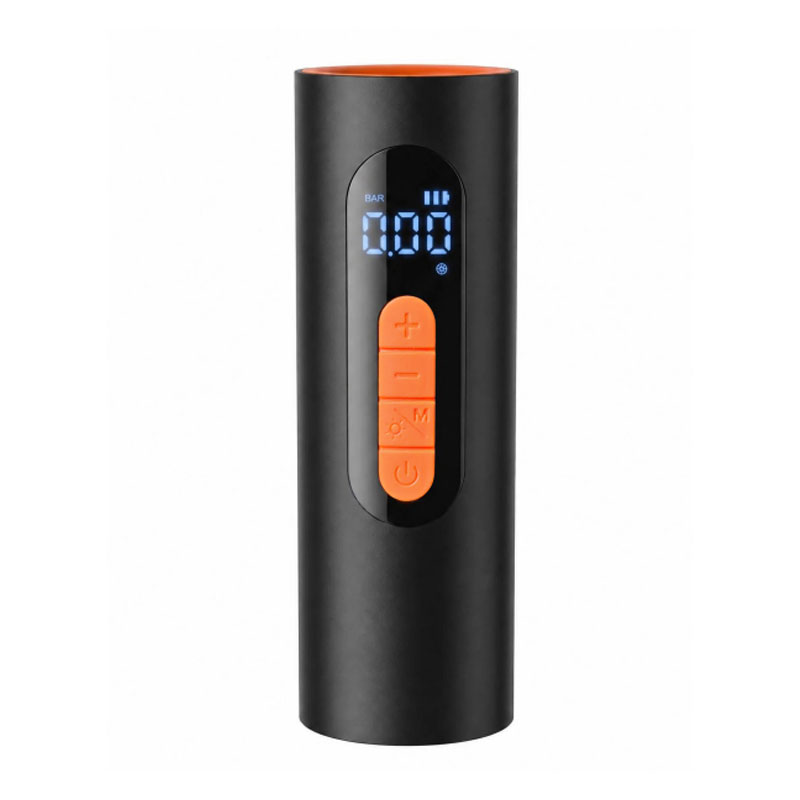
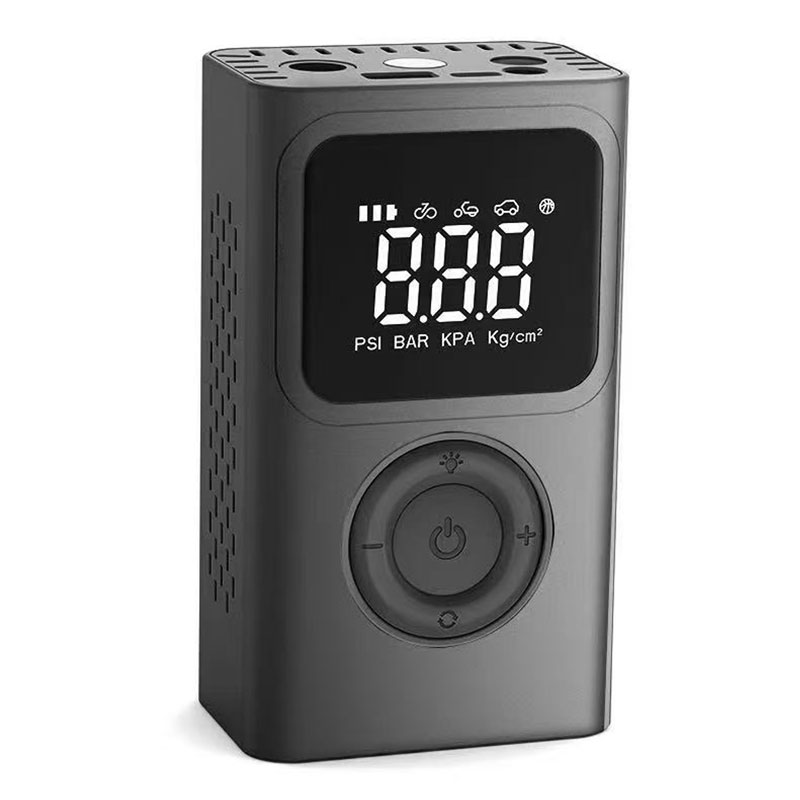
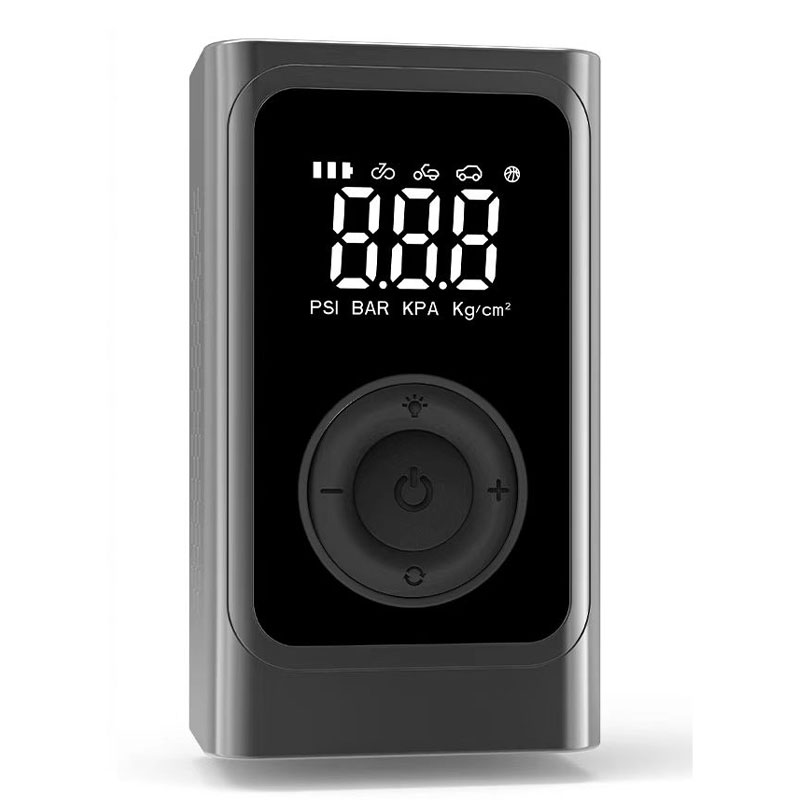
 SX-305 Multifunctional Jump Starter with Wireless InflatorCombines emergency jump starting with a 150 PSI inflator, USB output and lighting, backed by an 8000mAh battery and 1,000A peak current.View Product →
On the manufacturing side, this category is built around three modules — a battery pack, a piston pump and a control board — which is why suppliers with in-house casting and machining can tune the pump and the housing together instead of assembling bought-in parts. A short overview of the full 12V jump starter range shows how the same platform is reconfigured by cell capacity, pump size and housing.
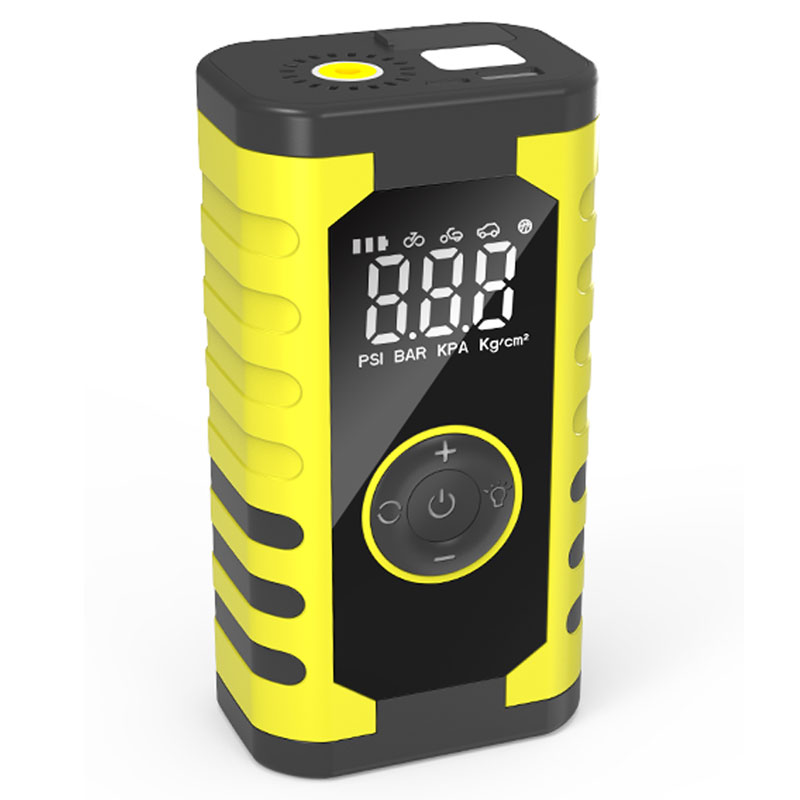
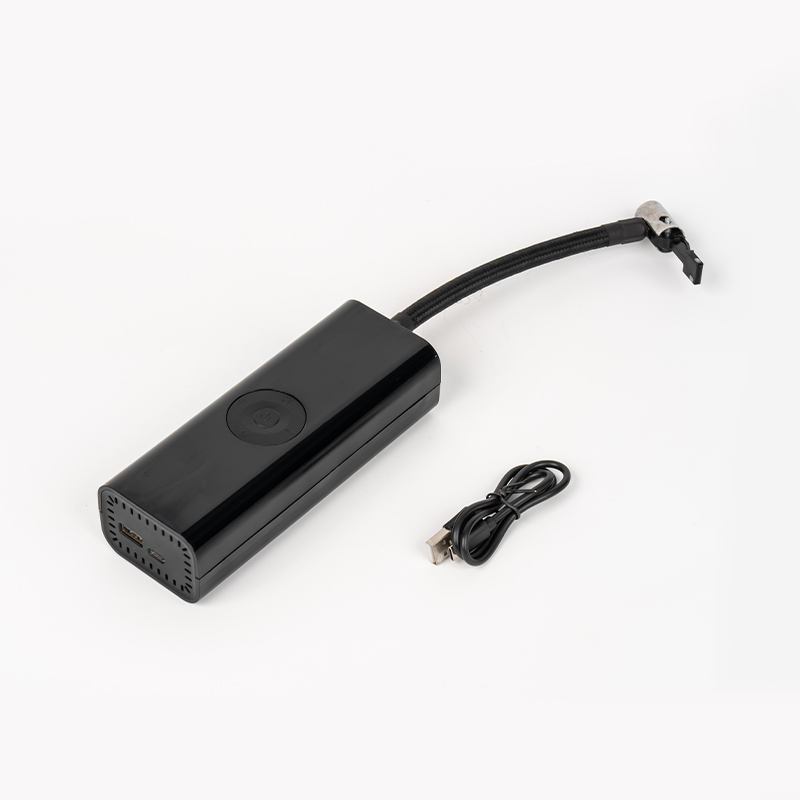 High-performance SX-306 Multifunctional wireless inflator/jump starter deviceMultifunctional device suitable for camping or field survival, fit for various extraordinary conditions, long endurance, and big powerView Product →
| Model | Function set | Typical fit |
|---|---|---|
| SX305 | Jump start, wireless inflation, USB output, lighting | Sedans and compact SUVs; everyday roadside kit |
| SX306 | High-performance jump start with wireless inflation | Larger petrol engines and cold-climate use |
| SX307 | Jump start with wireless inflation | Balanced carry size for mixed fleets |
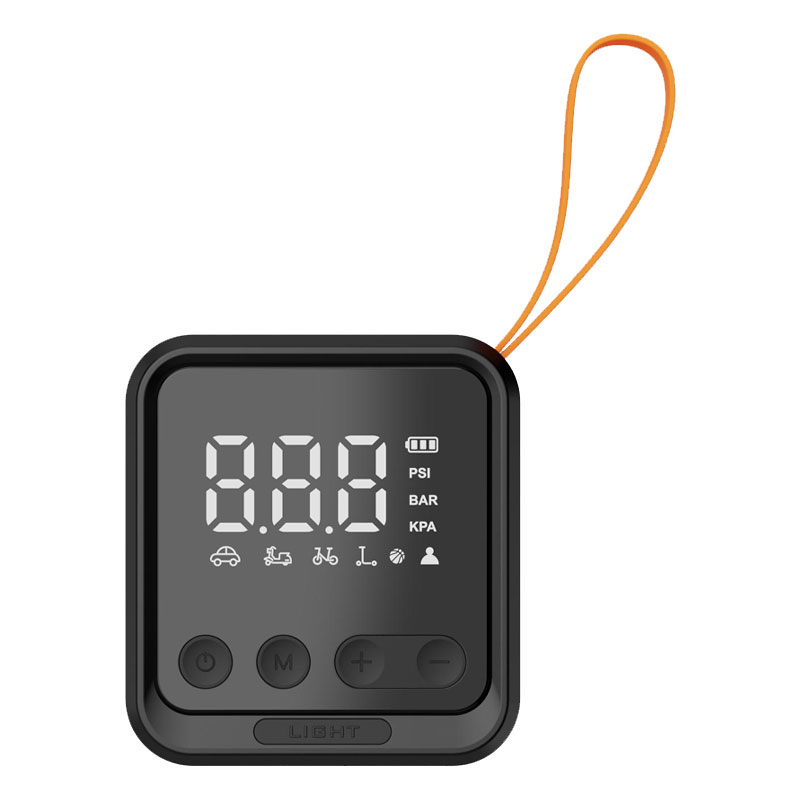
 SX-307 Wireless Inflator and Jump Starter DeviceA customizable 6000mAh jump starter and wireless inflator with preset pressure control, 500A starting current and 1,000A peak for varied vehicle classes.View Product →
For buyers assembling a private-label programme, the useful question is not "which is best" but "which engine class is this SKU aimed at". A pack sold into a market dominated by 1.5 L petrol cars should not carry the cost of 1,500 A hardware; a pack sold to pickup and van owners cannot afford to skimp on it.
Buying in Volume: What Importers Should Verify
Specification sheets are the start of a supplier conversation, not the end of one — insist on test data for clamps, cells and protection circuits before a container is booked.
- Cell source and grade: ask for the cell datasheet and whether the pack uses matched cells from a single batch.
- Protection board testing: reverse polarity, short circuit and over-temperature behaviour, demonstrated rather than described.
- Clamp and cable joint: pull test and a salt-spray result if the product is sold in coastal or winter-salt markets.
- Cycle and drop testing: repeated charge-discharge plus carton drop results, since roadside products live a hard life.
- Packaging and labelling: language variants, warning icons and shipping documentation for lithium cells.
- Logistics: a factory within roughly 90 km of Ningbo port shortens inland transit and simplifies consolidated shipments.
A supplier with its own foundry, CNC shop and test laboratory can usually answer these questions with documents rather than assurances, which shortens the approval cycle considerably.
How to Use a 12V Jump Starter Correctly
Correct order matters more than force: connect, check, crank briefly, disconnect — and never leave the pack connected after the engine catches.
- Switch off lights, radio and climate control before cranking.
- Connect the red clamp to the positive terminal and the black clamp to a solid ground point or the negative terminal.
- Wait for the pack to confirm correct polarity; if an alarm sounds, stop and swap the clamps.
- Crank for no more than 5–6 seconds, then pause 30–60 seconds before a second attempt.
- Once the engine runs, remove the black clamp first, then the red.
- Recharge the pack within a day or two; a depleted pack left flat loses capacity permanently.
Frequently Asked Questions
Can a 12V jump starter start a diesel engine?
Yes, if the pack is rated well above the diesel's cranking draw — typically 1,000 A peak and up for engines below 3.0 L, with more headroom in cold weather. Small petrol-oriented packs usually stall on the first compression stroke.
How many jumps can I get from one charge?
Most healthy packs manage several consecutive starts on a mid-size petrol engine, but the honest answer depends on temperature, engine size and pack age. Treat three to five starts as a realistic planning figure and recharge immediately afterwards.
Will a jump starter damage the car's electronics?
A well-built unit will not, because the output is clamped and the connection is brief. Risk comes from reverse polarity, from cheap packs without protection boards, and from cranking attempts far longer than the starter was designed for.
Does the pack stop charging on its own?
Most reputable units do cut off at full charge, but behaviour varies by design — this note on how a jump starter handles a full charge explains what to check. If the specification does not state a cut-off, assume you must unplug it.
Is an inflator worth having on the same device?
Yes for private cars and light commercial fleets, where a slow puncture and a flat battery are equally likely. For heavy or off-road use, a dedicated higher-volume compressor still performs better on large tyres.
Choose the pack by the engine it has to turn, then check the cable, the clamp and the protection board — those three decide whether the rating on the label ever reaches the starter. Capacity, storage habits and a recharge reminder keep it usable two winters later, and a combined inflator model simply removes one more item from the list of things that can go wrong at the roadside.