 English
 Español
 عربى
 Türk
A 150 PSI tire inflator is a portable air pump whose maximum rated output is 150 pounds per square inch, roughly four to five times the pressure a normal passenger tire actually carries. That headroom is deliberate. The rating is a ceiling, not a working point, and it says more about seals, cylinder head and hose construction than about how quickly your tire will fill.
In practice, a compact car with a 33 PSI placard, a crossover at 36 PSI, a light truck at 50 PSI and a trailer tire at 65 PSI can all be serviced by a well-built 150 PSI unit. The pump runs below its limit, which is exactly where airflow, heat build-up and gauge accuracy stay comfortable. Trouble starts when buyers read the number as a performance score and ignore flow rate, duty cycle and gauge tolerance.
Content
- What the 150 PSI Rating Actually Measures
- Matching the Rating to the Tires You Actually Service
- Where a 150 PSI Inflator Is Enough, and Where It Is Not
- Single Cylinder, Double Cylinder or Cordless
- What to Check Before You Buy or Specify
- Sourcing Notes for Brand Owners and Importers
- Frequently Asked Questions
What the 150 PSI Rating Actually Measures
The 150 PSI figure is a deadhead maximum: the highest pressure the pump can build with the outlet closed, measured at the pump rather than at the valve stem. Once air moves into a tire, the only number that matters is the gauge reading, and delivery falls as back pressure rises.
- Rating is not flow. Two 150 PSI pumps can differ by a factor of two in cubic feet per minute at 30 PSI, which is the band where most tires live.
- Rating is not accuracy. A unit with a plus or minus 3 PSI analog gauge is a different tool from one with a digital gauge holding plus or minus 1 PSI, even when both print the same headline number.
- Rating hints at duty cycle. Pumps engineered for a 150 PSI ceiling usually carry metal cylinder heads, reinforced hose and thermal cutouts, because reaching that ceiling generates heat fast.
Matching the Rating to the Tires You Actually Service
A simple rule covers almost every buyer: pick a maximum rating at least three times the highest target pressure you expect to set. That keeps the pump efficient, limits heat and leaves margin for cold weather and altitude.
| Application | Typical target pressure | Sensible max rating |
|---|---|---|
| Passenger car (P-metric tire) | 30 to 36 PSI | 100 to 150 PSI |
| SUV and crossover | 33 to 39 PSI | 120 to 150 PSI |
| Light truck, van, LT tire | 45 to 65 PSI | 150 PSI |
| Trailer and small RV | 50 to 80 PSI | 150 PSI, in stages |
| Motorcycle | 28 to 42 PSI | 100 to 150 PSI |
| Bicycle | 40 to 90 PSI | 120 to 150 PSI |
| Sports balls, air mattresses | 5 to 15 PSI | Any, with a low-pressure adapter |
Two rows deserve a note. An 80 PSI trailer tire sits close enough to the ceiling that a single-cylinder pump runs hot and slow, so plan on inflating in stages. Bicycle tires are the opposite case: modest pressure, tiny volume, so a high-flow pump needs a careful trigger hand to avoid overshoot. This guide to choosing an inflator for different tire types covers those edge cases in more detail.
Where a 150 PSI Inflator Is Enough, and Where It Is Not
For passenger cars, crossovers and most light trucks a 150 PSI inflator is genuinely sufficient; it becomes the wrong tool only when the job demands sustained volume or continuous duty.
What it handles well
- Routine top-ups after a cold night, when pressure drops about 1 PSI per 10 degrees Fahrenheit.
- Sealing a slow puncture long enough to reach a service bay.
- Seasonal changes on two vehicles plus a bicycle and a set of sports balls.
Where it runs out of margin
- Large LT tires taken from completely flat to 65 PSI in one continuous run.
- Air tools, spray guns or anything needing stored volume rather than peak pressure.
- Continuous duty across six or eight tires without a cooling break.
Time expectations matter more than spec sheets admit. A typical 12 V single-cylinder pump moves roughly 0.5 to 0.7 CFM at 30 PSI, so a top-up from 28 to 35 PSI on a 225/65R17 tire takes two to three minutes. From flat, expect six to nine minutes plus cooling time. A double-cylinder unit cuts that by roughly a third.
Single Cylinder, Double Cylinder or Cordless
Cylinder count and power source decide how the inflator behaves in real use, far more than the 150 PSI headline does.
| Format | Power source | Strength | Trade-off |
|---|---|---|---|
| Single cylinder, 12 V | Cigarette lighter socket | Compact, low cost, easy to stow | Slower on LT tires; limited by a 15 A fuse |
| Double cylinder, 12 V | Battery clips | Faster fill, better heat tolerance | Bulkier, higher current draw |
| Lithium cordless | Internal battery | No cord, works anywhere | Battery aging, lower peak flow |
| Jump starter combo | Internal battery | Inflation, jump start and light in one | Heavier, higher unit cost |
If the end user tows, hauls or drives a van, the double-cylinder layout is the safer recommendation: the second piston spreads heat and shortens fill time above 50 PSI. A toolbox-integrated example is the SX201, which pairs a 12 V double-cylinder pump with battery clips so it draws directly from the battery instead of through a fuse-protected socket.
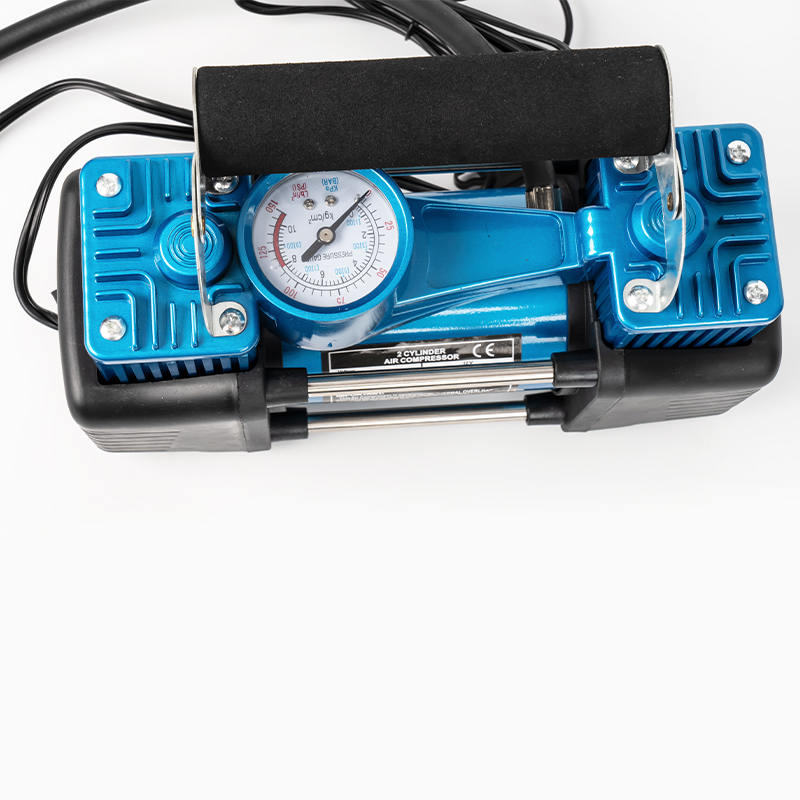 SX-201 Double cylinder air compressor + toolboxTwin-cylinder air compressor, high flow and pressure ensure continuous operation and large-capacity tire inflation, LED lighting makes it easier to work in dark areas ...View Product →
What to Check Before You Buy or Specify
Six checks separate a 150 PSI inflator that survives three winters from one that disappoints in the first.
- Gauge tolerance. Demand a stated figure, typically plus or minus 1 PSI for digital and plus or minus 2 to 3 PSI for analog.
- Flow at 30 PSI, not at zero. Ask for CFM or liters per minute at working pressure.
- Duty cycle. Ten minutes on, ten minutes off is common for 12 V single-cylinder units; verify it in writing.
- Power path. Socket-powered units are convenient but fuse-limited; clip-on units deliver more current for big tires.
- Hose and cord length. Around 3 m of power cord and 0.6 m of hose reaches all four wheels on most sedans.
- Storage and accessories. A molded toolbox, a needle adapter and a presta adapter prevent the pump from becoming loose clutter.
For a baseline 12 V single-cylinder unit covering passenger cars and light SUVs, the SX203 is a sensible benchmark: 150 PSI maximum, optional digital display, and a body sized to live in the trunk without complaint.
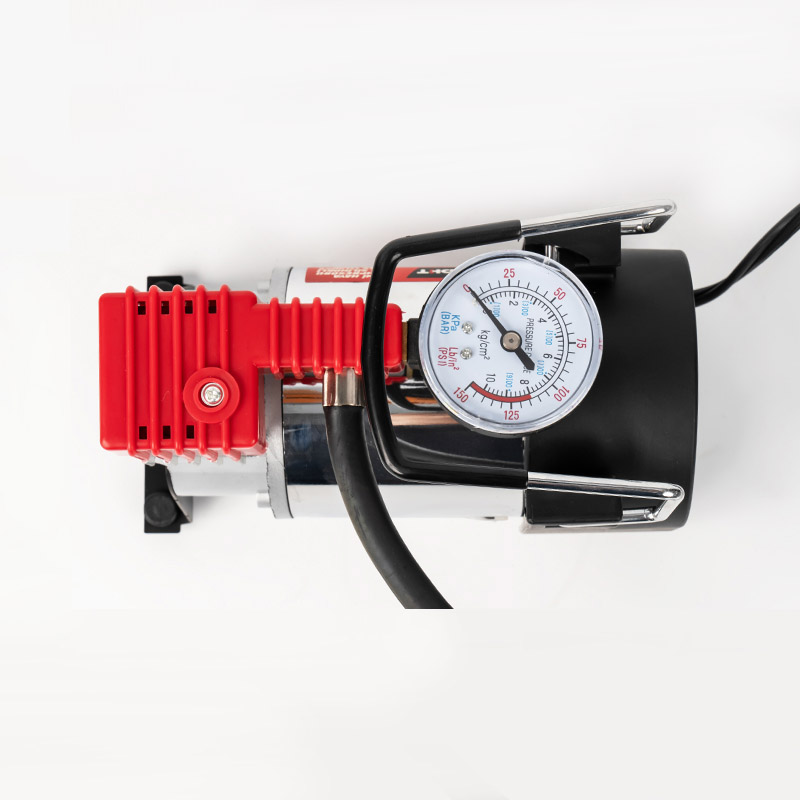 SX203 12V Single-Cylinder Tire InflatorA baseline 150 PSI, 12 V single-cylinder inflator with optional digital display, sized for trunk storage and suitable as a private-label benchmark.View Product →
Sourcing Notes for Brand Owners and Importers
Once a 150 PSI inflator becomes a private-label SKU, the questions shift from which model to which combination, at what tolerance, and how consistently it repeats across shipments.
Three items usually decide whether a program runs smoothly. First, gauge calibration: a display that drifts 3 PSI across a batch generates returns that cost more than the unit. Second, hose and seal durability at the pressure ceiling, since repeated deadhead runs are what kill cheap pumps. Third, packaging and accessory kits, which drive perceived value in retail channels far more than a few extra PSI of headroom.
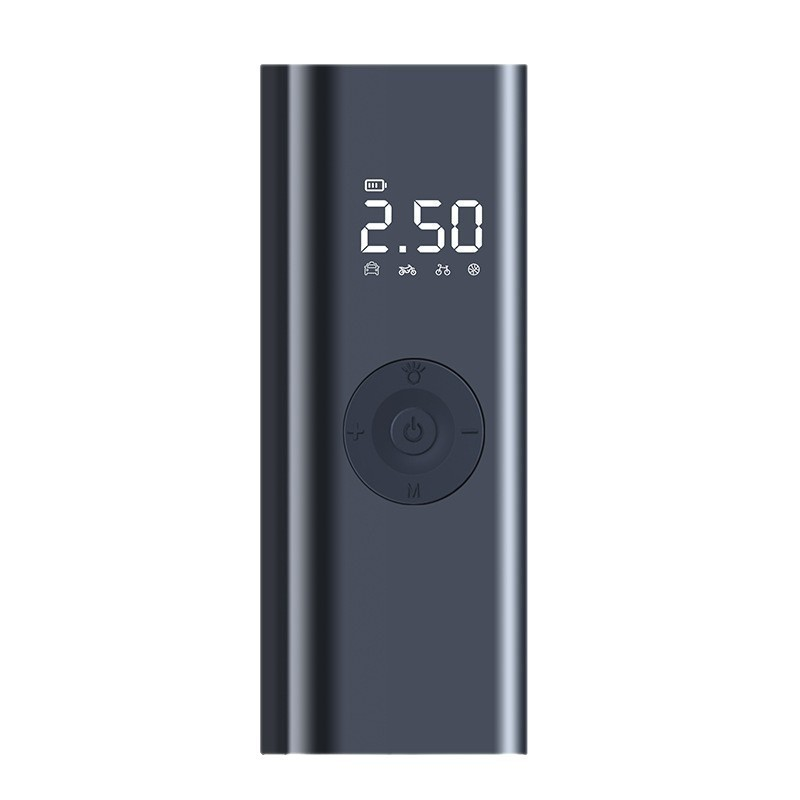
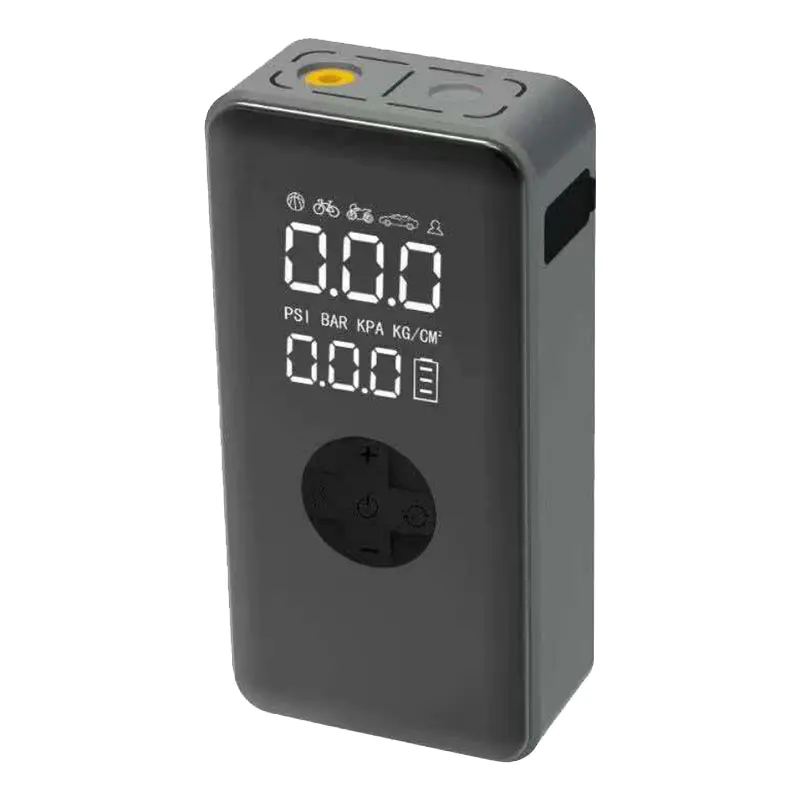
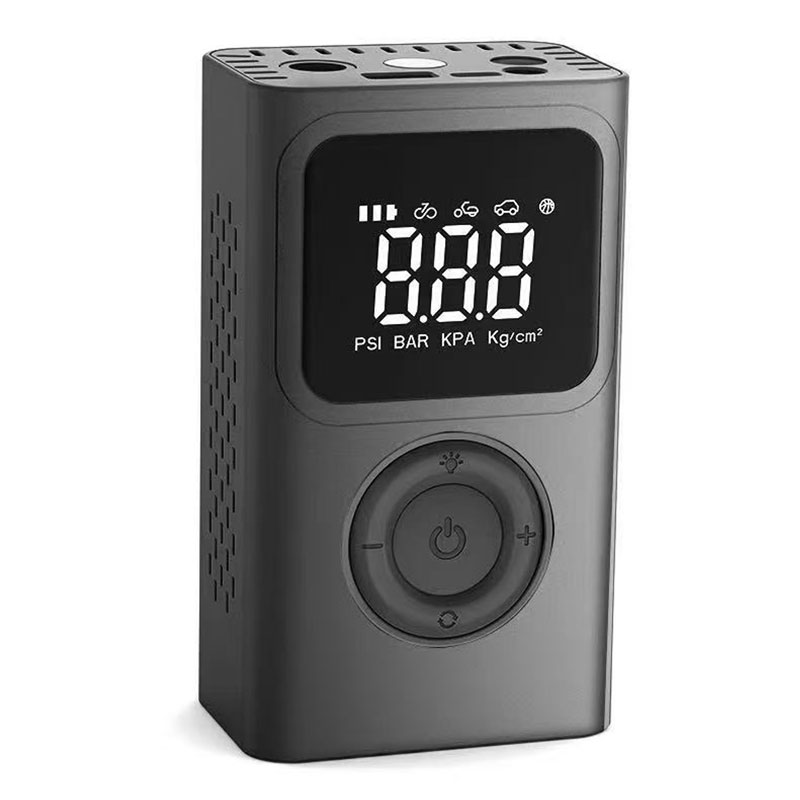
A cordless platform such as the SX301, with fast inflation and a larger battery capacity, fills the shelf space between a basic 12 V pump and a full jump-starter combo, and it is often the SKU that carries a premium price.
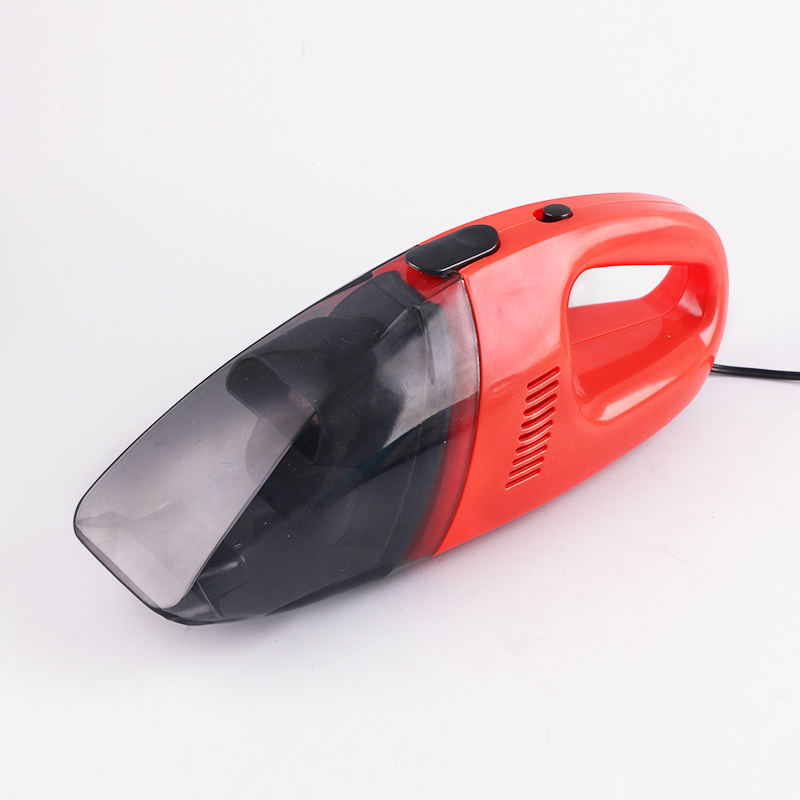 SX301 Cordless Digital Mini Air CompressorA portable lithium-battery inflator with digital pressure display and fast inflation, filling the gap between basic 12 V pumps and jump-starter combos.View Product →
Manufacturing depth matters here. Our vehicle-mounted air compressor range is produced in a 7,000 square meter plant with two in-house foundries, a CNC machining shop and an on-site test laboratory, roughly 90 km from Ningbo port, which keeps tooling changes, batch testing and export scheduling in one chain rather than three.
Frequently Asked Questions
Is 150 PSI too much for a car tire?
No. The rating is the maximum the pump can produce, not the pressure it delivers. You set the target on the gauge or preset dial, usually 30 to 36 PSI for a passenger car, and the pump stops there.
How long does a 150 PSI inflator take to fill a tire?
About two to three minutes for a top-up from 28 to 35 PSI on a mid-size tire, and six to nine minutes from completely flat. Double-cylinder and higher-flow cordless units cut that by roughly a third.
Can it inflate a light truck tire to 65 PSI?
Yes, but respect the duty cycle. Run five to eight minutes, let the cylinder head cool, then continue. A double-cylinder pump with battery clips handles the workload with less strain.
Does cold weather change the reading?
Tire pressure falls about 1 PSI for every 10 degrees Fahrenheit drop, so a tire set at 35 PSI in summer may read near 30 PSI in winter. Inflate to the placard value in ambient conditions and recheck once the tire warms.
Why does the pump gauge disagree with the car's TPMS?
Two gauges, two tolerances. TPMS sensors typically sit within 1 to 2 PSI, while a low-cost analog inflator gauge can be off by 3 PSI. A digital gauge with a stated plus or minus 1 PSI tolerance removes most of that doubt.
Can a 150 PSI inflator run air tools?
No. Air tools need sustained volume, and a portable tire inflator has neither the tank nor the duty cycle for that job.