 English
 Español
 عربى
عربى Türk
TürkA portable air compressor for RV tires is the difference between a ten-minute roadside stop and a trip cut short by a low-pressure steer tire. The short answer: choose a unit rated for at least 150 PSI, a duty cycle of 50 percent or higher, a flow rate near 40 L/min, and a digital gauge that shuts off automatically at the preset pressure. Many inflators marketed primarily for passenger cars never reach the pressures RV tires need, and even those that do cannot sustain the long runtimes that large tire volumes demand. This guide explains the performance numbers, power-source choices, and real-world scenarios you should weigh before buying.
Content
Why RV Tires Are a Different Inflation Problem
RV tires routinely run 65–120 PSI depending on axle load and tire size, while passenger tires run 30–35 PSI. They also hold far more air: a single 22.5-inch truck-style RV tire may contain three to four times the volume of a typical passenger tire. Cold weather adds another 1–2 PSI drop for every 10°F of temperature change. The result: an inflator that works fine for a car will stall, overheat, or simply top out below the pressure your RV tires need. Treat RV inflation as a continuous-duty job rather than a quick top-off.
Key Specs That Separate RV-Grade Compressors from the Rest
Start with four numbers: maximum pressure, duty cycle, flow rate, and gauge accuracy. These numbers decide whether a compressor can finish the job or quit halfway through the third tire.
| Specification | Minimum for RV Use | Why It Matters |
|---|---|---|
| Max pressure | 150 PSI | RV tires can require 110–120 PSI; headroom keeps the pump in an efficient range. |
| Duty cycle | 50–100 percent | Controls how long the motor can run before overheating; needed for four to six tires in a row. |
| Flow rate | 30–40 L/min | Cuts inflation time on high-volume tires. |
| Gauge accuracy | ±1 PSI | Prevents over-inflation and under-inflation, which cause uneven wear and blowout risk. |
| Auto shut-off | At preset pressure | Stops the fill automatically, so you can move between tires without watching the gauge. |
If the manufacturer does not publish a duty-cycle figure, assume the unit is a short-duty product and plan cooling breaks between tires. The pressure rating alone does not make a compressor suitable for RV use; the motor and cooling design determine whether it can hold output under continuous load. To connect each specification with a real use case, the guide to key features to look for in an automotive tire inflator is a practical reference.
12V Socket, Battery Clips, or Cordless Lithium
The power source determines where the compressor can operate, how much current it can draw, and how long it can run before draining a battery.
- 12V cigarette-lighter socket: works on any vehicle, but socket circuits often limit current to 10–15A. Fine for moderate RV tires, slower on large dual tires.
- Battery-clip direct power: connects straight to the vehicle battery, bypasses a weak socket circuit, and supports higher current draw. The best option for dual-axle trailers and repeated fills.
- Cordless lithium: no vehicle connection is needed, which is valuable when the battery is dead or when you need to walk around the RV. Capacity limits how many tires you can fill per charge.
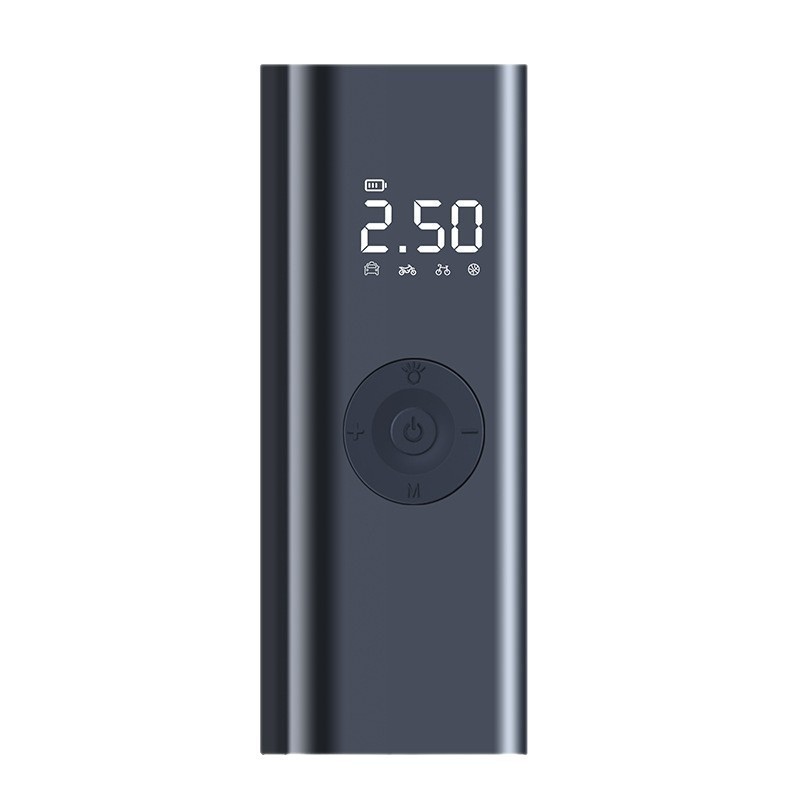
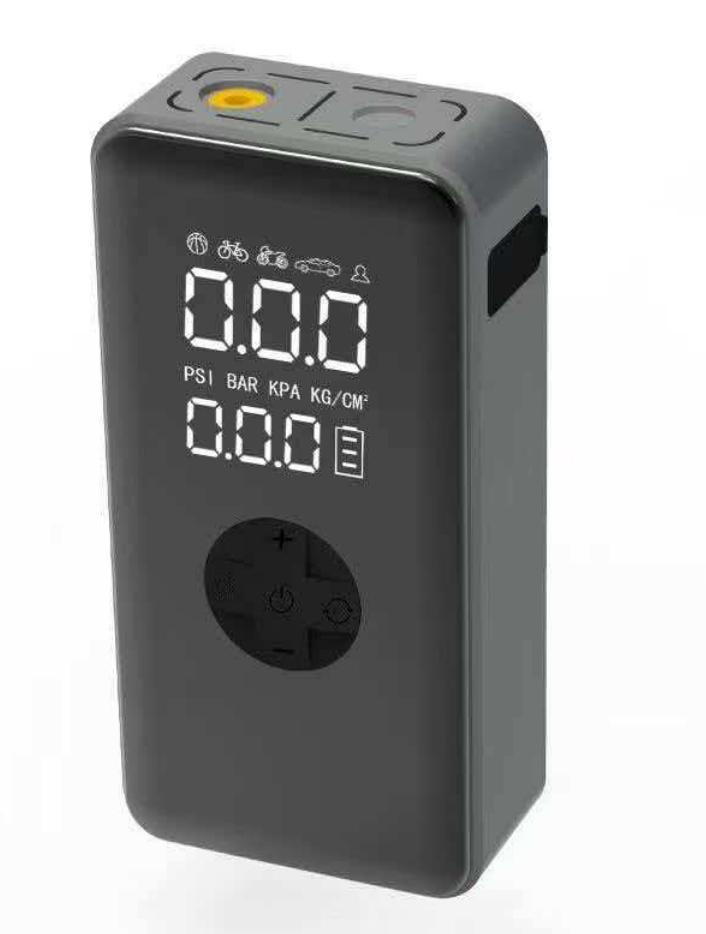
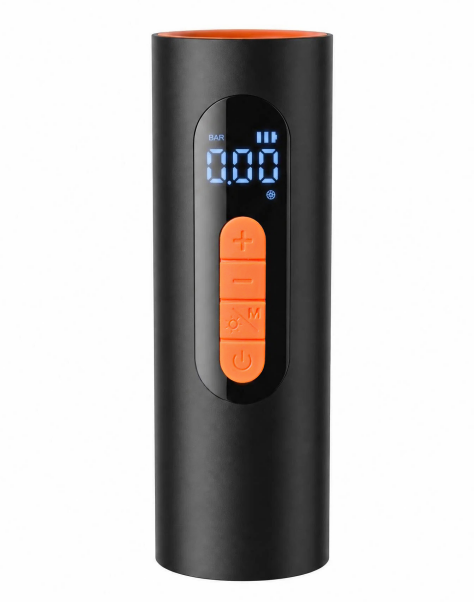
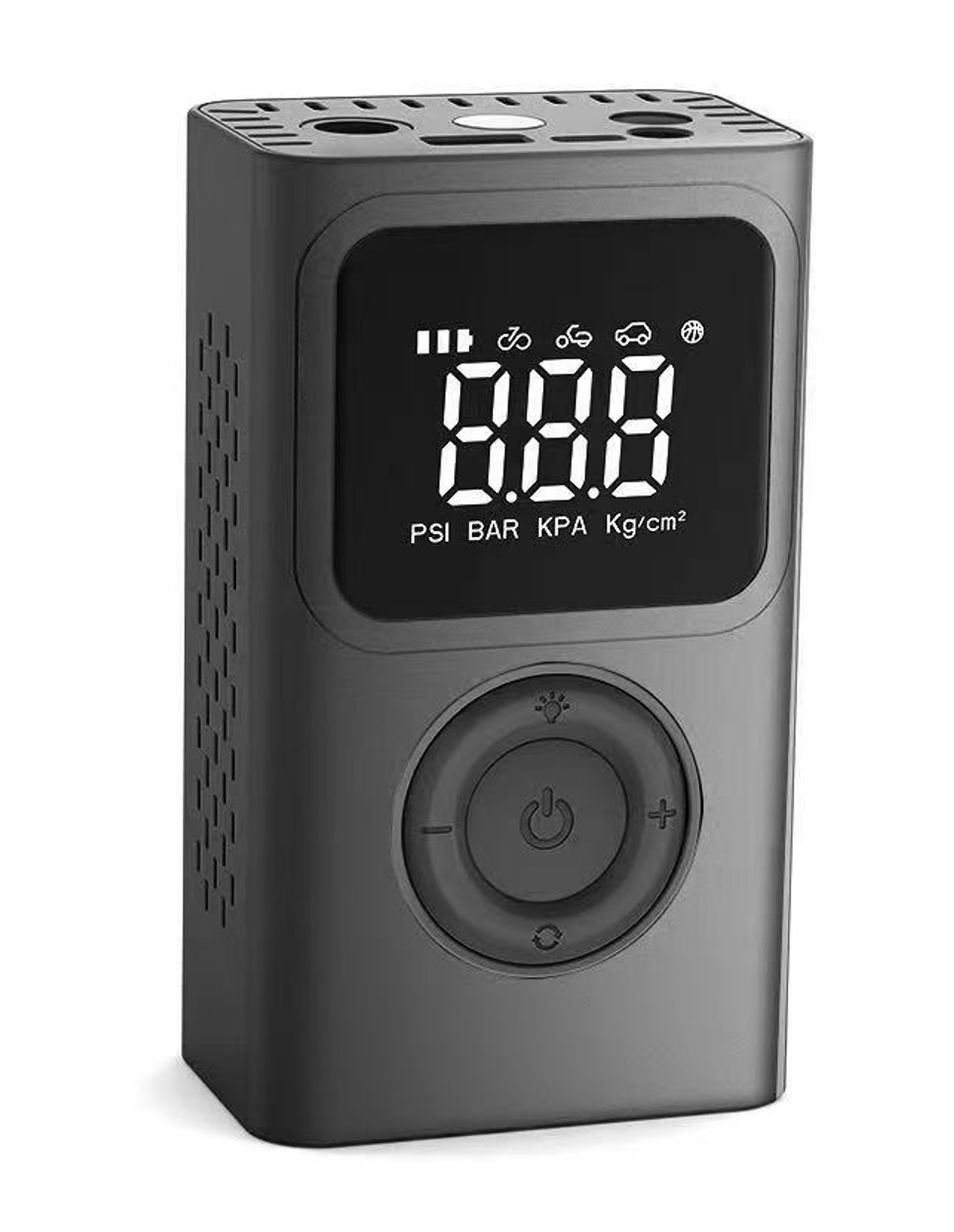
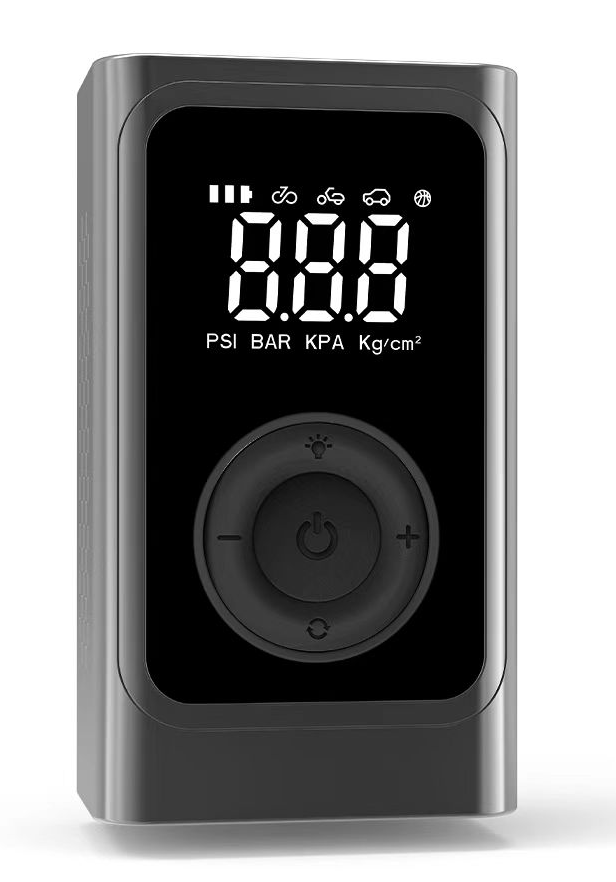
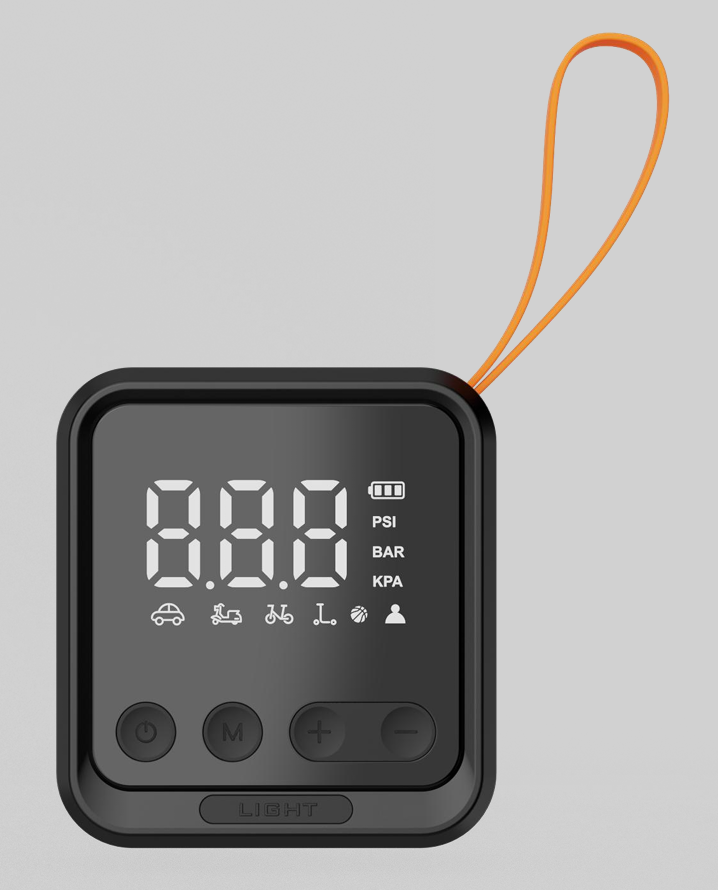
For the dead-battery case, a cordless digital mini air compressor with large battery capacity lets you inflate a low RV tire without running the engine.
 Custom SX-301 Digital mini air compressor, fast inflation and large battery capaAs a China SX-301 Digital mini air compressor, fast inflation and large battery capacity supplier and SX-301 Digital mini air compressor,...View Product →
Roadside Features That Actually Save Time
Once the key numbers are right, practical features decide whether the compressor is pleasant to use on the road or an exercise in frustration.
- Digital pressure gauge with auto shut-off: without it, you will overshoot each tire and have to bleed air back out.
- Hose length of at least 3 m (10 ft): lets you reach inner duals and trailer tires without moving the RV.
- LED work light: a flat tire at dusk is more common than a planned daytime inflation.
- Stable base or vibration-proof feet: keeps the unit from walking off a step or bumper during a long fill.
- Storage case or toolbox: keeps the compressor, hoses, and adapters organized and protected.
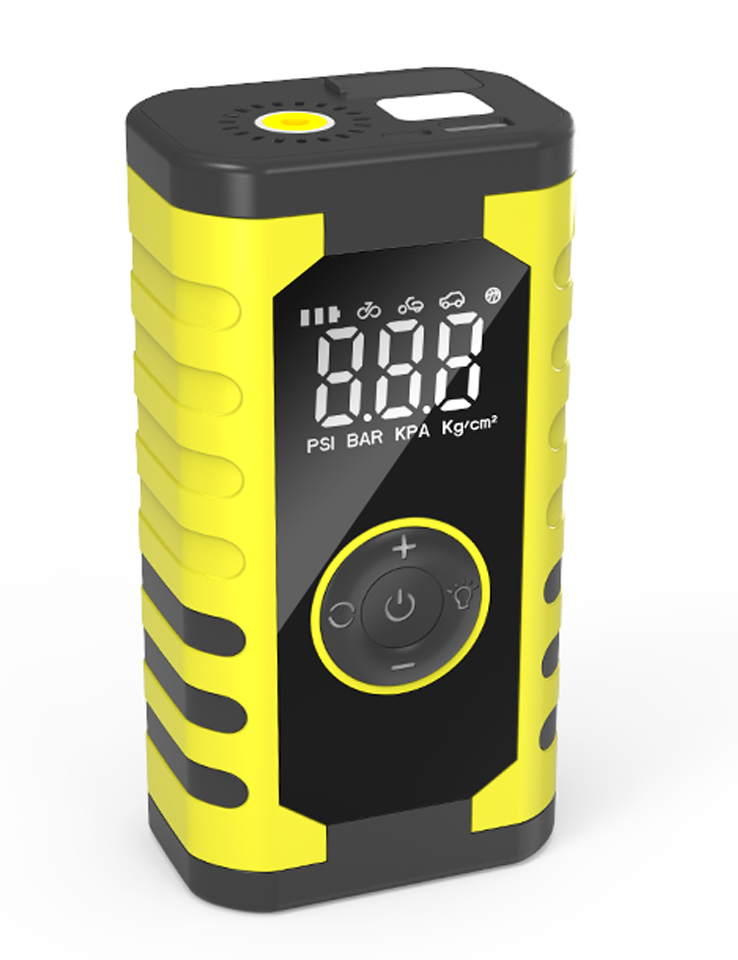
For heavier Class A and truck-style RVs, a heavy-duty 150 PSI air compressor with vibration-proof feet adds a stable base and enough pressure headroom for a loaded motorhome's largest tires.
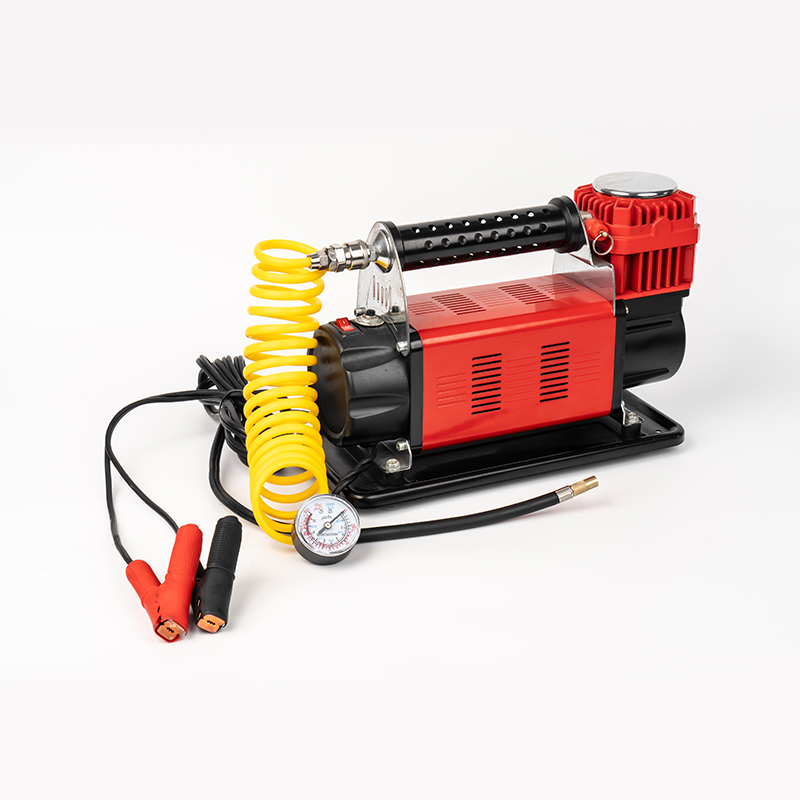 Custom SX-205 Heavy duty air compressor with viboration-proof feet Suppliers, OEAs a China SX-205 Heavy duty air compressor with viboration-proof feet supplier and SX-205 Heavy duty air compressor with viboration-proo...View Product →
Realistic Inflation Scenarios
Set your expectations before you buy; a portable compressor is not a shop-size unit, but the right one will finish the job.
- Pre-trip top-off: four to six tires from 75 to 85 PSI with a 150 PSI compressor at 35 L/min typically takes 8–15 minutes total.
- Cold-morning recovery: tires that lost 3–5 PSI overnight need about 3–5 minutes per tire at freezing ambient temperature.
- Slow-leak getaway: to reach a service center, choose a unit with a high duty cycle so it can run continuously for 10–20 minutes.
- Dual-axle trailers: inner valve stems require a long hose and a compact chuck; a double-cylinder unit shortens fill time considerably.
For dual-axle trailers and larger rigs, a double-cylinder air compressor toolbox with battery clips delivers higher flow, faster fills, and a storage box that keeps accessories together.
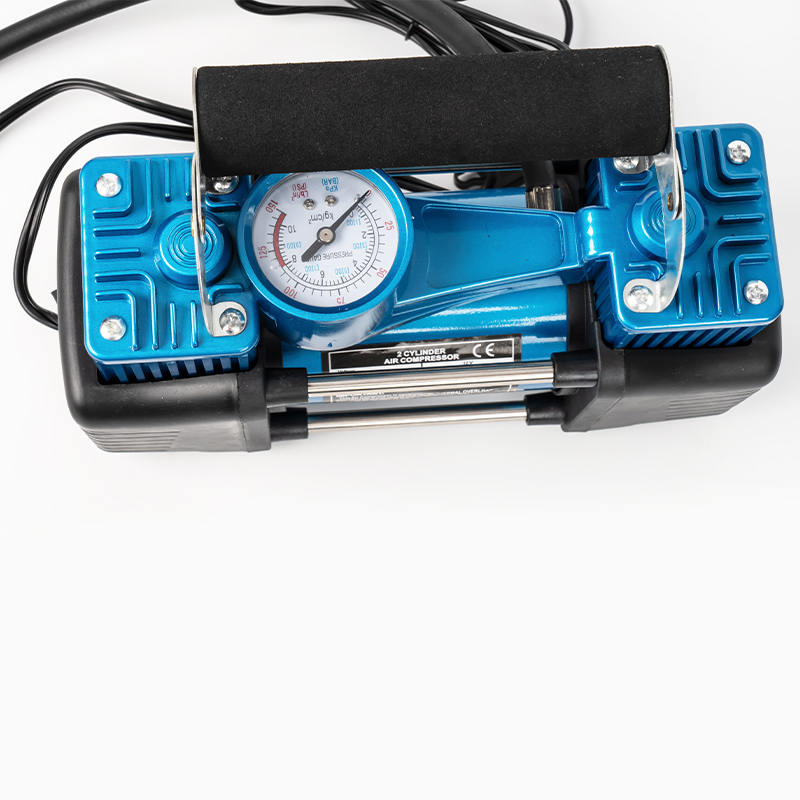 Custom SX-201 Double cylinder air compressor + toolbox Suppliers, OEM/ODM CompanAs a China SX-201 Double cylinder air compressor + toolbox supplier and SX-201 Double cylinder air compressor + toolbox OEM/ODM company, ...View Product →
Safety and Maintenance Tips
Safe inflation and a long service life come down to a few habits.
- Use the pressure on the vehicle's tire placard, not the maximum pressure printed on the tire sidewall.
- Inflate cold tires only; a hot tire reads higher than its true cold pressure.
- If the duty cycle is 50 percent, fill two tires and let the unit cool for an equal period before continuing.
- Clean the hose fittings and air filter periodically, especially after dusty camping trips.
- Store the compressor in a dry compartment; moisture inside a pump shortens motor life.
Matching the compressor to the tire type and load range is equally important, so the article on choosing the right inflator for different types of tires is worth reading before you settle on a final model.
FAQ: Portable Air Compressors for RV Tires
Can a 12V portable compressor really inflate an RV tire to 110 PSI?
Yes, if the unit is rated to at least 150 PSI and the socket circuit can supply the required current. Many 12V socket models are capped around 10A, which slows the fill but does not prevent it. Battery-clip models deliver more current and complete the same job faster.
Why does my inflator stop before reaching the target pressure?
The motor likely tripped a thermal breaker, which is the classic symptom of insufficient duty-cycle capacity. Let the unit cool down, or select a model with a 100 percent duty cycle for RV service.
Do I need 150 PSI if my RV tires only need 80 PSI?
Yes. The 150 PSI headroom keeps the pump in its efficient operating range during long fills, reduces motor strain, and lets the same compressor handle mixed fleets with different pressure requirements.
How long does it take to fill a completely flat RV tire?
Expect roughly 10–20 minutes from zero to 80 PSI with a 35–40 L/min compressor, depending on tire volume. This is exactly why short-duty-cycle units are unsuitable for emergency flat-tire service.
Cordless or corded: which is more reliable for RV travel?
Corded units, powered by battery clips or a 12V plug, are more reliable for sustained, high-volume inflation. Cordless units are best for one-tire emergencies and situations where vehicle power is unavailable. Many RV owners carry one of each.