 English
 Español
 عربى
عربى Türk
TürkTwo 12-volt portable air compressors can both be stamped 150 PSI, sit in the same price band, and still behave nothing alike at the valve stem. One lifts a 225/60R16 from 28 PSI to 35 PSI in roughly 90 seconds; the other needs close to three minutes and is noticeably hot when it finishes. That difference is exactly why portable air compressor reviews and ratings are worth your time, and exactly why they are so easy to misread.
The short answer: a rating only means something when it is tied to a stated test condition. In practice that condition reduces to four numbers - the pressure the unit was tested at, the airflow it produced there, the time it took to reach a target pressure, and the duty cycle that says how long it may run before it must cool. If a review publishes none of those, the star score tells you more about the reviewer's expectations than about the compressor.
Two definitions make everything else easier. Working pressure is the pressure a compressor can hold while air is actually moving into a tire. Maximum pressure is usually a peak figure reached with the valve closed and almost no flow left, which is why a 150 PSI label does not promise fast inflation. Duty cycle is the share of time a unit may run before a mandatory cooldown, commonly written as minutes on and minutes off.
Content
What Portable Air Compressor Reviews Actually Measure
Almost every credible rating is built from the same handful of measurements, and only the measured half of that list transfers to your own driveway. Editorial scores usually blend those measurements with subjective impressions such as packaging, manual clarity and value for money, which is why two reviewers can reach different verdicts from identical hardware.
| Measurement | How it is usually reported | What it tells you |
|---|---|---|
| Airflow | CFM at 0 PSI, sometimes CFM at 30 PSI | Flow at 0 PSI flatters a unit; flow at 30 to 40 PSI is what predicts tire inflation. |
| Inflation time | Seconds from 28 to 35 PSI on a named tire size | Comparable only when tire size, start pressure and temperature match. |
| Peak pressure | Maximum PSI with the valve closed | Headroom for a small top-up, not usable flow. |
| Duty cycle | Minutes on, minutes off | How many tires you can fill before heat forces a pause. |
| Gauge accuracy | Deviation against a reference gauge | Whether the automatic shut-off stops at the pressure you set. |
| Noise | dB at one metre | Practical only in a closed garage, on a campsite or at night. |
Two rows do most of the work. Flow at a stated pressure decides how quickly the tire reaches target, and duty cycle decides how many tires you get before a rest. A unit can post an impressive peak pressure and still feel slow, because peak pressure is recorded with almost no air moving.
Why the Same Compressor Earns Different Ratings
The largest single reason two reviewers score identical hardware differently is that they tested it on different tires, at different temperatures, starting from different pressures, so a rating is a result rather than a fixed property of the product.
| Test setup | Start pressure | Ambient | Time to 35 PSI | Likely verdict |
|---|---|---|---|---|
| Bench test, first tire of the session | 30 PSI | 22 C | Fast, close to best case | Highly recommended |
| Cold morning driveway | 26 PSI | 0 C | Noticeably longer | Solid but slow |
| Third tire in a row, sun-exposed pavement | 20 PSI | 35 C | Longest, pump running hot | Criticised for overheating |
Before you trust any star score, check four things in the method section:
- Which tire size and load rating was used, because a light passenger tire and a light-truck tire demand very different air volume.
- The starting pressure, since 20 to 35 PSI takes far more air than a 30 to 35 PSI top-up.
- Ambient temperature, and whether more than one tire was inflated in a single run.
- Whether the reading came from the unit's own gauge or an independent reference gauge.
The Four Specifications That Predict Real Performance
If you compare only four numbers, compare flow at 30 to 40 PSI, duty cycle, gauge accuracy and total weight with the hose attached, because those four decide how the unit behaves on your car rather than on a test bench.
Flow is the number most often obscured. A 12-volt single-cylinder pump rated at 150 PSI and a double-cylinder pump with the same 150 PSI ceiling are not interchangeable; the twin-cylinder layout moves roughly twice the air per stroke, which is why it finishes a 235/75R15 far sooner even though the pressure label on the box matches. Duty cycle is the second filter, and a 10-minutes-on, 10-minutes-off rating is fine for one tire yet awkward when you are topping up four before a trip.
Gauge accuracy deserves more attention than it usually gets, because the automatic stop point is the feature you will rely on every week. Independent checks of handheld inflator gauges have repeatedly found deviations of one to three PSI, which matters when your door sticker says 33 PSI. A closer look at how accurate automotive tire inflators are for measuring tire pressure covers the calibration question in more depth.
Double-cylinder designs also change the mechanical side of the experience. A unit such as the SX211 pairs its twin-cylinder pump with a high-intensity LED, which helps when the soft tire is discovered in a dark car park, and the extra airflow per stroke shortens run time enough that the housing has less opportunity to soak heat. Weight is the trade-off you accept, and it is the fourth specification worth weighing carefully: a heavier compressor with a long hose is faster to use than a light one you have to hold in place.
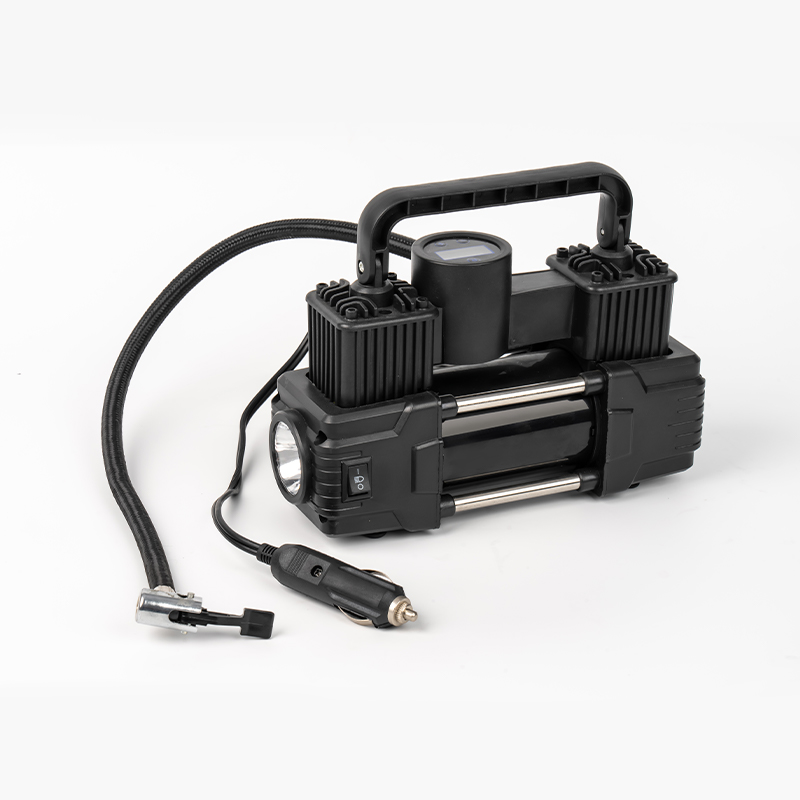 SX-211 Double-Cylinder Vehicle Air Compressor with LED LightDouble-cylinder 12V tire inflator with LED lighting, metal cylinder, copper motor, and 60L/min airflow; useful for night roadside inflation and faster flat-tire recovery.View Product →
Where Ratings Break Down in Emergency Use
A rating produced on a warm workshop bench tells you very little about a roadside flat at night in winter, when a cold battery delivers less current and a fully flat tire needs the largest volume of air.
Three factors separate a fair-weather top-up from a genuine roadside tool. The first is volume: taking a tire from fully flat to 30 PSI can require several times the air of a routine top-up, which is precisely when duty cycle and heat become limiting. The second is the power source, because a 12-volt unit running from a partly discharged battery works harder than one running from a healthy alternator. The third is reach, since the valve you need may sit on the far side of the vehicle or on a trailer.
That is why integrated devices change the maths: the same pack that starts a flat battery also runs the pump, removing two variables at once. In this class the SX306 multifunctional wireless inflator and jump starter is rated on battery capacity and inflation volume rather than peak pressure alone, and the manufacturer's stated airflow figures are a more useful buying signal than a decorative 150 PSI badge.
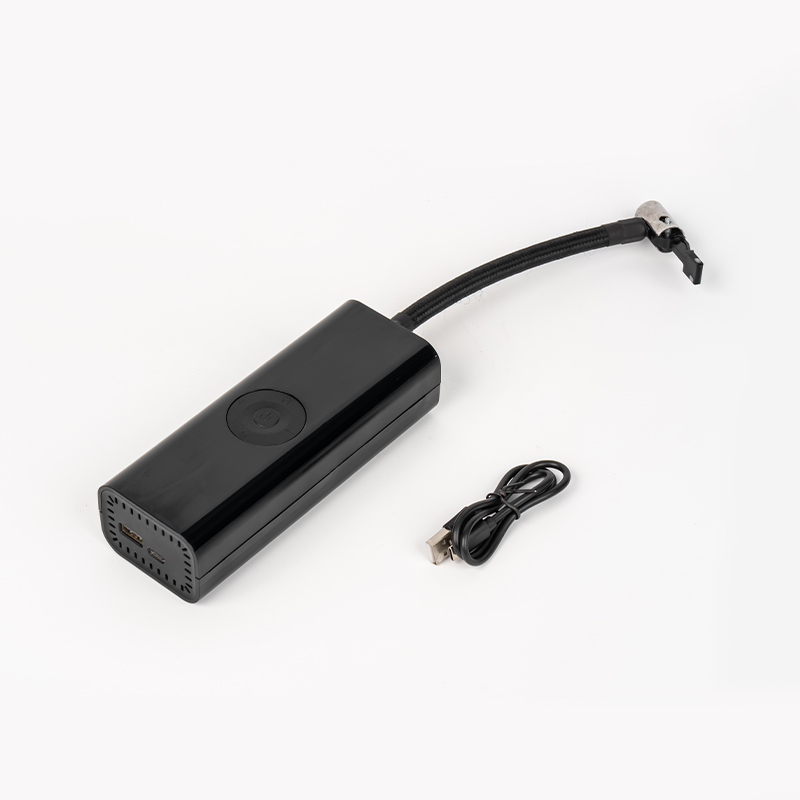 SX-306 Multifunctional Wireless Inflator and Jump Starter8000mAh portable jump starter and 100Psi inflator with USB charging and LED light; useful for camping, emergency starts, and keeping devices powered.View Product →
Matching a Rating to Your Own Use Case
The rating that matters is the one produced under conditions closest to your own routine, so the first step is deciding whether you are maintaining pressure or recovering from a failure.
| Use case | First priority | Second priority | Rating wording to look for |
|---|---|---|---|
| Weekly pressure checks on a passenger car | Gauge accuracy | Compact size | Shut-off within 1 PSI on a reference gauge |
| Winter top-ups and cold snaps | Flow at 30 PSI | Cold-weather cable flexibility | Tested at 0 C with the same inflation time |
| Towing, vans and light trucks | Duty cycle | Volume per minute | Filled four 265/70R16 tires without a cooldown |
| Roadside emergency after a full deflation | Air volume from a full flat | Power source independence | Measured from 0 to 30 PSI, not 28 to 35 PSI |
| Bicycles, sports gear and cars | Adapter set and low-pressure control | Portability | Holds low pressure without overshoot |
Heavy-duty single-cylinder units are often the better answer for towing and long vehicles, because extra airflow matters more than a smaller footprint. A model such as the SX205 pairs a 150 PSI single-cylinder pump with vibration-proof feet, and that mounting detail is not cosmetic: with the feet absorbing the stroke, the unit stays put on a sloped driveway instead of walking across the boot floor while it runs.
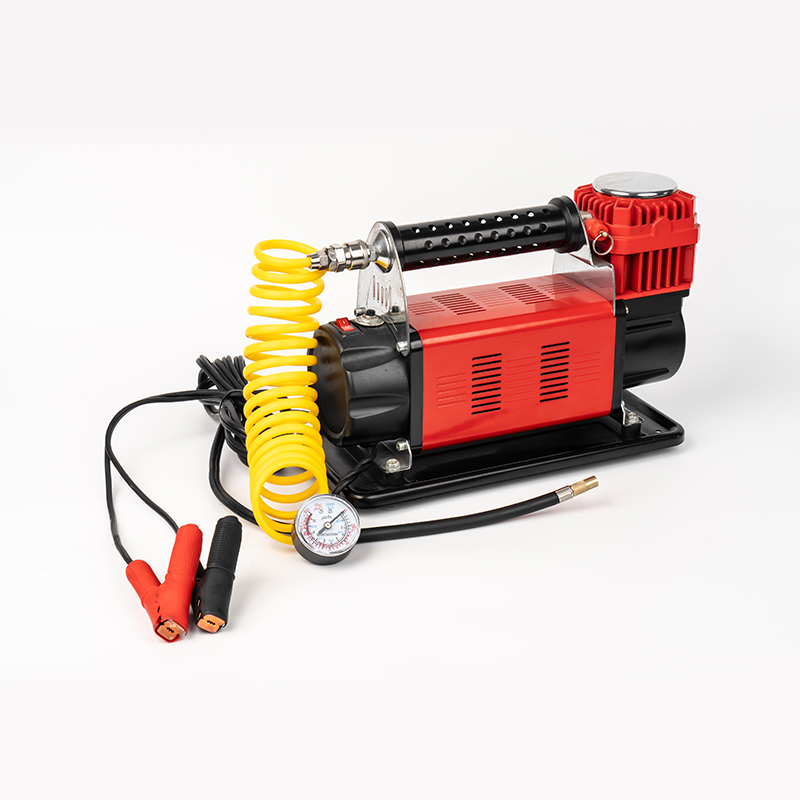 SX-205 Heavy-Duty Single-Cylinder Air Compressor with Vibration-Proof Feet150 PSI 12V/24V tire inflator with 160L/min airflow and vibration-proof feet; suited to heavy-duty 4x4, towing, and sloped driveway use.View Product →
Frequently Asked Questions
Are portable air compressor reviews comparable with each other?
Only when they publish their test conditions. Two reviews of the same 12-volt inflator can differ by a full minute on inflation time simply because one started at 30 PSI on a compact tire and the other at 20 PSI on a larger one.
Does a higher PSI rating mean faster inflation?
No. Peak pressure describes headroom at zero flow, while inflation speed follows airflow at working pressure. A 150 PSI single-cylinder unit and a 150 PSI double-cylinder unit can differ by close to a factor of two on the same tire.
How long can a portable air compressor run before it needs to rest?
Typical 12-volt duty cycles sit between five and fifteen minutes of continuous running, followed by a cooldown of similar length. Because the heat comes from the pump and not the tire, the third and fourth tire of a session always take longer than the first.
What makes a review rating trustworthy for a roadside emergency?
The method has to include a full deflation, a cold start and a stated power source. Ratings built from 28 to 35 PSI top-ups on a warm bench overstate how the same unit performs on a flat tire at night.
Bottom Line
Read the method before the score, and check four things: the pressure at which the flow figure was measured, the duty cycle, the gauge deviation against a reference, and the weight with the hose attached. A rating built on those four points travels to your own driveway; one built on packaging and price does not.
When a review is missing the details you need, the published specification sheet is the next best source, and it is worth confirming whether those figures come from a manufacturer that builds its own castings, pump assemblies and test benches rather than assembling bought-in parts. You can compare flow classes, duty ratings and gauge options side by side across the SHUANGXIN portable air compressor line.