 English
 Español
 عربى
 Türk
A portable air compressor tank is the part that decides whether the machine earns its space in the boot. A 12V tyre inflator with no receiver fits in a glovebox and moves about 1 CFM of air. A 6-gallon hot-dog compressor weighs roughly 25 to 35 lb and will feed a blow gun 3 to 4 CFM for about half a minute before the motor restarts. If your only job is topping up car tyres, you do not need a tank. If you run air tools, seat a tyre bead or spray small parts, the tank is the whole point of the purchase.
The tank, properly called the receiver, is a pressure vessel that stores compressed air so the pump can run intermittently instead of continuously. It does three jobs at once: it buffers the gap between a pump's steady output and a tool's short, heavy demand; it gives hot compressed air somewhere to cool, so some moisture drops out before it reaches the hose; and it lets the motor stop, which matters on small direct-drive units where heat and start cycles cause most of the wear. Volume, material and working pressure are the three decisions to fix before you compare anything else.
Content
- How much air does a portable compressor tank really hold?
- Steel or aluminium? Pick by how the compressor travels
- Pressure ratings, relief valves and certification: read the nameplate
- Recovery time and duty cycle: the numbers behind the tank
- When a tank is the wrong purchase
- Cold mornings and battery-powered options
- Roadside emergencies: inflation plus a jump start
- Draining and storage: the five-minute routine
- Five-point buying checklist
- Frequently asked questions
How much air does a portable compressor tank really hold?
Less than the label suggests, and you can estimate it in one line: free air in cubic feet = (tank gallons ÷ 7.48) × (pressure drop ÷ 14.7). A 6-gallon receiver cycling between a 120 PSI cut-out and a 90 PSI cut-in releases roughly 1.6 cubic feet of atmospheric-pressure air. That is about 30 seconds of a 3 CFM tool, or one car tyre from 28 to 35 PSI.
A bigger tank buys two things: longer tool runs between motor starts, and fewer start-stop cycles, which is gentler on the motor, the pressure switch and the check valve. It costs you weight, boot space and refill time, because the first fill of an 11-gallon tank from a 1 CFM pump can take several minutes.
| Tank size | Typical empty unit weight | Usable free air | Realistic jobs |
|---|---|---|---|
| 1–2 gal | 12–18 lb | 0.3–0.6 cu ft | Tyre top-ups, dusting, a few brads |
| 3–6 gal | 20–35 lb | 0.8–1.6 cu ft | Blow gun, trim nailer, one wheel at a time |
| 8–11 gal | 35–55 lb | 2.2–3.0 cu ft | Small spray work, impact wrench bursts, several tyres |
| 20–30 gal | 60–100 lb | 5.4–8.2 cu ft | Shop work; portable only on wheels |
Under 3 gallons
Tyres, balls and bike tubes only. Carry it with one hand and accept that any air tool will drain it in seconds.
3 to 6 gallons
The portability sweet spot. Enough buffer for a blow gun or a nailer, still light enough to lift into a car boot.
8 to 11 gallons
Shop-grade bursts and small spray jobs, but only worth it if the pump delivers at least 3 to 4 CFM to refill it.
Steel or aluminium? Pick by how the compressor travels
Short answer: steel is the default because it is cheaper and stiffer, and aluminium only earns its extra cost when the weight saving changes whether you actually carry the unit. Aluminium receivers are almost always small, commonly under 10 gallons, because the metal costs more per pound and the wall thickness needed for the same working pressure erodes the weight advantage as the vessel grows.
| Property | Steel tank | Aluminium tank |
|---|---|---|
| Weight | 6-gallon units commonly 25–35 lb | Roughly 30–50% lighter for the same volume |
| Corrosion | Rusts from the inside if condensate is left standing | Oxidises on the surface, but rarely perforates |
| Cost | Lower per gallon | Often two to three times the price per gallon |
| Common sizes | 1–30 gallons across the range | Usually under 10 gallons |
| Repair | Weldable, but pressure-vessel welding needs certification | Normally replaced rather than repaired |
| Best fit | Garage and shop, wheeled or bench-mounted | Boot, travel kit, one-hand carry |
One cold-weather note worth remembering: pressure tracks absolute temperature, so a tank filled at 70°F and then left at 20°F reads roughly 10% lower. Winter top-ups take longer because the air is denser and the gauge tells you less, not because the pump has changed.
Pressure ratings, relief valves and certification: read the nameplate
The number that matters is the maximum allowable working pressure (MAWP), not the pressure the marketing copy quotes.
- MAWP versus burst pressure: a 150 PSI tank may rupture far above 500 PSI. The stamped limit is the one you respect.
- Relief valve: set at or just below MAWP and above the cut-out, so it opens only if the pressure switch fails. Never plug, tape or reroute it.
- Certification: larger receivers sold in the US normally carry ASME Section VIII coding, and vessels above the small-volume thresholds in the EU carry PED and CE marking. Small tanks may be exempt, but a gauge, a drain and a working relief valve are not optional.
- Re-testing: commercial users in many jurisdictions hydro-test portable receivers every five years, and inspectors look for the date stamped on the nameplate.
- Air path: a 1/4-inch coupler is fine up to about 6 CFM. Step up to 3/8-inch above that to avoid pressure loss at the tool.
Recovery time and duty cycle: the numbers behind the tank
Cut-out pressure sells compressors; recovery time is what you live with. Recovery time is simply the air you used divided by the pump's free air delivery. After a 30-second burst from a 4 CFM impact wrench, roughly 2 cubic feet, a pump rated 1 CFM at 90 PSI needs about two minutes to refill the tank.
- Duty cycle: 50% at 90 PSI means five minutes running followed by five minutes resting. Most small direct-drive portables are rated at 50%; continuous ratings start at shop-class sizes.
- Cycle count: a wider cut-in to cut-out band, 20 to 30 PSI is common, means fewer starts and longer motor life. A narrow band holds pressure steadier but starts the motor more often.
- Match test: if a tool empties the tank in 15 seconds and the pump needs two minutes to recover, the tank is too small for that tool, whatever the CFM sticker says.
When a tank is the wrong purchase
For tyre pressure maintenance alone, a tankless 12V inflator wins on cost, size and simplicity. There is no receiver, so the pump runs continuously, output is typically well under 2 CFM, the motor warms up, and you cannot store a reserve of air. In exchange you get a unit that lives in the boot, needs no drain valve and starts from the socket you already have.
Manufacturers such as SHUANGXIN, a Chinese inflator and mini-compressor factory, build both types, and their line-up shows where the split falls: 12V 150 PSI single-cylinder compressors with an optional digital display, double-cylinder units with a battery clip, and lithium-battery models. A double-cylinder pump spreads the load across two cylinders, which cuts vibration and heat on longer fills, and a digital-display version stops at a preset pressure so you are not crouching over the valve with a separate gauge.
For a closer look at fill speed, heat build-up and where each design stalls, this comparison of automotive tyre inflators versus traditional air compressors walks through the same trade-offs from the road-use side.
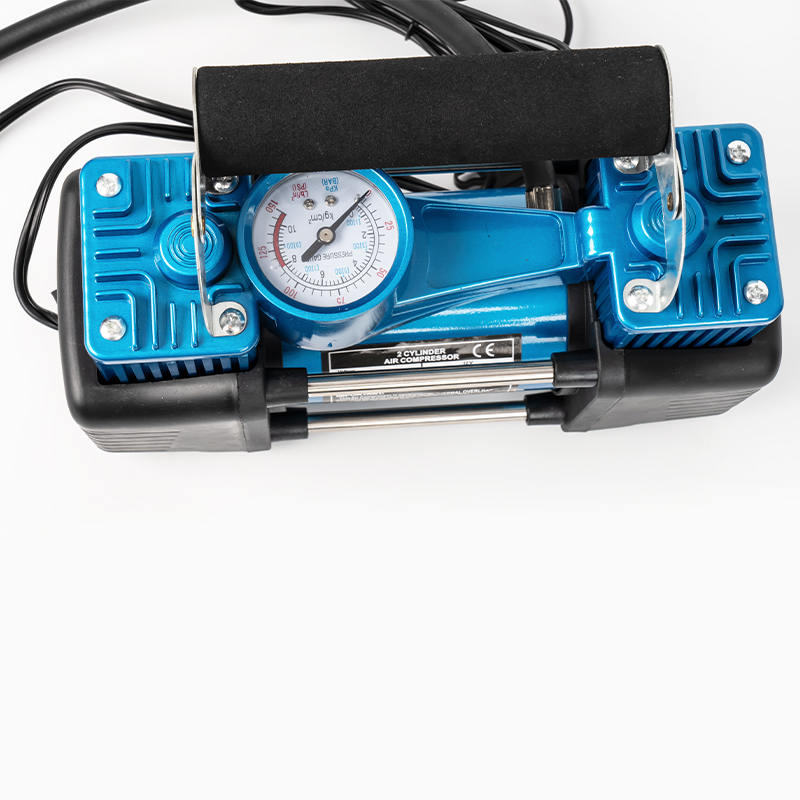 SX-201 Twin-Cylinder 12V Air Compressor with ToolboxTwin-cylinder 12V inflator with 150 PSI, 60 L/min airflow, LED lighting, and extended PU hose for fast tyre inflation from a vehicle power source.View Product →
Cold mornings and battery-powered options
A 12V corded inflator is limited by where its cable reaches, which is exactly the wrong constraint on a freezing morning when two tyres are low and the car is parked nose-in. A cordless unit can be warmed inside the cabin first and then carried to each wheel, and it removes the risk of flattening the very battery you need for starting.
The trade-off is energy rather than pressure. Battery capacity, not tank volume, sets how many tyres you can fill per charge, and because the pump still runs continuously, cooling and duty cycle matter as much as they do on a corded model. Look for a stated inflation pressure, a stated charge time, and an automatic stop that lets the pump rest between tyres.
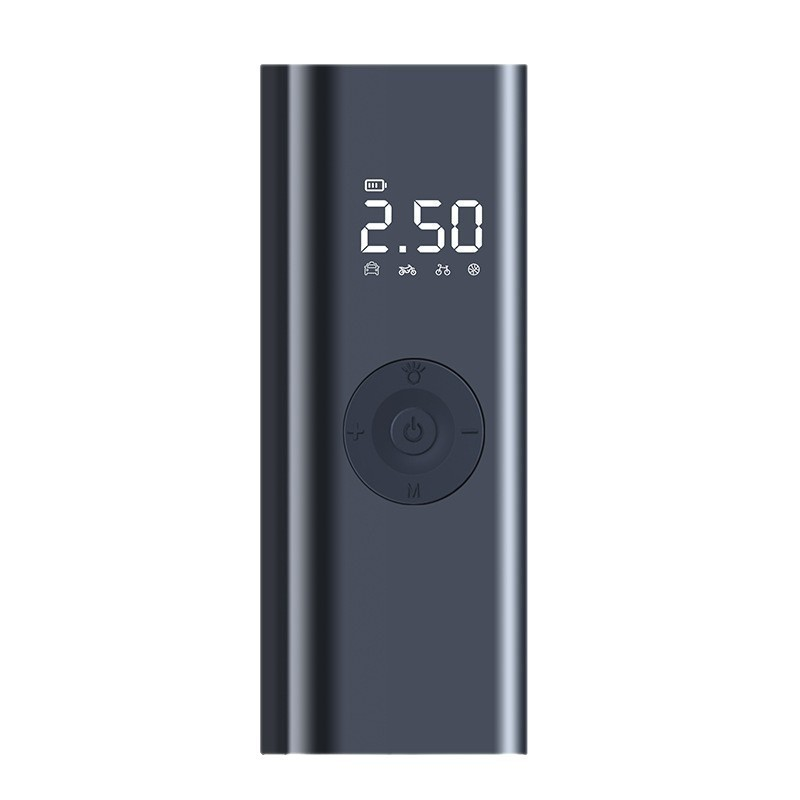
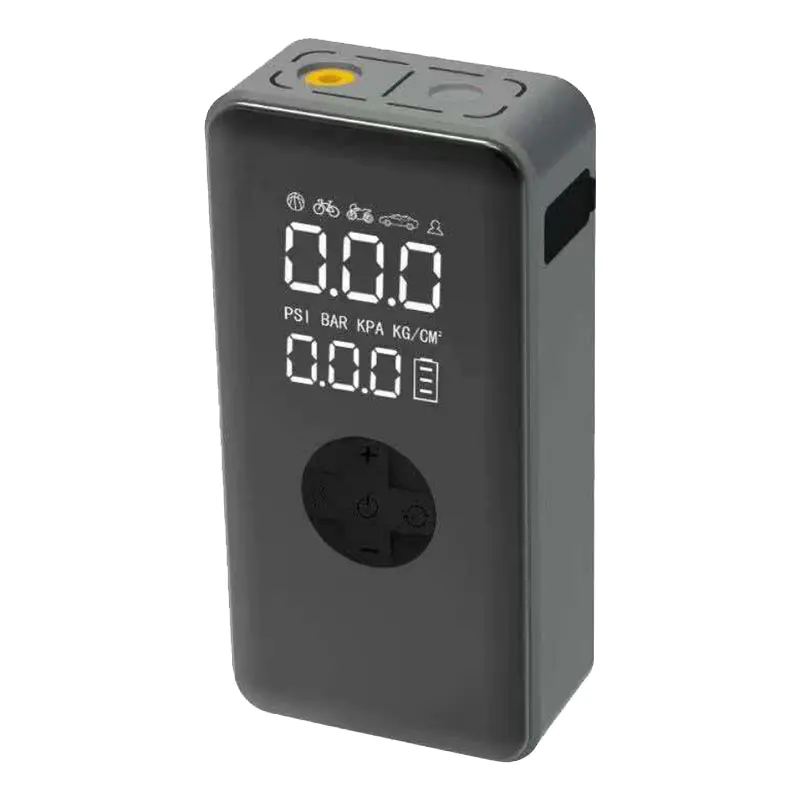
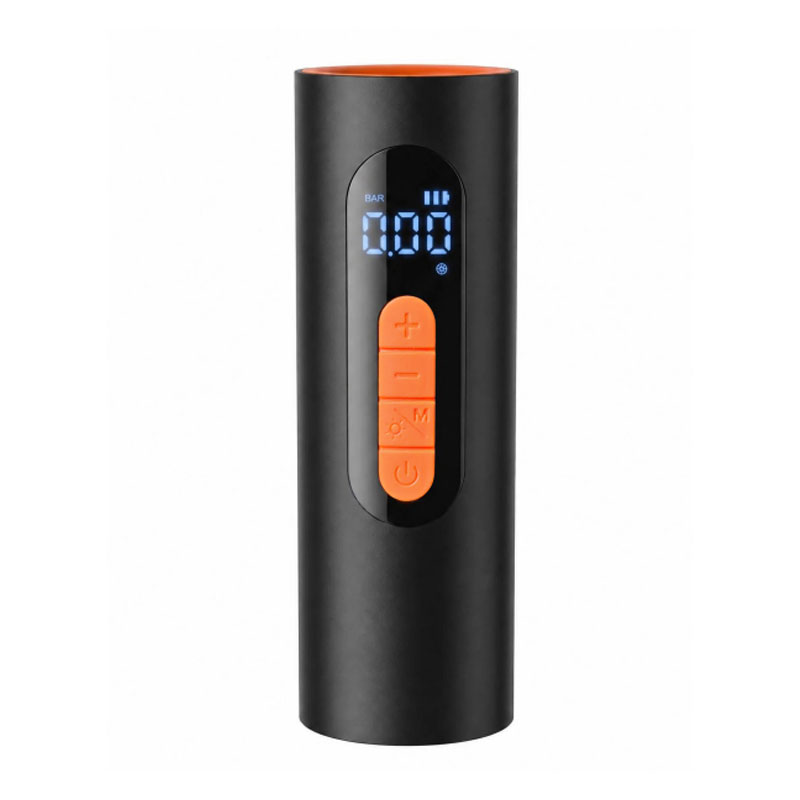
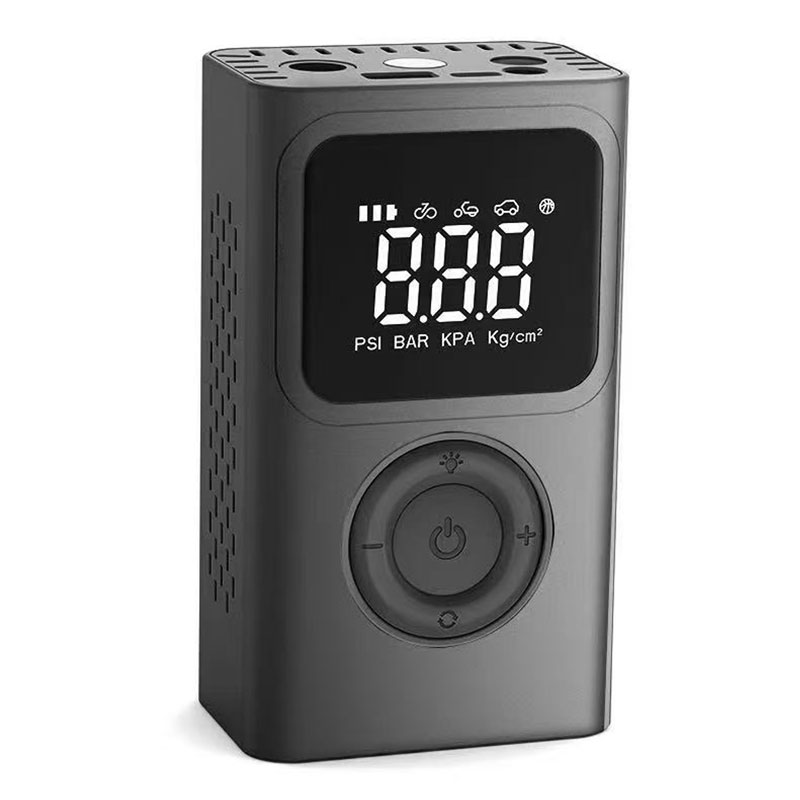
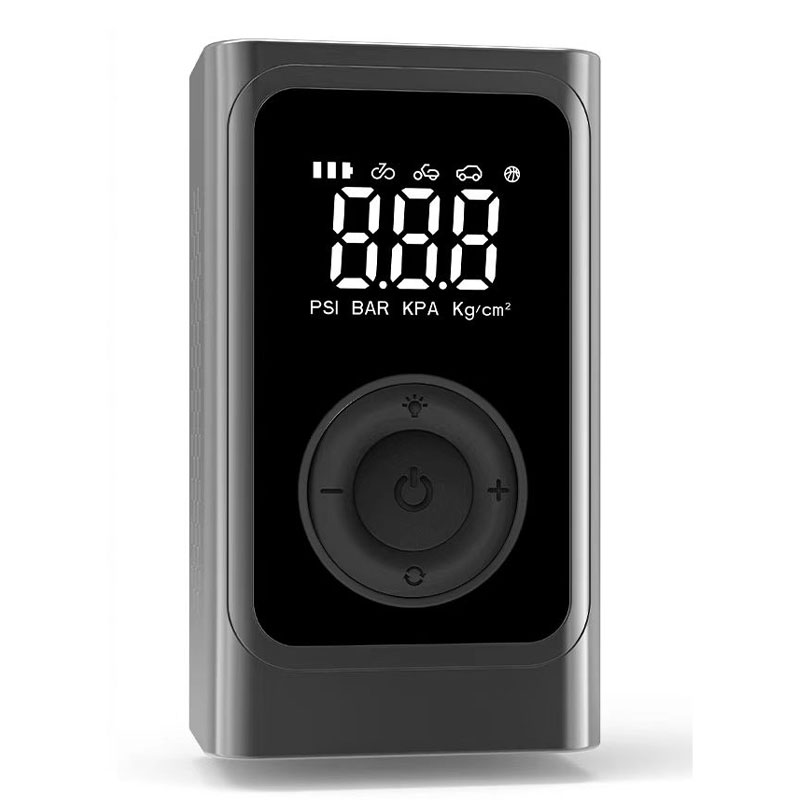
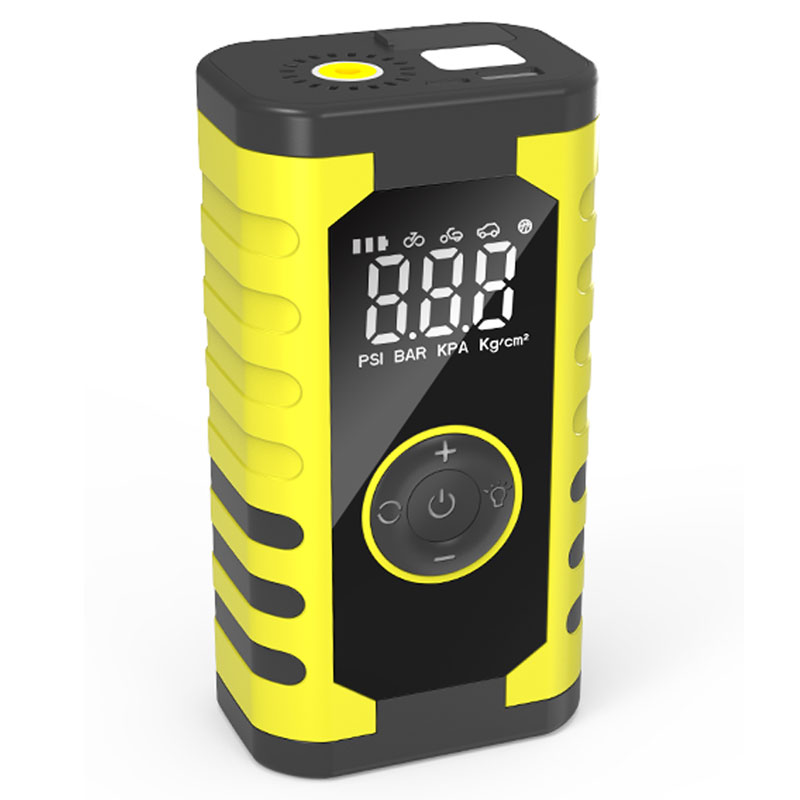
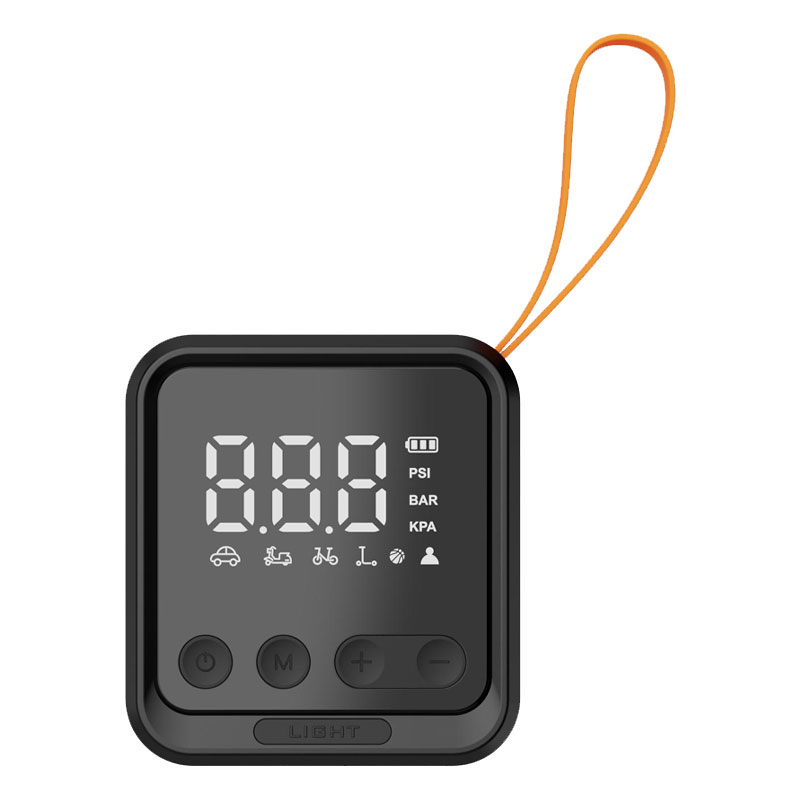
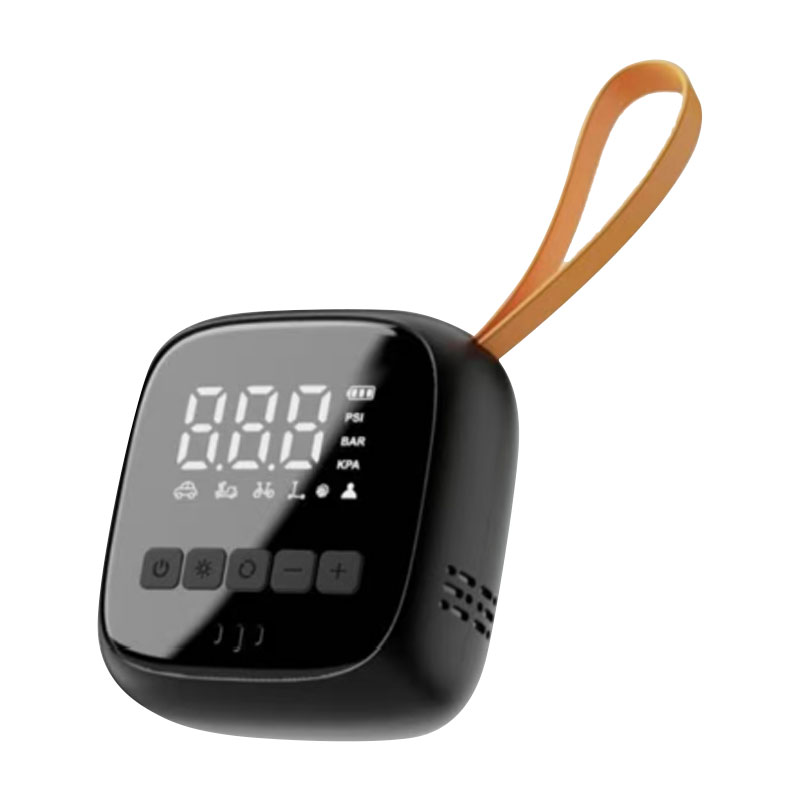
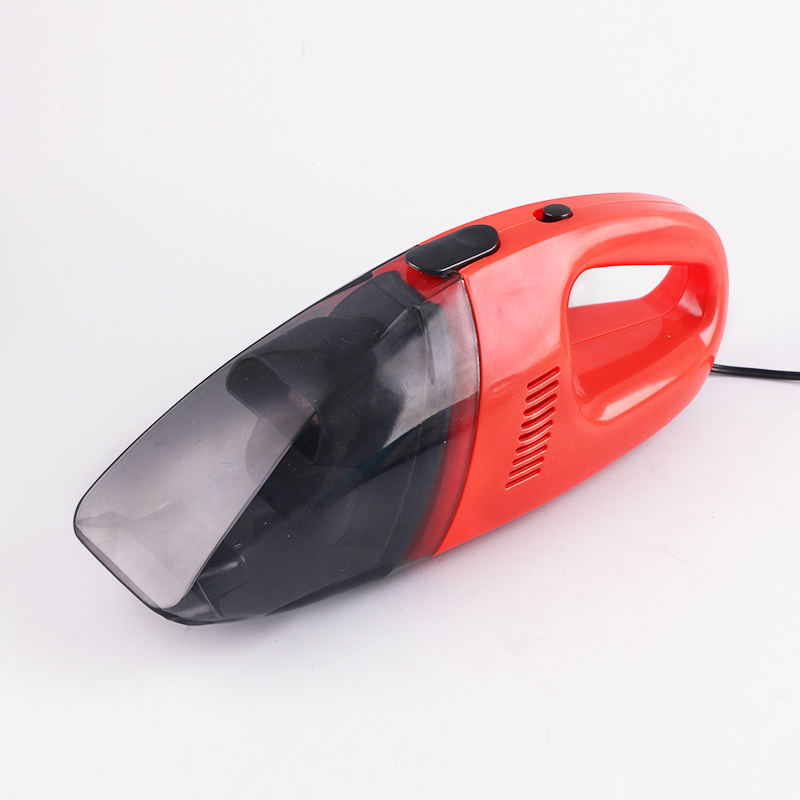 SX-301 Portable Digital Lithium Battery Mini Air CompressorCompact 7.4V lithium-battery inflator with digital pressure display, 100 PSI, 20 L/min airflow, 30-minute runtime, and 3–5-hour charge time for portable tyre inflation.View Product →
Roadside emergencies: inflation plus a jump start
A discharged battery is a more common roadside failure than a punctured tyre, and the two often arrive together, because a slow leak and repeated cranking drain the same power source. A jump starter with an integrated wireless inflator covers both jobs from one pack, typically adding USB output and a work light for night-time wheel changes.
Check three figures before buying one: peak cranking current for your engine size, real inflation pressure rather than a peak number, and whether the device stops charging automatically when the pack is full. Also check the storage temperature range if the unit will live in a car through winter.
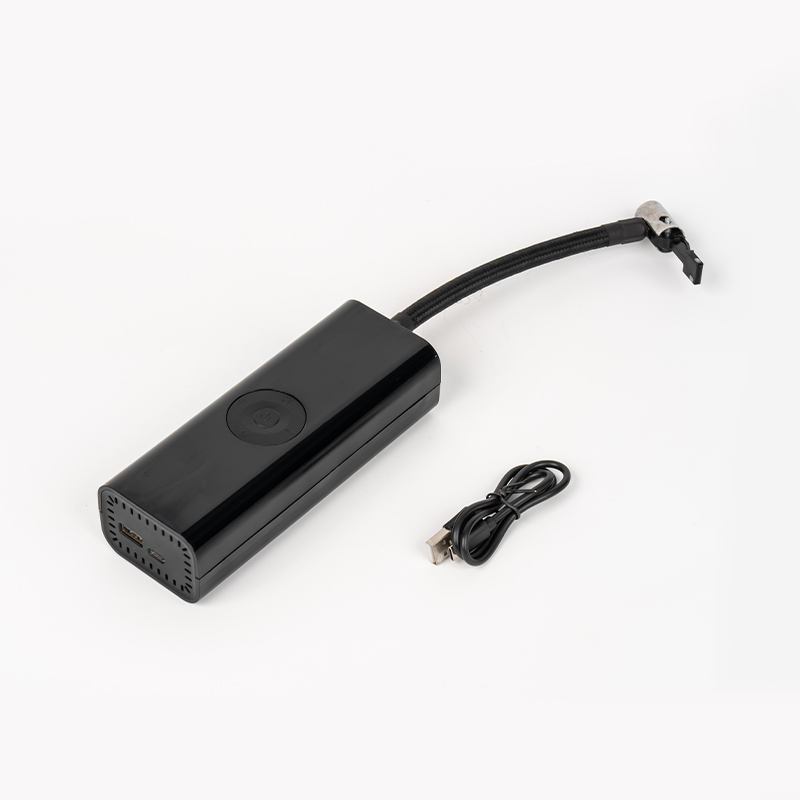 SX-306 Multifunctional Wireless Jump Starter and Tire InflatorMultifunctional 8000mAh jump starter and wireless inflator with 1000A peak, 100 PSI, USB charging, and LED light for roadside and camping use.View Product →
Draining and storage: the five-minute routine
Drain the tank after every session, or weekly at the very least, because condensate is the single biggest reason small steel receivers fail early. Water collects at the lowest point, which is usually the bottom seam and around the drain bung, and rust there is invisible until the vessel leaks. Open the drain at low pressure, tilt the unit so the water pools at the valve, then close it and leave a small amount of pressure in the tank to keep moist air out.
- Add an inline filter and water separator if you spray paint or use the air for anything sensitive.
- Never store a unit below freezing with trapped water in the tank or the pump head.
- Check the relief valve by hand once a season; it should move freely and not hiss when the pump is off.
- Replace cracked or hardened drain seals rather than tightening them harder.
Five-point buying checklist
- Decide the tool first. A blow gun wants 3 to 5 CFM at 90 PSI; a brad nailer needs a fraction of that. Size the tank around the tool, not the other way round.
- Check MAWP and the relief valve setting, not just the advertised cut-out pressure.
- Weigh the filled unit. Six gallons of air adds almost nothing; the steel does. If the number is heavier than you will lift, choose aluminium or drop a size.
- Confirm the drain valve is reachable without tools. A tank you cannot drain is a tank that rusts.
- Price the fittings: couplers, a 3/8-inch hose for higher flow, and a filter separator if you plan to spray.
Frequently asked questions
Is a bigger tank always better?
No. A larger receiver only helps if the pump can refill it in a sensible time. A 20-gallon tank on a 1 CFM pump means long waits between bursts and a motor that runs almost constantly, which is worse than a smaller tank that cycles cleanly.
Can I add a tank to a tankless 12V inflator?
Practically, no. Those pumps are sized for direct inflation at low flow. Adding a receiver increases fill time and heat while giving you no useful burst of stored air.
How often should a portable tank be drained?
After each use if you can, and weekly at minimum. Even a short run in humid weather leaves enough condensed water at the bottom of a steel tank to start corrosion.
Do small portable tanks need pressure testing?
Usually not for private use, but commercial users in many regions have receivers hydro-tested every five years. Check the rules where you work, and read the date on the nameplate before you buy second-hand.
What tank size fits in a car boot?
Three to six gallons is the practical ceiling for something you lift by hand; aluminium units under 10 gallons are the lightest option, but they cost noticeably more per gallon.