 English
 Español
 عربى
 Türk
A quiet portable air compressor is a compact inflator designed to fill tires and other inflatables while keeping measured noise below roughly 70 decibels. If you have ever crouched beside a car at 6 a.m. with a rattling compressor echoing off your neighbor's garage, you already know why this matters. The practical answer is simple: choose a model with a low-noise motor, vibration-damping feet, and a balanced pump design, then confirm the decibel rating and duty cycle before you buy. The rest of this guide explains how those factors affect real-world performance, what specs to compare, and where a quiet unit earns its keep.
Content
- What Makes a Portable Air Compressor Quiet?
- Why Noise Level Matters More Than You Think
- Single-Cylinder vs Double-Cylinder: Which Is Quieter?
- Power Sources: 12V, Lithium Battery, or Battery Clamp?
- Key Specs and Buying Checklist
- Real-World Scenarios Where Quiet Operation Pays Off
- Maintenance Tips to Keep It Quiet
- FAQ
What Makes a Portable Air Compressor Quiet?
Noise comes from four sources: motor speed, piston slap, airflow turbulence, and structural vibration. A quiet portable air compressor reduces all four, not just one. Manufacturers use low-RPM motors, rubber isolation mounts, sound-absorbing housings, and twin-cylinder layouts that cancel opposing forces. The result is a machine that can run in a residential driveway without drawing complaints.
Decibels are logarithmic, so a 10 dB increase sounds roughly twice as loud. A standard pancake compressor may hit 85–90 dB, comparable to a gas lawn mower. A well-designed quiet portable air compressor typically lands between 60 and 70 dB, closer to a vacuum cleaner or normal conversation. That difference determines whether you feel comfortable using it in a campground, a hotel parking lot, or your own garage at night.
| Sound Level | Comparable To | Suitable Environment |
|---|---|---|
| 50–60 dB | Quiet conversation | Residential areas, early morning or late evening |
| 60–70 dB | Vacuum cleaner | Most driveways, campgrounds, roadside stops |
| 70–80 dB | City traffic | Daytime garage use only |
| 80–90 dB | Gas lawn mower | Not recommended near homes or tents |
Why Noise Level Matters More Than You Think
Noise level determines where and when you can safely use the compressor, and it also signals mechanical quality. A loud unit often vibrates excessively, which loosens fittings, wears piston seals, and shortens service life. Low noise usually indicates better balance, tighter tolerances, and more effective damping.
Consider three real scenarios. First, a slow leak in a tire at 11 p.m. in a suburban driveway. A quiet compressor lets you top up the tire and drive to a repair shop without waking the household. Second, an off-road trip where you air down for sand and need to air up before the highway. At a shared campsite, a 65 dB inflator is a courtesy; an 85 dB one is a public nuisance. Third, a small garage with poor ventilation. Lower noise means less operator fatigue and better concentration when setting precise pressures.
- Early morning or late evening tire maintenance in residential zones.
- Campgrounds, trailheads, and RV parks with quiet hours.
- Roadside emergencies where you want to avoid attention.
- Repeated use in a home garage without hearing protection.
- Pet or child passengers nearby who may be startled by sudden noise.
Single-Cylinder vs Double-Cylinder: Which Is Quieter?
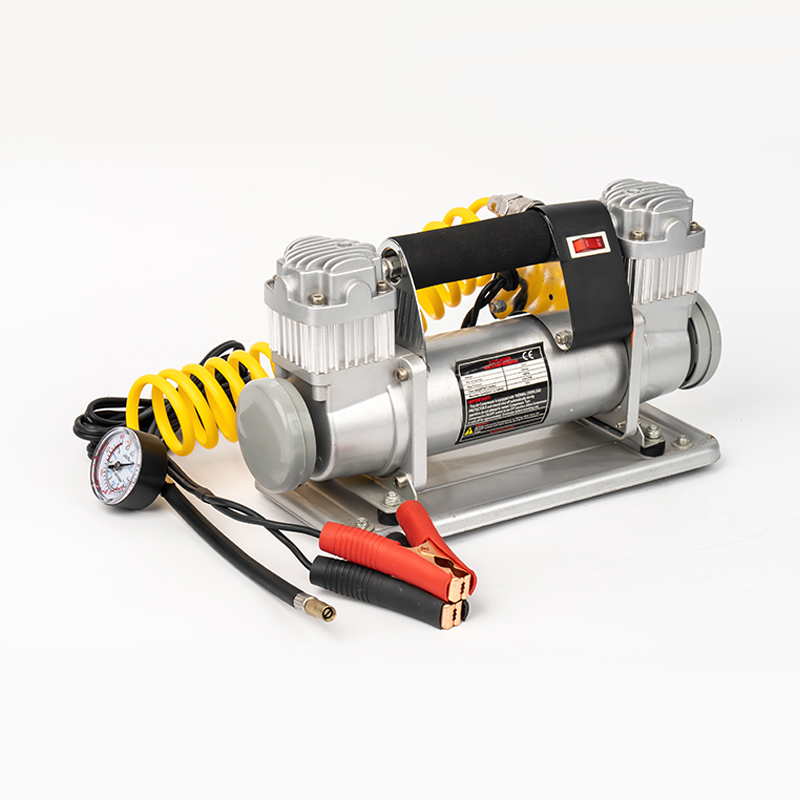 SX-204 Double-Cylinder 12V/24V Air Compressor with Vibration-Proof FeetTwin-cylinder, 480W, 150 PSI inflator for continuous large-car tire inflation; anti-vibration feet make it worth comparing for stability and noise.View Product →
A double-cylinder compressor is generally quieter than a single-cylinder unit of similar output because two pistons moving in opposite directions cancel much of the vibration. However, a poorly balanced twin-cylinder model running at high speed can be just as loud as a good single-cylinder design. The decisive factor is whether the manufacturer has addressed vibration at the mounting points.
Single-cylinder compressors are lighter, simpler, and less expensive. They work well for occasional top-ups on passenger cars, but they tend to shake and produce a sharper exhaust note. Double-cylinder models inflate faster, run cooler, and usually measure 5–10 dB lower. They cost more and weigh more, but for frequent use or larger tires, the noise reduction alone can justify the upgrade.
| Feature | Single-Cylinder | Double-Cylinder |
|---|---|---|
| Typical noise | 75–85 dB | 65–75 dB |
| Inflation speed | Slower | Faster |
| Weight | Lighter | Heavier |
| Vibration | Noticeable | Reduced by opposed pistons |
| Best for | Occasional passenger car top-ups | Frequent use, SUVs, trucks, off-road |
Vibration-damping feet are a small detail with a large effect. Rubber or elastomer mounts isolate the pump from the housing, preventing the entire unit from acting like a drum. When comparing models, look for explicit mention of anti-vibration feet or isolation mounts; it is one of the most reliable indicators of a quieter portable air compressor.
Power Sources: 12V, Lithium Battery, or Battery Clamp?
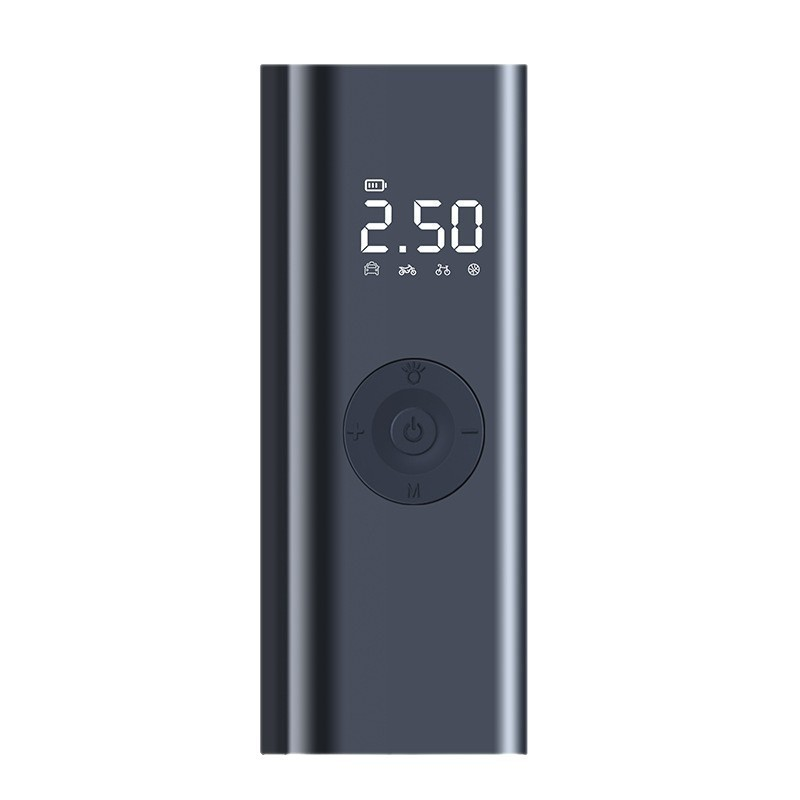
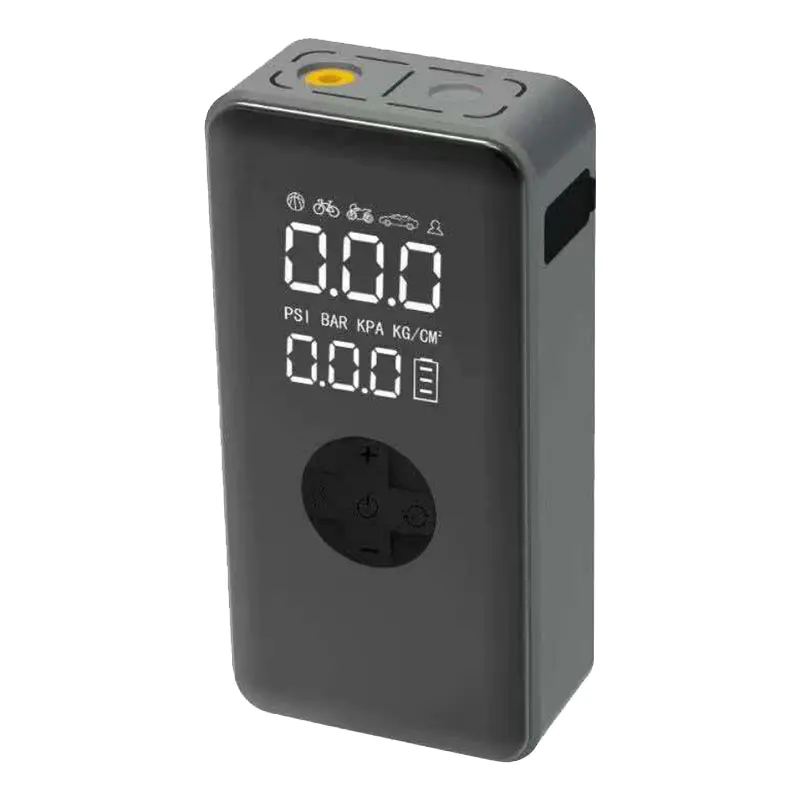
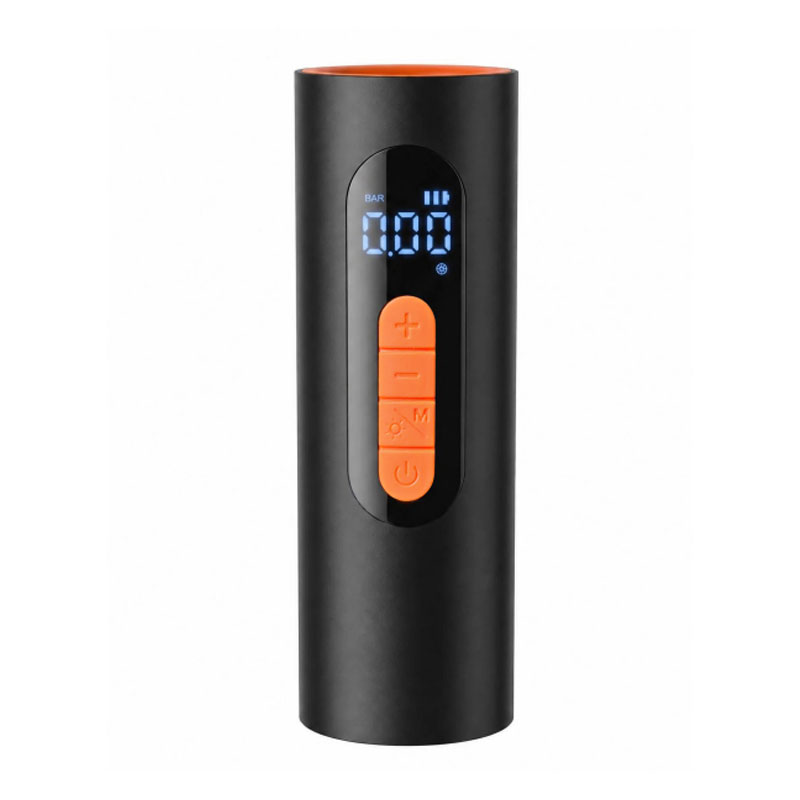
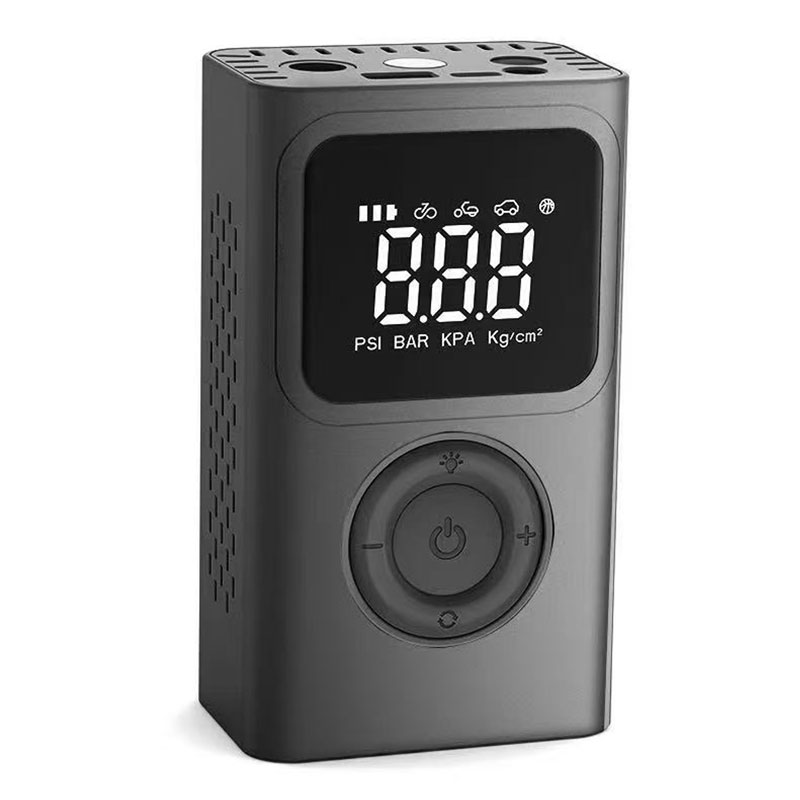
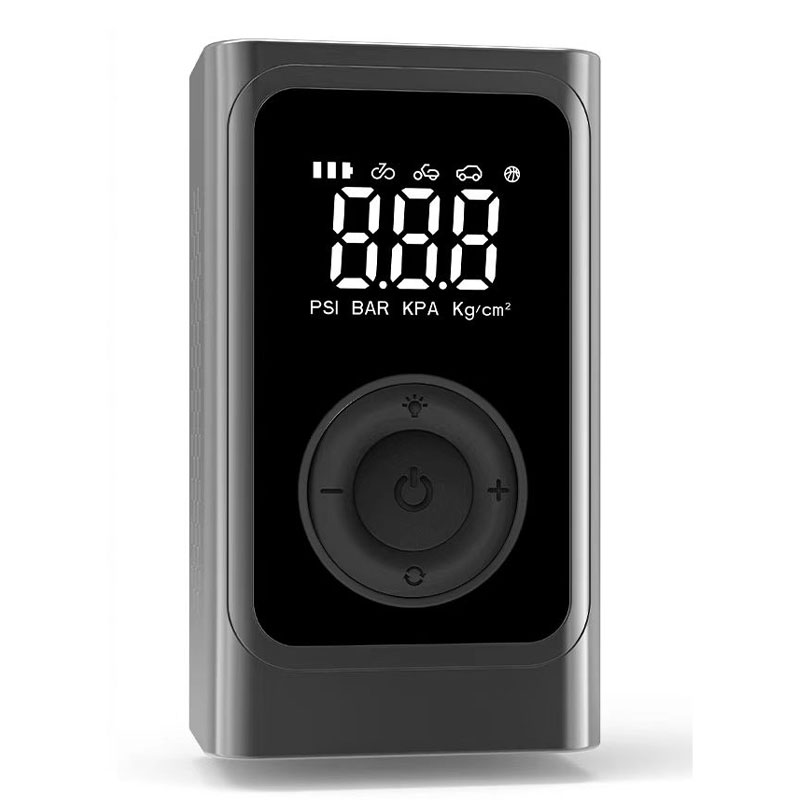
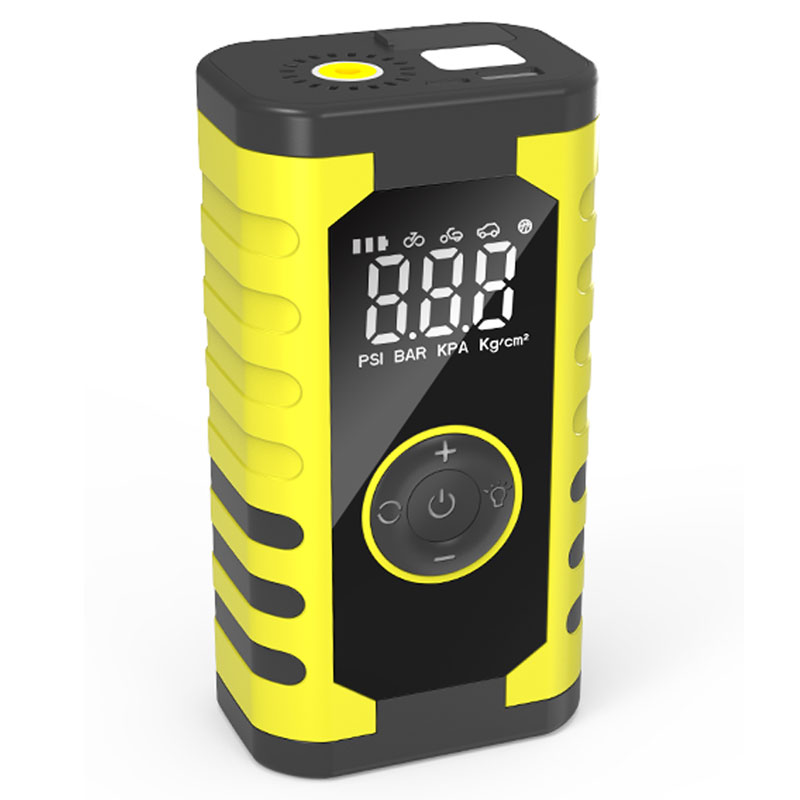
 SX-301 Digital Lithium-Battery Mini Air Compressor for Portable Tire InflationCordless lithium-battery mini inflator with digital pressure display; relevant for portable emergency tire inflation where corded 12V options are inconvenient.View Product →
A 12V cigarette-lighter compressor is the most common choice for passenger cars, but it is not automatically quiet. Lithium-battery models often use brushless motors that run more smoothly, yet their smaller size can limit duty cycle. Battery-clamp units deliver the most power for large tires, and that power usually comes with higher noise. The quietest option depends on your tire size and how often you inflate.
For occasional use on a sedan, a 12V corded unit with a low-RPM motor and rubber feet is often the best balance of price, portability, and noise. For travel and remote locations, a lithium battery model removes the need for a running engine, and brushless motors tend to produce a less irritating pitch. For trucks, tractors, or repeated off-road use, a clamp-powered double-cylinder compressor provides the speed you need, but you should expect 70–75 dB rather than 60 dB.
| Power Source | Noise Tendency | Portability | Best Use |
|---|---|---|---|
| 12V cigarette lighter | Moderate; depends on motor and mounts | Corded, limited by cable length | Passenger car tires, occasional top-ups |
| Lithium battery | Often quieter with brushless motor | High; no external power needed | Travel, remote camping, quick top-ups |
| Battery clamp | Louder due to higher power draw | Medium; requires access to battery | Large tires, trucks, frequent off-road use |
Key Specs and Buying Checklist
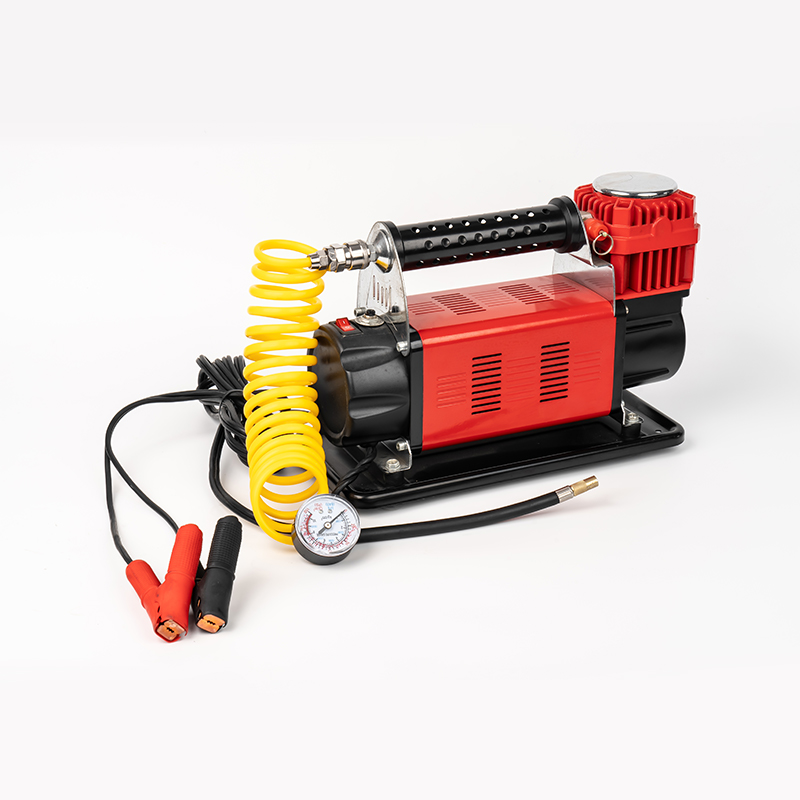 SX-205 Heavy-Duty 12V/24V Onboard Air Compressor with Vibration-Proof FeetHeavy-duty 12V/24V 150 PSI single-cylinder compressor for 4x4 tires and pneumatic tools; compare duty cycle and noise for repeated use.View Product →
Start with the decibel rating, then verify duty cycle, pressure, and inflation speed. A lower noise figure is meaningless if the compressor overheats after three minutes or cannot reach 150 PSI. Use the following checklist to compare models without getting distracted by cosmetic features.
- Measured noise: look for a specific dB value, ideally below 70 dB at three feet. Avoid vague claims like “low noise” without a number.
- Maximum pressure: at least 150 PSI for passenger cars; higher for light trucks and trailers.
- Inflation speed: check the time to inflate a 225/65R17 tire from 0 to 32 PSI. Under two minutes is good; under 90 seconds is excellent.
- Duty cycle: a continuous run time of 10–15 minutes before cool-down is practical for multiple tires.
- Vibration control: rubber feet, balanced pistons, and a rigid housing reduce both noise and long-term wear.
- Power source: match the connector to your vehicle and use case. Lithium battery adds convenience but adds cost and charging time.
- Digital display and auto-stop: preset pressure reduces guesswork and keeps you from repeatedly restarting the motor, which is when noise complaints often begin.
- Storage and cable length: a carry bag and a 10-foot cord make the difference between a smooth job and an awkward one.
For off-road-specific advice, including tire size and pressure targets, see this guide on choosing a portable air compressor for off-road adventures.
Real-World Scenarios Where Quiet Operation Pays Off
A quiet portable air compressor earns its price in specific situations, not in abstract specifications. The following examples show where lower decibels translate into real convenience and social acceptance.
- Early morning commute: a tire warning light appears at 6:30 a.m. You inflate in your driveway without waking the neighbors.
- Late-night arrival: you return from a trip and notice a soft tire. A quiet unit lets you fix it before morning without disturbing the household.
- Campground etiquette: quiet hours are enforced. A 60–65 dB compressor respects other campers and keeps you out of trouble.
- Roadside emergency: a low-noise unit lets you work without drawing attention or competing with passing traffic.
- Repeated use in a small shop: lower noise reduces fatigue when you check multiple vehicles in a day.
- Pets and children in the car: sudden loud noises can cause stress; a smoother, quieter pump keeps the cabin calmer.
Maintenance Tips to Keep It Quiet
Regular maintenance preserves the low-noise characteristics that attracted you in the first place. Most portable compressors become louder over time because of loosened fasteners, clogged filters, and dried piston seals, not because the motor suddenly fails.
- Check and tighten housing screws every few months. Vibration loosens them, and a rattling cover amplifies noise.
- Clean or replace the air intake filter. A clogged filter makes the motor work harder and sound rougher.
- Run the compressor briefly every month if it sits unused. This keeps seals lubricated and prevents dry starts.
- Store in a dry, dust-free place. Moisture and grit accelerate wear on pistons and bearings.
- Inspect rubber feet and isolation mounts. Replace them if they harden or crack; they are inexpensive and directly affect noise.
FAQ
How quiet is a quiet portable air compressor?
Most models marketed as quiet measure between 60 and 70 decibels at three feet. The best units approach 55–60 decibels, which is roughly the level of a normal conversation. Anything above 75 decibels is noticeably loud and better suited to daytime, outdoor use only.
Can a quiet compressor still inflate a large tire?
Yes, but speed and duty cycle matter. A quiet double-cylinder model can inflate a large SUV tire, though it may take slightly longer than a high-power, noise-heavy unit. Check the duty cycle to avoid overheating during repeated fills.
Do I need a lithium battery model for quiet operation?
Not necessarily. Many 12V corded compressors with anti-vibration feet are just as quiet and cost less. Lithium battery models offer portability and often use brushless motors, but their smaller size can limit continuous run time.
What is the most common noise complaint with portable compressors?
Vibration and piston slap are the top complaints, followed by motor whine. Choosing a twin-cylinder design with rubber isolation mounts addresses most of these issues at the source.
Choosing a quiet portable air compressor comes down to measured decibels, vibration control, and a duty cycle that matches your tire size. A 60–70 dB unit with anti-vibration feet and a digital auto-stop will handle daily driving, road trips, and campground use without becoming a nuisance. As a manufacturer of vehicle-mounted air compressors and related inflators, SHUANGXIN builds low-noise models for passenger cars, SUVs, and light trucks. To explore current options, visit our manufacturing site and compare the specifications directly.