 English
 Español
 عربى
عربى Türk
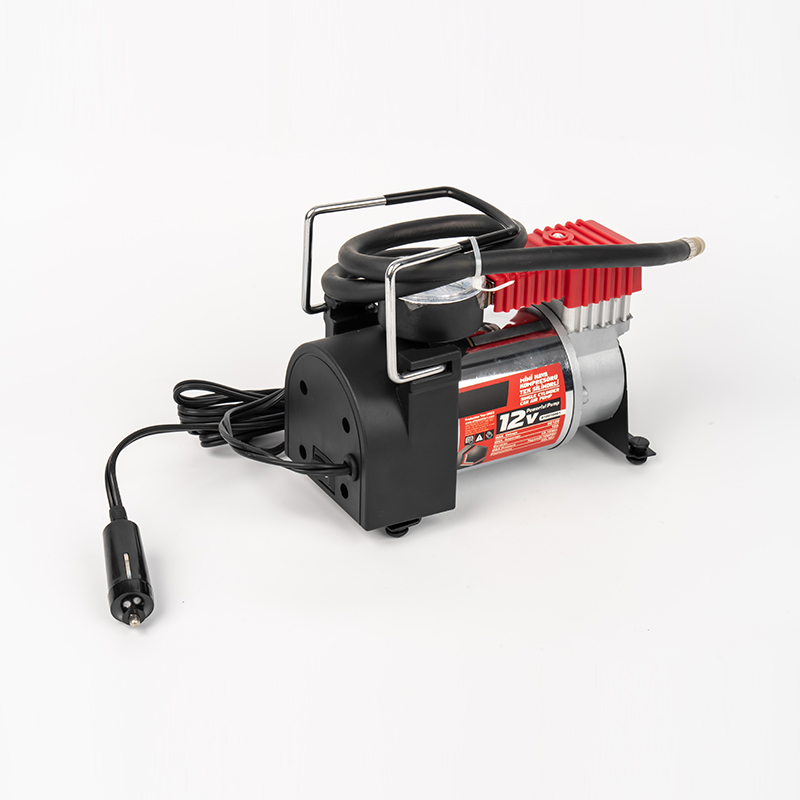
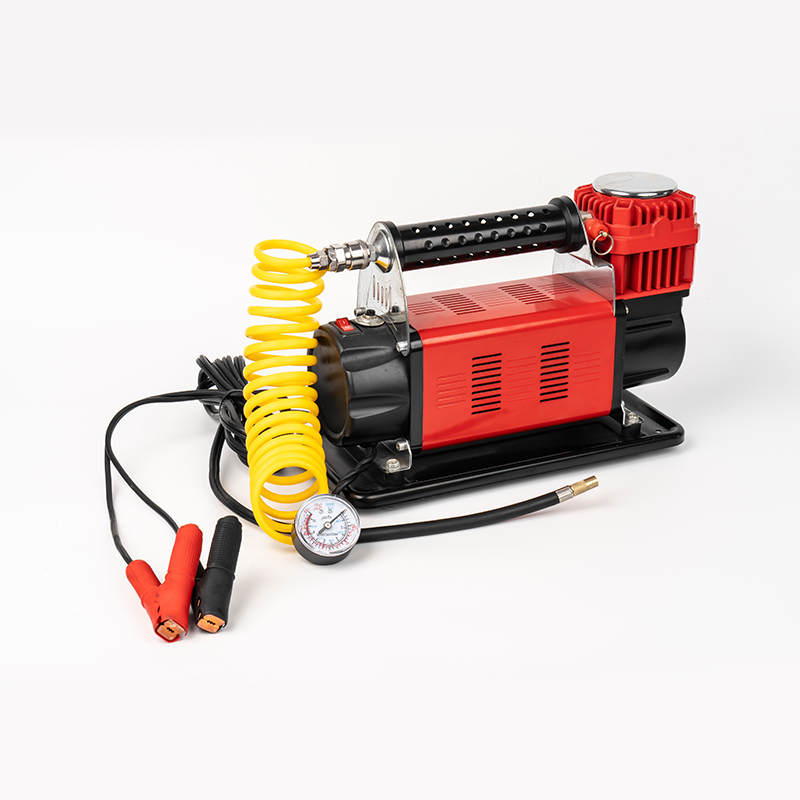
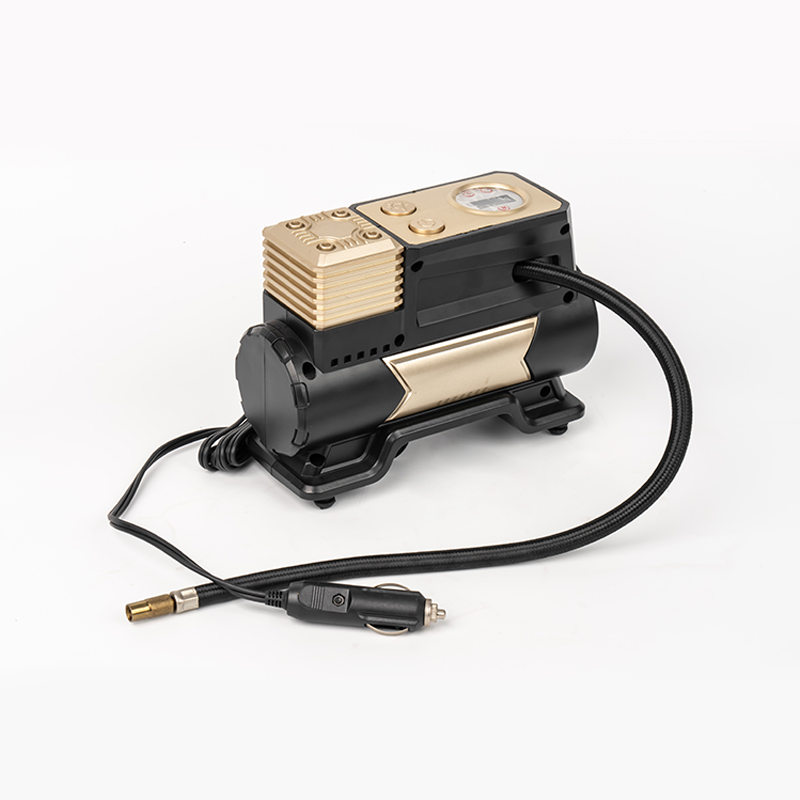
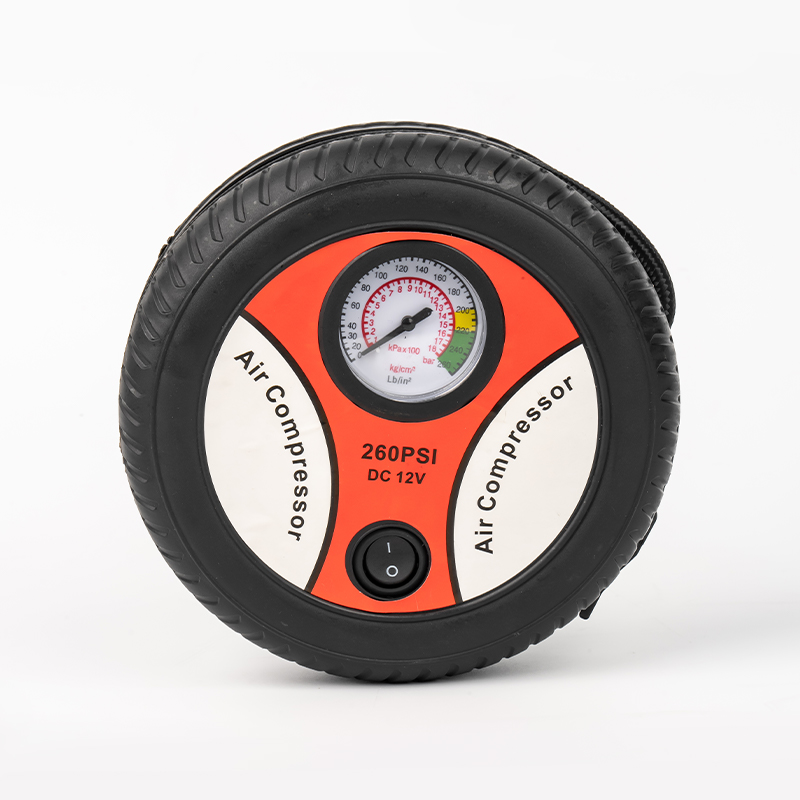
TürkA car jump starter with air compressor is a portable, battery-powered device that combines two critical roadside rescue functions in a single compact unit: enough electrical peak current to restart a dead vehicle battery, and a built-in pump capable of inflating a flat tire to the correct PSI — all without requiring another vehicle or an external power source. For drivers who want a single, all-in-one emergency tool in the trunk, this category of device has become one of the most practical automotive accessories available today.
This guide explains exactly how these combination units work, what specifications actually matter, how they compare to standalone products, and what to look for when choosing the right model for your vehicle type and driving habits.
Content
- How Does a Car Jump Starter with Air Compressor Work?
- Key Specifications Explained: What the Numbers Actually Mean
- Combo Unit vs. Standalone Devices: A Direct Comparison
- Which Vehicles Can a Jump Starter with Air Compressor Handle?
- What Features Should You Look for in a Quality Combo Unit?
- How to Use a Car Jump Starter with Air Compressor Safely
- How Long Does the Battery Last Between Charges?
- Common Mistakes to Avoid When Using These Devices
- Frequently Asked Questions
- Q: Can a jump starter with air compressor start a completely dead battery?
- Q: How many times can I jump-start my car before recharging the unit?
- Q: Can I use the air compressor while the unit is charging?
- Q: Is a 1,000 peak amp unit sufficient for a V8 truck?
- Q: How long does the integrated air compressor take to inflate a car tire?
- Q: What is the lifespan of a portable jump starter with air compressor?
- Q: Are these devices safe to use in rain or wet conditions?
- Q: Can I use a car jump starter with air compressor to inflate sports balls, bicycle tires, or air mattresses?
- Conclusion: Is a Jump Starter with Air Compressor Worth It?
How Does a Car Jump Starter with Air Compressor Work?
A portable jump starter with air compressor operates through two independent subsystems that share a single lithium-ion or lead-acid battery pack as their power source.
The Jump-Starting Subsystem
The jump-starting circuit delivers a high burst of electrical current — measured in peak amps or cranking amps (CA) — through a pair of heavy-gauge clamp cables directly to the vehicle's battery terminals. Modern lithium-ion jump starters store energy in polymer cells that can discharge at very high rates for 2–3 seconds, providing the surge needed to spin the starter motor. A typical compact unit rated at 1,000 peak amps can restart a 4-cylinder engine; units rated at 2,000–3,000 peak amps can handle V8 gas engines and diesel engines up to 7–8 liters. Most units include smart clamp protection that detects reverse polarity and prevents sparks or short-circuit damage.
The Air Compressor Subsystem
The integrated air compressor uses a small DC motor — powered by the same internal battery — to drive a miniature piston or diaphragm pump. This pump draws ambient air and compresses it through a short hose to a tire valve. Most built-in compressors in this category deliver 100–150 PSI maximum pressure and 20–35 liters per minute (L/min) of airflow. A standard passenger car tire (195/65R15, for example) typically requires about 32–35 PSI; inflating it from flat to full pressure takes approximately 4–8 minutes with a built-in compressor. A digital pressure gauge and auto-shutoff feature — found on better models — stops inflation automatically when the preset PSI is reached.
Both functions draw from the same internal battery, which means the order of operations matters. It is strongly recommended to perform the jump-start first, then use the compressor to inflate the tire — because the compressor draws continuously from the battery (often 5–10 minutes of runtime per tire), while jump-starting consumes energy in a very brief burst. Most quality units carry enough charge to do both in sequence without recharging in between, provided the battery was fully charged before use.
Key Specifications Explained: What the Numbers Actually Mean
Shopping for a jump starter with built-in air compressor is confusing because manufacturers use multiple overlapping specs. Here is a plain-language breakdown of each one.
Peak Amps vs. Cranking Amps (CA) vs. Cold Cranking Amps (CCA)
Peak amps is the maximum current the unit can deliver for a fraction of a second — it is the most commonly advertised figure and the least meaningful in isolation. Cranking amps (CA) measures sustained current delivery at 32°F (0°C) for 30 seconds. Cold cranking amps (CCA) measures the same at 0°F (-18°C), which is the harshest condition for battery starting. A unit with 800 CCA is genuinely more capable in winter than one with 1,500 peak amps but only 400 CCA. Always check CCA if you live in a cold climate.
Battery Capacity (mAh or Wh)
Capacity determines how many jump starts and tire inflations the unit can perform on a single charge. Most consumer models carry 12,000–20,000 mAh (roughly 44–74 Wh). A unit with 20,000 mAh can typically deliver 20–30 jump-start attempts and inflate 3–5 standard car tires before needing a recharge. Premium models offering 26,800 mAh or higher extend this range significantly, which matters for fleet operators or long road trips in remote areas.
Compressor PSI and L/min
Maximum PSI tells you the highest pressure the pump can reach — 150 PSI covers car tires (30–44 PSI), SUV and light truck tires (35–45 PSI), and even sport bike tires (up to 42 PSI). Flow rate in L/min determines how fast it inflates. A unit delivering 30 L/min will inflate a car tire roughly twice as fast as one delivering 15 L/min. For inflating truck tires (10-ply LT tires at 65–80 PSI), units with 150 PSI and 25+ L/min are recommended.
Engine Compatibility
Manufacturers specify maximum engine displacement for gas and diesel separately. A unit rated for "up to 6.0L gas / 3.0L diesel" means it has sufficient peak amps for those engine sizes at normal temperatures. Diesel engines require significantly more cranking power than equivalent gas engines because of higher compression ratios — a 3.0L diesel demands more from a jump starter than a 5.0L gasoline V8 in many cases.
Combo Unit vs. Standalone Devices: A Direct Comparison
The most common question buyers face is whether a 2-in-1 jump starter air compressor combo is better than owning separate, dedicated tools. The answer depends on your priorities.
| Factor | Combo Jump Starter + Compressor | Standalone Jump Starter | Standalone Tire Inflator |
| Trunk Space Used | 1 unit | 1 unit (no inflation) | 1 unit (no jump start) |
| Jump-Start Performance | Good (800–2,000 peak A) | Excellent (up to 4,000 peak A) | None |
| Inflation Speed | Moderate (15–35 L/min) | None | Fast (35–75 L/min) |
| Max Tire Size | Car, SUV, light truck | N/A | Car to full-size truck |
| Typical Weight | 2.0–3.5 lbs | 0.9–1.5 lbs | 0.8–2.0 lbs |
| Price Range | $80–$200 | $40–$150 | $25–$80 |
| USB Charging Port | Usually yes (USB-A + USB-C) | Usually yes | Rarely |
| Cold Weather Reliability | Good with lithium; warm before use below 14°F (-10°C) | Good | Excellent |
| Best For | Everyday drivers, single emergency tool | Diesel owners, heavy-duty vehicles | Frequent tire checks, high volume |
Table 1: Side-by-side comparison of combo jump starters with air compressor versus standalone jump starters and standalone tire inflators.
Which Vehicles Can a Jump Starter with Air Compressor Handle?
The compatibility of a portable jump starter with air compressor depends on both the peak amp rating for jump-starting and the PSI range of the compressor for inflation. Here is a practical breakdown by vehicle class:
| Vehicle Type | Typical Tire PSI | Min. Compressor PSI Needed | Min. Peak Amps Recommended | Suitable Combo Unit |
| Compact / Sedan (4-cyl) | 30–35 PSI | 100 PSI | 800–1,000 | Yes — most entry-level models |
| SUV / Crossover (V6) | 35–40 PSI | 100 PSI | 1,200–1,500 | Yes — mid-range models |
| Pickup Truck (V8 Gas) | 35–45 PSI | 120–150 PSI | 1,500–2,000 | Yes — higher-end models |
| Diesel Truck / Van | 55–80 PSI | 150 PSI | 2,000–3,000 | Specialized heavy-duty combos only |
| Motorcycle | 28–42 PSI | 100 PSI | 400–800 | Yes — most models with adapter |
| RV / Motorhome | 65–110 PSI | 150 PSI | 2,500+ | Limited — heavy-duty units only |
Table 2: Vehicle compatibility guide for jump starter with air compressor combos by tire PSI, compressor requirement, and peak amp rating.
What Features Should You Look for in a Quality Combo Unit?
Not all car jump starters with built-in air compressors are equal. The following features separate reliable units from cheap ones that fail when you need them most.
Smart Clamp Protection
Quality units include intelligent clamp circuitry that detects reverse polarity, short circuits, over-voltage, and over-current conditions before completing the circuit. This protection is non-negotiable — without it, an accidental reverse-connection can destroy both the jump starter and the vehicle's electronics. Look for units that explicitly list "reverse polarity protection" and "spark-proof" clamps in their specifications.
Digital Pressure Gauge with Auto-Shutoff
A digital pressure gauge lets you set a precise target PSI (e.g., 33 PSI) and the compressor automatically stops when that pressure is reached. Analog gauges require manual monitoring and are less accurate. Auto-shutoff also prevents over-inflation, which at highway speeds on an over-inflated tire can cause uneven wear or, in extreme cases, blowout.
Multiple Valve Adapters
The compressor hose should come with at least three nozzle adapters: a Schrader valve adapter (standard car tires), a Presta valve adapter (road bike tires), and a ball/sports needle. Units that include a French valve adapter cover virtually every inflation scenario a driver might encounter, including bicycle tires, sports balls, and inflatable kayaks.
LED Flashlight and Emergency Strobe
Virtually all combo units on the market include an integrated LED light. The most useful implementations offer at least three modes: steady beam for working under the hood, a fast strobe for emergency signaling, and an SOS flash pattern. A 300+ lumen output is bright enough to illuminate an engine bay in complete darkness.
USB Power Bank Functionality
Because the unit carries a large lithium battery (typically 12,000–20,000 mAh), most quality models double as a USB power bank with USB-A and USB-C ports. A unit with a 20,000 mAh capacity and a USB-C PD (Power Delivery) port rated at 18W can fully recharge a smartphone 4–5 times and deliver a fast-charge cycle to a laptop, making it genuinely useful every day — not just in emergencies.
Low-Temperature Performance Rating
Lithium-ion batteries lose capacity and peak current delivery in cold weather. A battery that delivers 1,500 peak amps at 77°F (25°C) may only deliver 800 effective amps at 14°F (-10°C). Look for units rated for operation at -4°F (-20°C) or below, and choose models that specify lithium polymer (LiPo) or lithium iron phosphate (LiFePO4) chemistry, which retains significantly more capacity in cold conditions than standard Li-ion.
How to Use a Car Jump Starter with Air Compressor Safely
Using a portable jump starter with compressor correctly takes less than 5 minutes once you know the proper sequence. Follow these steps to jump-start a dead battery safely:
- Turn off the jump starter and ensure it has sufficient charge (most units show a percentage LED indicator).
- Connect the red (positive) clamp to the dead battery's positive (+) terminal.
- Connect the black (negative) clamp to a bare metal ground point on the engine block — not directly to the dead battery's negative terminal — to minimize spark risk near the battery.
- Power on the jump starter and wait 30–60 seconds for the voltage to stabilize across the circuit.
- Attempt to start the vehicle. If it does not start within 3–5 seconds, wait 2–3 minutes before trying again to allow the jump starter's cells to recover temperature.
- Once the vehicle starts, remove the black clamp first, then the red clamp.
- Drive the vehicle for at least 15–30 minutes to allow the alternator to recharge the car battery.
To inflate a tire using the built-in compressor:
- Remove the valve stem cap from the tire and attach the correct nozzle adapter.
- Set the target PSI on the digital display (check the sticker inside the driver's door jamb for the manufacturer's recommended pressure — typically 30–44 PSI for passenger cars).
- Press start. The compressor will run and stop automatically when the target PSI is reached.
- Remove the nozzle, replace the valve cap, and verify the reading with a separate gauge if desired.
How Long Does the Battery Last Between Charges?
Battery longevity in a jump starter air compressor combo is affected by three factors: storage duration, usage frequency, and ambient temperature. Here is what users typically experience in real-world conditions:
| Storage Duration Without Use | Typical Remaining Charge (Li-Ion) | Typical Remaining Charge (LiFePO4) | Action Required |
| 1 month | 90–95% | 95–98% | Ready to use |
| 3 months | 75–85% | 88–92% | Check indicator; top up if below 50% |
| 6 months | 55–70% | 78–85% | Recharge before storing again |
| 12 months | 30–50% | 60–75% | Recharge fully before any emergency use |
Table 3: Estimated battery charge retention over storage time for Li-Ion vs. LiFePO4 jump starter chemistry. Actual results vary by temperature and unit quality.
The practical recommendation is to recharge the unit every 3 months during storage, and to always top it up fully at the start of winter and summer — the two seasons when both dead batteries and flat tires are most common.
Common Mistakes to Avoid When Using These Devices
Even experienced drivers make avoidable errors with car jump starters with air compressors. These are the most frequent mistakes and how to avoid them:
- Using the compressor before checking the tire for damage: If the tire has a nail, screw, or sidewall puncture, inflating it will only delay the loss momentarily and may cause a dangerous blowout. Inspect the tire visually before inflating.
- Over-inflating to the "maximum" PSI printed on the tire sidewall: The number on the sidewall (e.g., "Max 51 PSI") is the maximum safe pressure for the tire structure, not the recommended operating pressure. Always use the PSI from the door jamb sticker or owner's manual — usually 10–15 PSI lower.
- Attempting multiple jump-starts without recharging: Each jump-start attempt draws approximately 5–10% of battery capacity. After 3–4 failed attempts, the unit may lack enough charge for a successful start. Recharge between extended sessions.
- Leaving the unit in a hot car trunk in summer: Temperatures inside a closed trunk can reach 150°F (65°C) or higher. Sustained heat above 113°F (45°C) degrades lithium cells, reducing both capacity and peak current output. Store the unit in the cabin or in a shaded area of the trunk where possible.
- Ignoring the compressor's duty cycle: Most built-in compressors are rated for 10–15 minutes of continuous operation before requiring a 10-minute cool-down. Running them past this threshold overheats the motor and causes permanent pump damage. For large SUV or truck tires, inflate in two sessions if needed.
Frequently Asked Questions
Q: Can a jump starter with air compressor start a completely dead battery?
Yes, in most cases. A battery at 0 volts (completely discharged) can still be jumped, but many modern jump starters include a "boost" or "manual override" mode specifically for deeply discharged batteries. Without this mode, the smart circuitry may refuse to connect because it cannot detect voltage on the dead battery. If your vehicle's battery reads below 3V, use a unit with an explicit deep-discharge or boost mode.
Q: How many times can I jump-start my car before recharging the unit?
A fully charged 16,000 mAh unit can typically deliver 20–30 jump-start attempts for a 4-cylinder gas engine under normal temperature conditions. Real-world numbers are lower in cold weather (10–15 starts at 14°F / -10°C is more realistic). After any emergency use, recharge the unit as soon as possible so it is ready for the next situation.
Q: Can I use the air compressor while the unit is charging?
Most units do not support simultaneous charging and compressor operation due to the risk of overheating the internal battery management system (BMS). Always check the manufacturer's manual. A few premium models with thermal management systems do allow "pass-through" charging while using the compressor, but this is the exception rather than the rule.
Q: Is a 1,000 peak amp unit sufficient for a V8 truck?
A 1,000 peak amp unit is generally sufficient for V6 gasoline engines up to 3.5L. For a V8 gasoline engine (4.6–6.2L), 1,500–2,000 peak amps is recommended. In cold weather, go higher — a V8 engine at 20°F (-7°C) requires substantially more cranking power than the same engine at 70°F (21°C). When in doubt, choose the higher-rated unit for the headroom.
Q: How long does the integrated air compressor take to inflate a car tire?
From completely flat (0 PSI) to 33 PSI on a standard 205/55R16 car tire, most built-in compressors with a 25–30 L/min flow rate take 6–10 minutes. Adding 5 PSI to an already partially inflated tire (e.g., from 28 to 33 PSI) takes only 1–2 minutes. Larger SUV tires (235/60R18) at 38 PSI from flat may take 10–14 minutes.
Q: What is the lifespan of a portable jump starter with air compressor?
The limiting factor is usually the lithium battery, which degrades with each charge cycle. Most units are rated for 500–1,000 full charge cycles before capacity drops below 80% of original. At one full charge per month, this equates to 40–80 years — but in practice, cell aging means most consumer units perform reliably for 3–7 years with proper storage and care. The compressor motor is typically rated for 30–50 hours of cumulative run time in budget models and 100+ hours in premium units.
Q: Are these devices safe to use in rain or wet conditions?
Most portable jump starters with compressors carry an IP (Ingress Protection) rating of IP65 or IP67 on the housing, which means they are dust-tight and resistant to water splashes or brief immersion. However, the clamp cables and compressor hose connectors are not waterproof. In rain, shield the unit's charging port, USB ports, and electrical connectors from direct water exposure, and avoid using the compressor in standing water. Never use the jump-start clamps in rain if the battery terminals are pooled with water.
Q: Can I use a car jump starter with air compressor to inflate sports balls, bicycle tires, or air mattresses?
Yes, provided the unit comes with the appropriate nozzle adapters. Most combo units include a needle adapter for sports balls, a Presta valve adapter for road bike tires, and a high-volume nozzle for inflatable products. Bicycle tires inflated to 80–120 PSI (road bikes) require a unit rated for at least 120–150 PSI maximum output — confirm the spec before attempting, as lower-rated compressors will stall before reaching road bike pressures.
Conclusion: Is a Jump Starter with Air Compressor Worth It?
A car jump starter with air compressor is worth it for the vast majority of everyday drivers. It consolidates two of the most common roadside emergencies — dead battery and flat tire — into one device that fits in a glove box or laptop bag, costs $80–$200, and does not require another vehicle or a power outlet. The trade-off is that neither function is as powerful or fast as a dedicated standalone unit, but for passenger cars, SUVs, and light trucks, the performance is entirely adequate.
For diesel truck owners, RV travelers, or anyone with a high-displacement engine who regularly operates in extreme cold, a heavy-duty combo unit rated at 2,000+ peak amps with LiFePO4 chemistry is the right investment. For the average commuter, a mid-range lithium unit with 1,200–1,500 peak amps, 150 PSI compressor, auto-shutoff digital gauge, and USB-C power bank capability delivers the best balance of preparedness, portability, and everyday utility.
Keep it fully charged, store it at room temperature, and recharge it every three months — and it will be ready to handle both a dead battery and a flat tire the next time either strikes at the worst possible moment.